

advanced extraction method to recover a wide variety of
bioactive compounds from different by-products with higher
yields as well as greater variety of compounds than conventional extractions methods.
MAE has been described as a fast, efficient (in terms of
solvent consumption) and relative high-performance technology which offers the possibility of attaining “green”
products with high qualities and low costs (Sahin et al.
2017). In contrast to PLE, MAE allows the extraction of
thermosensitive compounds such as essential oils or anthocyanins (Thakker et al. 2016; Backes et al. 2018). Moreover,
this extraction technique facilitates the use of GRAS solvents such as ethanol and water (Kumar et al. 2019), deep
eutectic solvents (Alañón et al. 2020), or the possibility of
working without solvent (solvent free) (Sahin et al. 2017) to
obtain extracts from different by-products. For instance,
MAE has been applied to obtain phenolics from grape or
sage by-products using water:ethanol mixtures improving
the extraction of some specific compounds compared with
conventional extractions (Tsali and Goula 2018; Zeković
et al. 2017). In addition, different natural deep eutectic solvents (NADES) have been used in combination with MAE,
revealing that it is a promising sustainable alternative to
attain high quality extracts from food by-products. NADES
have been used to attain enriched extracts from Lippia leaves
(Ivanović et al. 2018), olive pomace (Chanioti and Tzia
2018), or soy by-products (Bajkacz and Adamek 2017),
proving to be safe solvents and an alternative to traditional
solvents.
Supercritical fluids extraction has been broadly applied to
recover compounds which have low polarity such as
essential oils, fatty acids or terpenoids. Overall, the main
solvent used is CO 2 due to its supercritical points (31 °C and
74 bars) (Azmir et al. 2013). Nevertheless, to obtain some
polar compounds, the use of different co-solvent such as
ethanol or water is necessary (Pimentel-Moral et al. 2018;
He et al. 2012). Furthermore, SFE is a technology which can
be used from lab scale to industrial scale (Herrero et al.
2015) being an interesting technology to recover specific
phytochemicals from food waste and by-products. The high
selectivity of this technique has allowed obtaining extracts
enriched in specific compounds, such as lutein (Derrien et al.
2018), essential oils (Shahsavarpour et al. 2017), or lycopene
(Urbonaviciene and Viskelis 2017) from spinach, Mentha
species or tomato by-products, respectively. Moreover, the
use of different co-solvents together with the different
extraction conditions may significantly affect the diffusivity,
density, and polarity of solvents enabling the recovery of
more polar compounds. For instance, extracts enriched with
proanthocyanins and flavonoids from grape or Castanea
sativa by-products have been obtained by SFE technique
(Da Porto et al. 2014; Da Porto and Natolino 2017; Pinto
et al. 2020).
UAE has been described as an economical, versatile,
simple, safe, effective, and advanced extraction method to
obtain bioactive compounds from different sources (Varo
et al. 2019). UAE has generally obtained better results in
terms of time and energy consumption than conventional
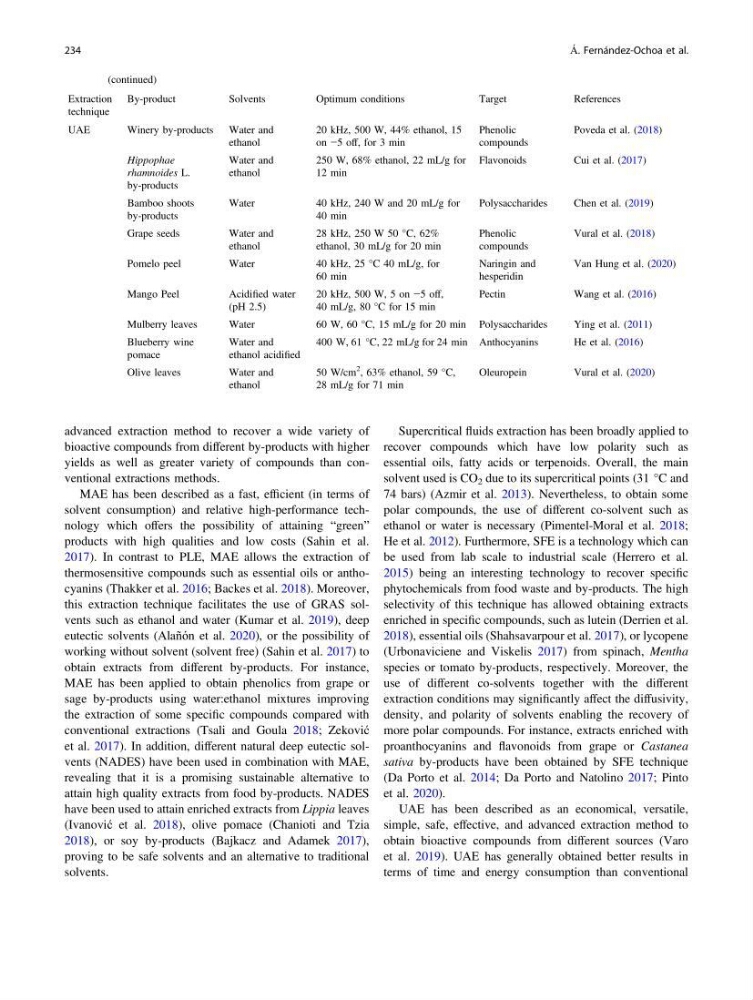
Table 1 (continued)
Extraction
technique
By-product
Solvents
Optimum conditions
Target
References
UAE
Winery by-products Water and
ethanol
20 kHz, 500 W, 44% ethanol, 15
on −5 off, for 3 min
Phenolic
compounds
Poveda et al. (2018)
Hippophae
rhamnoides L.
by-products
Water and
ethanol
250 W, 68% ethanol, 22 mL/g for
12 min
Flavonoids
Cui et al. (2017)
Bamboo shoots
by-products
Water
40 kHz, 240 W and 20 mL/g for
40 min
Polysaccharides
Chen et al. (2019)
Grape seeds
Water and
ethanol
28 kHz, 250 W 50 °C, 62%
ethanol, 30 mL/g for 20 min
Phenolic
compounds
Vural et al. (2018)
Pomelo peel
Water
40 kHz, 25 °C 40 mL/g, for
60 min
Naringin and
hesperidin
Van Hung et al. (2020)
Mango Peel
Acidified water
(pH 2.5)
20 kHz, 500 W, 5 on −5 off,
40 mL/g, 80 °C for 15 min
Pectin
Wang et al. (2016)
Mulberry leaves
Water
60 W, 60 °C, 15 mL/g for 20 min Polysaccharides
Ying et al. (2011)
Blueberry wine
pomace
Water and
ethanol acidified
400 W, 61 °C, 22 mL/g for 24 min Anthocyanins
He et al. (2016)
Olive leaves
Water and
ethanol
50 W/cm
2
, 63% ethanol, 59 °C,
28 mL/g for 71 min
Oleuropein
Vural et al. (2020)
234
Á. Fernández-Ochoa et al.
bioactive compounds from different by-products with higher
yields as well as greater variety of compounds than conventional extractions methods.
MAE has been described as a fast, efficient (in terms of
solvent consumption) and relative high-performance technology which offers the possibility of attaining “green”
products with high qualities and low costs (Sahin et al.
2017). In contrast to PLE, MAE allows the extraction of
thermosensitive compounds such as essential oils or anthocyanins (Thakker et al. 2016; Backes et al. 2018). Moreover,
this extraction technique facilitates the use of GRAS solvents such as ethanol and water (Kumar et al. 2019), deep
eutectic solvents (Alañón et al. 2020), or the possibility of
working without solvent (solvent free) (Sahin et al. 2017) to
obtain extracts from different by-products. For instance,
MAE has been applied to obtain phenolics from grape or
sage by-products using water:ethanol mixtures improving
the extraction of some specific compounds compared with
conventional extractions (Tsali and Goula 2018; Zeković
et al. 2017). In addition, different natural deep eutectic solvents (NADES) have been used in combination with MAE,
revealing that it is a promising sustainable alternative to
attain high quality extracts from food by-products. NADES
have been used to attain enriched extracts from Lippia leaves
(Ivanović et al. 2018), olive pomace (Chanioti and Tzia
2018), or soy by-products (Bajkacz and Adamek 2017),
proving to be safe solvents and an alternative to traditional
solvents.
Supercritical fluids extraction has been broadly applied to
recover compounds which have low polarity such as
essential oils, fatty acids or terpenoids. Overall, the main
solvent used is CO 2 due to its supercritical points (31 °C and
74 bars) (Azmir et al. 2013). Nevertheless, to obtain some
polar compounds, the use of different co-solvent such as
ethanol or water is necessary (Pimentel-Moral et al. 2018;
He et al. 2012). Furthermore, SFE is a technology which can
be used from lab scale to industrial scale (Herrero et al.
2015) being an interesting technology to recover specific
phytochemicals from food waste and by-products. The high
selectivity of this technique has allowed obtaining extracts
enriched in specific compounds, such as lutein (Derrien et al.
2018), essential oils (Shahsavarpour et al. 2017), or lycopene
(Urbonaviciene and Viskelis 2017) from spinach, Mentha
species or tomato by-products, respectively. Moreover, the
use of different co-solvents together with the different
extraction conditions may significantly affect the diffusivity,
density, and polarity of solvents enabling the recovery of
more polar compounds. For instance, extracts enriched with
proanthocyanins and flavonoids from grape or Castanea
sativa by-products have been obtained by SFE technique
(Da Porto et al. 2014; Da Porto and Natolino 2017; Pinto
et al. 2020).
UAE has been described as an economical, versatile,
simple, safe, effective, and advanced extraction method to
obtain bioactive compounds from different sources (Varo
et al. 2019). UAE has generally obtained better results in
terms of time and energy consumption than conventional
Table 1 (continued)
Extraction
technique
By-product
Solvents
Optimum conditions
Target
References
UAE
Winery by-products Water and
ethanol
20 kHz, 500 W, 44% ethanol, 15
on −5 off, for 3 min
Phenolic
compounds
Poveda et al. (2018)
Hippophae
rhamnoides L.
by-products
Water and
ethanol
250 W, 68% ethanol, 22 mL/g for
12 min
Flavonoids
Cui et al. (2017)
Bamboo shoots
by-products
Water
40 kHz, 240 W and 20 mL/g for
40 min
Polysaccharides
Chen et al. (2019)
Grape seeds
Water and
ethanol
28 kHz, 250 W 50 °C, 62%
ethanol, 30 mL/g for 20 min
Phenolic
compounds
Vural et al. (2018)
Pomelo peel
Water
40 kHz, 25 °C 40 mL/g, for
60 min
Naringin and
hesperidin
Van Hung et al. (2020)
Mango Peel
Acidified water
(pH 2.5)
20 kHz, 500 W, 5 on −5 off,
40 mL/g, 80 °C for 15 min
Pectin
Wang et al. (2016)
Mulberry leaves
Water
60 W, 60 °C, 15 mL/g for 20 min Polysaccharides
Ying et al. (2011)
Blueberry wine
pomace
Water and
ethanol acidified
400 W, 61 °C, 22 mL/g for 24 min Anthocyanins
He et al. (2016)
Olive leaves
Water and
ethanol
50 W/cm
2
, 63% ethanol, 59 °C,
28 mL/g for 71 min
Oleuropein
Vural et al. (2020)
234
Á. Fernández-Ochoa et al.