

environmental management of wastes. Even so, we still are
on the way to improve this futuristic idea and raise it to a
commercial level, since there are still technical and economic bottlenecks to be solved. In order to consolidate the
third-generation microalgae biofuel industry, in addition to
the use of industrial waste, other strategies are also crucial to
achieving this goal, including: (i) harness the full potential of
biomass, through the use of a biorefinery approach; (ii) use
of genetic and metabolic engineering to improve the
microalgae strains resistance and the yields of the bioproducts of interest; and (iii) improve downstream processing
techniques, aiming at integrated and more economical
processes.
References
Alptekin, E. (2017). Emission, injection and combustion characteristics
of biodiesel and oxygenated fuel blends in a common rail diesel
engine. Energy, 119, 44–52.
Amara, S., Seghezzi, N., Otani, H., Diaz-Salazar, C., Liu, J., & Eltis, L.
D. (2016). Characterization of key triacylglycerol biosynthesis
processes in rhodococci. Scientific Reports, 6(1), 1–13.
Amaro, H. M., Macedo, Â. C., & Malcata, F. X. (2012). Microalgae:
An alternative as sustainable source of biofuels? Energy, 44(1),
158–166.
American Society for Testing and Materials (ASTM). (2002). ASTM
6751—standard specification for biodiesel fuel (B100) blend stock
for distillate fuels. West Conshohocken, PA, USA: ASTM.
Aravantinou, A. F., Theodorakopoulos, M. A., & Manariotis, I. D.
(2013). Selection of microalgae for wastewater treatment and
potential lipids production. Bioresource Technology, 147, 130–134.
Arita, C. E. Q., Peebles, C., & Bradley, T. H. (2015). Scalability of
combining microalgae-based biofuels with wastewater facilities: A
review. Algal Research, 9, 160–169.
Ayoola, A. A., Hymore, F. K., Omonhinmin, C. A., Olawole, O. C.,
Fayomi, O. S. I., Babatunde, D., et al. (2019). Analysis of waste
groundnut oil biodiesel production using response surface methodology and artificial neural network. Chemical Data Collections, 22,
100238.
Ayyasamy, P. M., Banuregha, R., Vivekanandhan, G., Rajakumar, S.,
Yasodha, R., Lee, S., et al. (2008). Bioremediation of sago industry
effluent and its impact on seed germination (green gram and maize).
World Journal of Microbiology & Biotechnology, 24(11), 2677–
2684.
Bagwell, C. E., Abernathy, A., Barnwell, R., Milliken, C. E., Noble,
P. A., Dale, T.,… & Moeller, P. D. (2016). Discovery of bioactive
metabolites in biofuel microalgae that offer protection against
predatory bacteria. Frontiers in Microbiology, 7, 516.
Bai, X., & Acharya, K. (2017). Algae-mediated removal of selected
pharmaceutical and personal care products (PPCPs) from Lake
Mead water. Science of the Total Environment, 581–582, 734–740.
Beal, C. M., Gerber, L. N., Sills, D. L., Huntley, M. E., Machesky, S.
C., Walsh, M. J., … & Greene, C. H. (2015). Algal biofuel
production for fuels and feed in a 100-ha facility: A comprehensive
techno-economic analysis and life cycle assessment. Algal
Research, 10, 266–279.
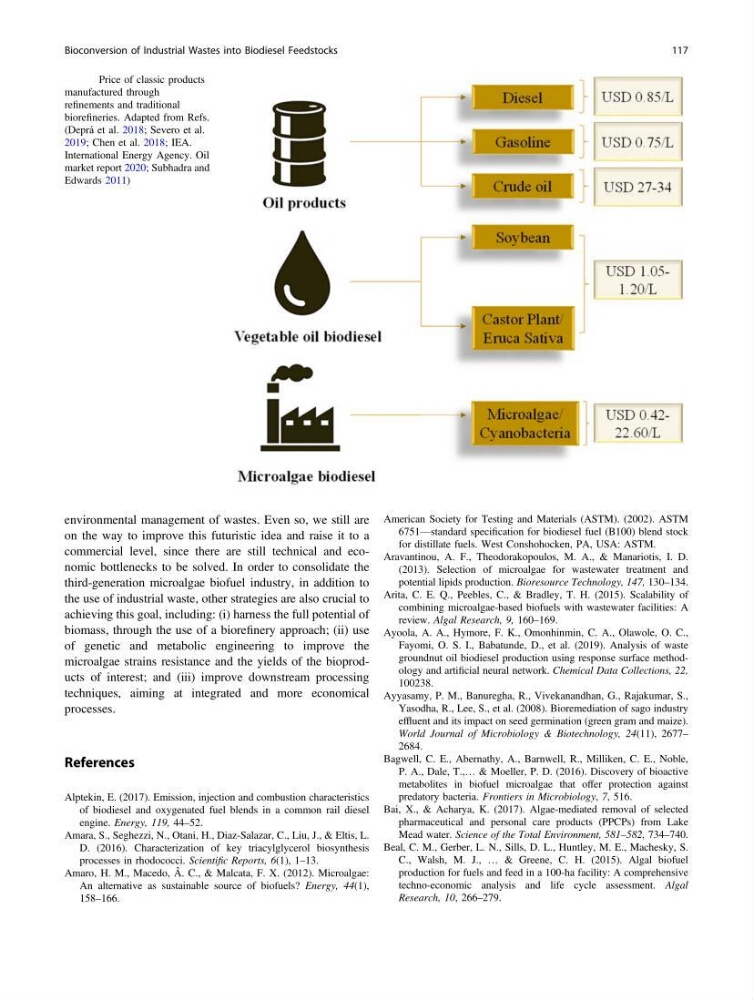
Fig. 2 Price of classic products
manufactured through
refinements and traditional
biorefineries. Adapted from Refs.
(Deprá et al. 2018; Severo et al.
2019; Chen et al. 2018; IEA.
International Energy Agency. Oil
market report 2020; Subhadra and
Edwards 2011)
Bioconversion of Industrial Wastes into Biodiesel Feedstocks
117
on the way to improve this futuristic idea and raise it to a
commercial level, since there are still technical and economic bottlenecks to be solved. In order to consolidate the
third-generation microalgae biofuel industry, in addition to
the use of industrial waste, other strategies are also crucial to
achieving this goal, including: (i) harness the full potential of
biomass, through the use of a biorefinery approach; (ii) use
of genetic and metabolic engineering to improve the
microalgae strains resistance and the yields of the bioproducts of interest; and (iii) improve downstream processing
techniques, aiming at integrated and more economical
processes.
References
Alptekin, E. (2017). Emission, injection and combustion characteristics
of biodiesel and oxygenated fuel blends in a common rail diesel
engine. Energy, 119, 44–52.
Amara, S., Seghezzi, N., Otani, H., Diaz-Salazar, C., Liu, J., & Eltis, L.
D. (2016). Characterization of key triacylglycerol biosynthesis
processes in rhodococci. Scientific Reports, 6(1), 1–13.
Amaro, H. M., Macedo, Â. C., & Malcata, F. X. (2012). Microalgae:
An alternative as sustainable source of biofuels? Energy, 44(1),
158–166.
American Society for Testing and Materials (ASTM). (2002). ASTM
6751—standard specification for biodiesel fuel (B100) blend stock
for distillate fuels. West Conshohocken, PA, USA: ASTM.
Aravantinou, A. F., Theodorakopoulos, M. A., & Manariotis, I. D.
(2013). Selection of microalgae for wastewater treatment and
potential lipids production. Bioresource Technology, 147, 130–134.
Arita, C. E. Q., Peebles, C., & Bradley, T. H. (2015). Scalability of
combining microalgae-based biofuels with wastewater facilities: A
review. Algal Research, 9, 160–169.
Ayoola, A. A., Hymore, F. K., Omonhinmin, C. A., Olawole, O. C.,
Fayomi, O. S. I., Babatunde, D., et al. (2019). Analysis of waste
groundnut oil biodiesel production using response surface methodology and artificial neural network. Chemical Data Collections, 22,
100238.
Ayyasamy, P. M., Banuregha, R., Vivekanandhan, G., Rajakumar, S.,
Yasodha, R., Lee, S., et al. (2008). Bioremediation of sago industry
effluent and its impact on seed germination (green gram and maize).
World Journal of Microbiology & Biotechnology, 24(11), 2677–
2684.
Bagwell, C. E., Abernathy, A., Barnwell, R., Milliken, C. E., Noble,
P. A., Dale, T.,… & Moeller, P. D. (2016). Discovery of bioactive
metabolites in biofuel microalgae that offer protection against
predatory bacteria. Frontiers in Microbiology, 7, 516.
Bai, X., & Acharya, K. (2017). Algae-mediated removal of selected
pharmaceutical and personal care products (PPCPs) from Lake
Mead water. Science of the Total Environment, 581–582, 734–740.
Beal, C. M., Gerber, L. N., Sills, D. L., Huntley, M. E., Machesky, S.
C., Walsh, M. J., … & Greene, C. H. (2015). Algal biofuel
production for fuels and feed in a 100-ha facility: A comprehensive
techno-economic analysis and life cycle assessment. Algal
Research, 10, 266–279.
Fig. 2 Price of classic products
manufactured through
refinements and traditional
biorefineries. Adapted from Refs.
(Deprá et al. 2018; Severo et al.
2019; Chen et al. 2018; IEA.
International Energy Agency. Oil
market report 2020; Subhadra and
Edwards 2011)
Bioconversion of Industrial Wastes into Biodiesel Feedstocks
117