

the blogger have argued that the state falsified claims or made their case on trumped-up
charges, and did so for the sole purpose of silencing unwanted views. It is not easy to assess
the validity of these claims. It should be noted that on a number of occasions those making
the claims were also charged and imprisoned soon afterward.
31
While Iran and China are key perpetrators of threats against bloggers, the effort to silence
bloggers is widespread. Bloggers are facing sentences throughout Asia, Europe, North Africa,
and Europe (see figure 6.3). As figure 6.3 illustrates, bloggers are facing charges throughout
the world. While Iran remains by far the largest contributor to worldwide blogger arrests,
Bahrain has prosecuted the second largest number of bloggers. China, Malaysia, and the
United States are not far behind.
We also found that a preponderance of sentences handed down to bloggers found guilty of
a crime is for undisclosed periods of time. While the increase in the number of bloggers facing
charges and arrest is in and of itself a worrying trend, perhaps more alarmingly is the finding
that 40 percent of those arrested face charges and sentences that are not made public. Most
bloggers arrested will be detained without access to legal recourse until the state, of its own
volition, chooses to release information on the blogger’s sentence and occasionally release
the blogger either outright or pending a trial or retrial.
Of those bloggers whose sentences are public, the majority spend a maximum of one year
incarcerated. Often among this group, a longer sentence was set and then shortened during
appeals through the justice system. (See figure 6.4.)
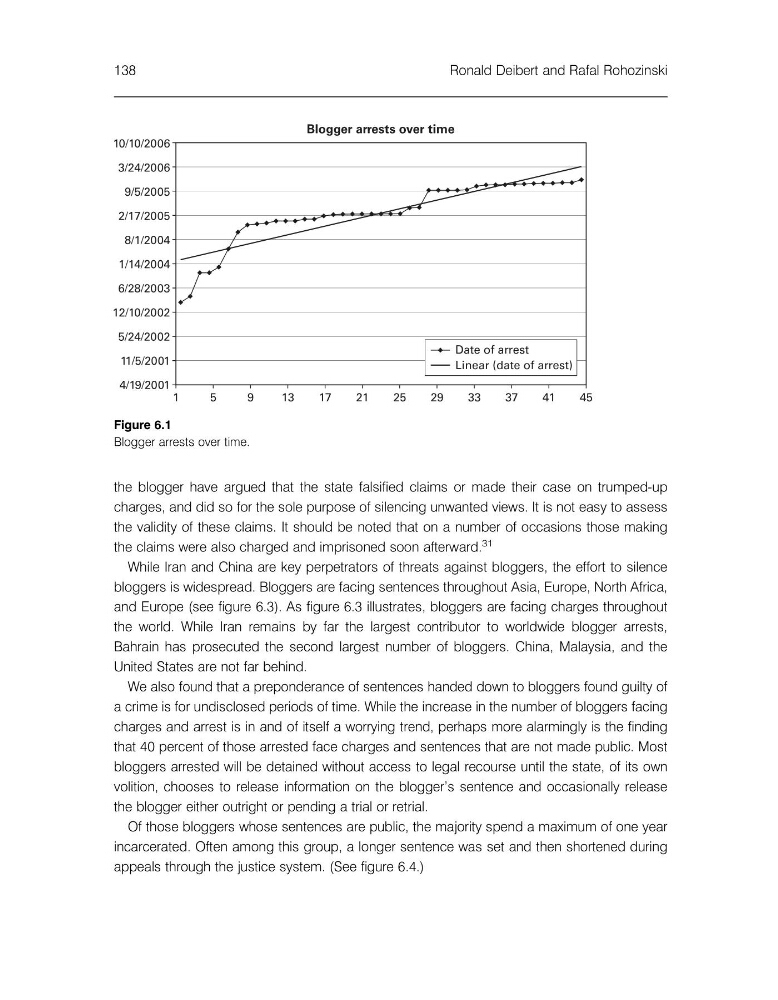
Figure 6.1
Blogger arrests over time.
138
Ronald Deibert and Rafal Rohozinski
charges, and did so for the sole purpose of silencing unwanted views. It is not easy to assess
the validity of these claims. It should be noted that on a number of occasions those making
the claims were also charged and imprisoned soon afterward.
31
While Iran and China are key perpetrators of threats against bloggers, the effort to silence
bloggers is widespread. Bloggers are facing sentences throughout Asia, Europe, North Africa,
and Europe (see figure 6.3). As figure 6.3 illustrates, bloggers are facing charges throughout
the world. While Iran remains by far the largest contributor to worldwide blogger arrests,
Bahrain has prosecuted the second largest number of bloggers. China, Malaysia, and the
United States are not far behind.
We also found that a preponderance of sentences handed down to bloggers found guilty of
a crime is for undisclosed periods of time. While the increase in the number of bloggers facing
charges and arrest is in and of itself a worrying trend, perhaps more alarmingly is the finding
that 40 percent of those arrested face charges and sentences that are not made public. Most
bloggers arrested will be detained without access to legal recourse until the state, of its own
volition, chooses to release information on the blogger’s sentence and occasionally release
the blogger either outright or pending a trial or retrial.
Of those bloggers whose sentences are public, the majority spend a maximum of one year
incarcerated. Often among this group, a longer sentence was set and then shortened during
appeals through the justice system. (See figure 6.4.)
Figure 6.1
Blogger arrests over time.
138
Ronald Deibert and Rafal Rohozinski