

287
The farmers of the village have traditionally been using bullock-driven wooden
ploughs to cultivate their lands. The number of hal (plough) per family varies
depending upon the size of their landholdings. As per the number of hal, the farming families receive dong water to irrigate their fields. It is worth mentioning that
recently with the introduction of power tiller, the number of hal in the village has
declined. Interestingly, the timing of seed sowing and transplantation of paddy in
different parts of the village are scheduled as per the availability of the canal water.
During the kor watering of paddy, the farmers carefully maintain the water supply
in their fields. On an average, for 20–25 days per month, they supply water to their
paddy fields. After kor watering, they reduce the frequency of watering. From the
post-monsoon period (October), the volume of water in the canals starts subsiding,
and the farmers manage their water supply in rotation. Although the farmers cultivated a variety of crops during the rabi season in the recent past, presently the total
area devoted to rabi crops is relatively less. Majority of the farmers are of the opinion that the decrease in rainfall and canal water supply, growth of non-farm activities and out-migration of young people from the area are the major causes behind
the changes in cropping pattern in the recent years.
The growth and productivity of crops largely depend on the availability and
timely supply of water (Liu et al. 2007; Konzmann et al. 2013). Supply of water
plays a key role in enhancing agricultural productivity in an environment of increasing demand for food on the one hand and extreme climatic events resulting from
global warming on the other (Fischer et al. 2007; Rosenzweig et al. 2004; Watanabe
et al. 2018). This is true in the case of Himalayan foothill zone in Assam also where
the farmers are struggling hard to supply water to their agricultural fields. As all the
agricultural plots of Chaulkara village are well connected by the network of
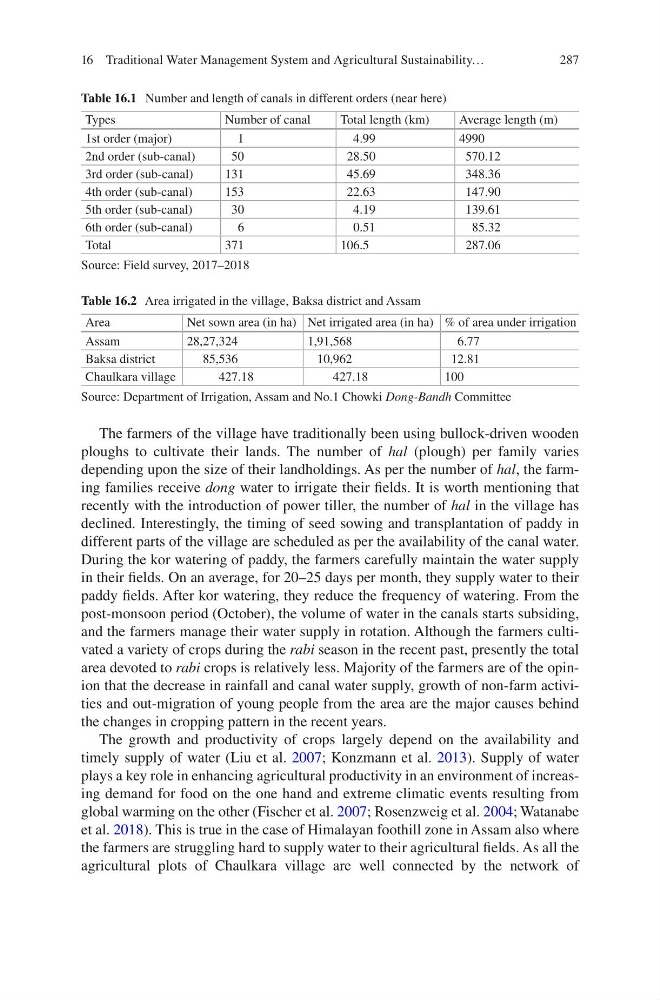
Table 16.1 Number and length of canals in different orders (near here)
Types
Number of canal
Total length (km)
Average length (m)
1st order (major)
1
4.99
4990
2nd order (sub-canal)
50
28.50
570.12
3rd order (sub-canal)
131
45.69
348.36
4th order (sub-canal)
153
22.63
147.90
5th order (sub-canal)
30
4.19
139.61
6th order (sub-canal)
6
0.51
85.32
Total
371
106.5
287.06
Source: Field survey, 2017–2018
Table 16.2 Area irrigated in the village, Baksa district and Assam
Area
Net sown area (in ha) Net irrigated area (in ha) % of area under irrigation
Assam
28,27,324
1,91,568
6.77
Baksa district
85,536
10,962
12.81
Chaulkara village
427.18
427.18
100
Source: Department of Irrigation, Assam and No.1 Chowki Dong-Bandh Committee
16 Traditional Water Management System and Agricultural Sustainability…
The farmers of the village have traditionally been using bullock-driven wooden
ploughs to cultivate their lands. The number of hal (plough) per family varies
depending upon the size of their landholdings. As per the number of hal, the farming families receive dong water to irrigate their fields. It is worth mentioning that
recently with the introduction of power tiller, the number of hal in the village has
declined. Interestingly, the timing of seed sowing and transplantation of paddy in
different parts of the village are scheduled as per the availability of the canal water.
During the kor watering of paddy, the farmers carefully maintain the water supply
in their fields. On an average, for 20–25 days per month, they supply water to their
paddy fields. After kor watering, they reduce the frequency of watering. From the
post-monsoon period (October), the volume of water in the canals starts subsiding,
and the farmers manage their water supply in rotation. Although the farmers cultivated a variety of crops during the rabi season in the recent past, presently the total
area devoted to rabi crops is relatively less. Majority of the farmers are of the opinion that the decrease in rainfall and canal water supply, growth of non-farm activities and out-migration of young people from the area are the major causes behind
the changes in cropping pattern in the recent years.
The growth and productivity of crops largely depend on the availability and
timely supply of water (Liu et al. 2007; Konzmann et al. 2013). Supply of water
plays a key role in enhancing agricultural productivity in an environment of increasing demand for food on the one hand and extreme climatic events resulting from
global warming on the other (Fischer et al. 2007; Rosenzweig et al. 2004; Watanabe
et al. 2018). This is true in the case of Himalayan foothill zone in Assam also where
the farmers are struggling hard to supply water to their agricultural fields. As all the
agricultural plots of Chaulkara village are well connected by the network of
Table 16.1 Number and length of canals in different orders (near here)
Types
Number of canal
Total length (km)
Average length (m)
1st order (major)
1
4.99
4990
2nd order (sub-canal)
50
28.50
570.12
3rd order (sub-canal)
131
45.69
348.36
4th order (sub-canal)
153
22.63
147.90
5th order (sub-canal)
30
4.19
139.61
6th order (sub-canal)
6
0.51
85.32
Total
371
106.5
287.06
Source: Field survey, 2017–2018
Table 16.2 Area irrigated in the village, Baksa district and Assam
Area
Net sown area (in ha) Net irrigated area (in ha) % of area under irrigation
Assam
28,27,324
1,91,568
6.77
Baksa district
85,536
10,962
12.81
Chaulkara village
427.18
427.18
100
Source: Department of Irrigation, Assam and No.1 Chowki Dong-Bandh Committee
16 Traditional Water Management System and Agricultural Sustainability…