

87
4.7 Conclusion
Effective management of elephant corridors can be done to an extent by reducing
human-elephant conflict, rather than implementing rules and regulations that cannot
be fulfilled as human interference and encroachment into elephant corridors and
habitats continues to increase. This requires adoption of measures that would
involve human beings or more specifically speaking, indigenous people who are
mostly dependent on forests for their day-to-day livelihood. Joint Forest Management
can be adopted as a measure in this case, that would ensue sharing of benefits on
both the sides. Effective conservation-based strategies should be adopted that
includes spreading of information regarding the importance of elephant corridors
and the need to conserve their existing populations especially in central India, where
forests getting fragmented at an alarming rate. The forest department also has a very
important role to play by taking stringent action in cases where there is a need of
providing compensation to the local people, as when their rights are denied once,
these people will never support animal conservation. It leads them to retaliation,
with people trying to target, harm and attack the elephants using various local mechanisms followed in the past decades. Electric fences also, at many times tend to be
ineffective and causes loss of money involved in setting them up. So measures that
are scientifically proven to be effective should be implemented. Not only are the
elephant populations getting affected, but people living in the corridor forests are
also suffering economic loss as they are entirely dependent on agriculture and NTFP
from the forests. So from the human perspective, measures should be adopted in
such a way that tribal people do not harm the elephants and at the same time, their
lives are also secured. Many NGOs countrywide are putting lots of efforts to restore
the declining animal numbers and are also sensitizing various stakeholders regarding the importance of securing the linkages between habitats. Besides all these measures that were taken in the past, many still in force at present, the declining species
numbers are not fully restored. Still the sad fact prevails that many of the rules and
regulations are implemented properly and hence these rules are taken for granted
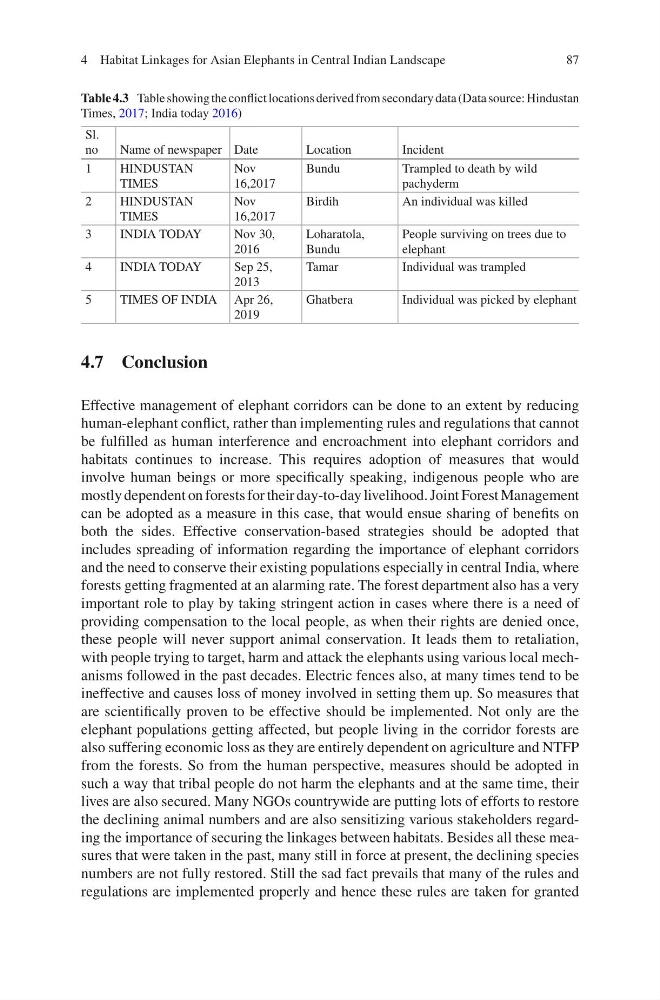
Table 4.3 Table showing the conflict locations derived from secondary data (Data source: Hindustan
Times, 2017; India today 2016)
Sl.
no
Name of newspaper Date
Location
Incident
1
HINDUSTAN
TIMES
Nov
16,2017
Bundu
Trampled to death by wild
pachyderm
2
HINDUSTAN
TIMES
Nov
16,2017
Birdih
An individual was killed
3
INDIA TODAY
Nov 30,
2016
Loharatola,
Bundu
People surviving on trees due to
elephant
4
INDIA TODAY
Sep 25,
2013
Tamar
Individual was trampled
5
TIMES OF INDIA Apr 26,
2019
Ghatbera
Individual was picked by elephant
4 Habitat Linkages for Asian Elephants in Central Indian Landscape
4.7 Conclusion
Effective management of elephant corridors can be done to an extent by reducing
human-elephant conflict, rather than implementing rules and regulations that cannot
be fulfilled as human interference and encroachment into elephant corridors and
habitats continues to increase. This requires adoption of measures that would
involve human beings or more specifically speaking, indigenous people who are
mostly dependent on forests for their day-to-day livelihood. Joint Forest Management
can be adopted as a measure in this case, that would ensue sharing of benefits on
both the sides. Effective conservation-based strategies should be adopted that
includes spreading of information regarding the importance of elephant corridors
and the need to conserve their existing populations especially in central India, where
forests getting fragmented at an alarming rate. The forest department also has a very
important role to play by taking stringent action in cases where there is a need of
providing compensation to the local people, as when their rights are denied once,
these people will never support animal conservation. It leads them to retaliation,
with people trying to target, harm and attack the elephants using various local mechanisms followed in the past decades. Electric fences also, at many times tend to be
ineffective and causes loss of money involved in setting them up. So measures that
are scientifically proven to be effective should be implemented. Not only are the
elephant populations getting affected, but people living in the corridor forests are
also suffering economic loss as they are entirely dependent on agriculture and NTFP
from the forests. So from the human perspective, measures should be adopted in
such a way that tribal people do not harm the elephants and at the same time, their
lives are also secured. Many NGOs countrywide are putting lots of efforts to restore
the declining animal numbers and are also sensitizing various stakeholders regarding the importance of securing the linkages between habitats. Besides all these measures that were taken in the past, many still in force at present, the declining species
numbers are not fully restored. Still the sad fact prevails that many of the rules and
regulations are implemented properly and hence these rules are taken for granted
Table 4.3 Table showing the conflict locations derived from secondary data (Data source: Hindustan
Times, 2017; India today 2016)
Sl.
no
Name of newspaper Date
Location
Incident
1
HINDUSTAN
TIMES
Nov
16,2017
Bundu
Trampled to death by wild
pachyderm
2
HINDUSTAN
TIMES
Nov
16,2017
Birdih
An individual was killed
3
INDIA TODAY
Nov 30,
2016
Loharatola,
Bundu
People surviving on trees due to
elephant
4
INDIA TODAY
Sep 25,
2013
Tamar
Individual was trampled
5
TIMES OF INDIA Apr 26,
2019
Ghatbera
Individual was picked by elephant
4 Habitat Linkages for Asian Elephants in Central Indian Landscape