

for the search of new CSPs in enantiomer-selective gas chromatographic separation
(see above).
In 1983, Koscielski et al. were the first to report gas chromatographic enantiomer
separations using cyclic glucose oligomers, so-called cyclodextrins (Koscielski et al.
1983). Because of the present overwhelming scope of the application range using
chiral stationary phases with modified cyclodextrins, in particular, with regard to the
central subject of the present monograph, that is, chiral environmental pollutants,
this experimental approach deserves a more extensive description.
Cyclodextrins are cyclic α-(1!4)-connected glucose oligomers with 6, 7, or
8 glucose units, corresponding to α-, β- and γ-cyclodextrin, respectively (Fig. 5.1).
They can be prepared by enzymatic degradation of starch with cyclodextringlucanosyltransferase (CGTase) from Bacillus macerans, Bacillus megaterium and
other bacteria strains, but they are also commercially available (Vetter et al. 1992). A
total chemical synthesis of α-cyclodextrin and of a “mannose isomer” was also
reported in the literature (Li et al. 2016). For further details, the reader should refer to
Bikbulatova et al. (2000) and Kim and Robyt (2000). As shown in Fig. 3.2, the
cyclodextrins exhibit a torus-shaped geometry with specific dimensions of their
cavity, with the 6-hydroxy groups positioned at the narrow entrance of the cavity
and with the 2- and 3-hydroxy groups at the wider opening. Their overall conformation is mainly determined by the α-(1!4)-connected glucose units in their
4 C 1 -
conformation and stabilised by intramolecular hydrogen bonding forces between the
2- and 3-hydroxy groups. In contrast to the hydrophilic character of the outer surface
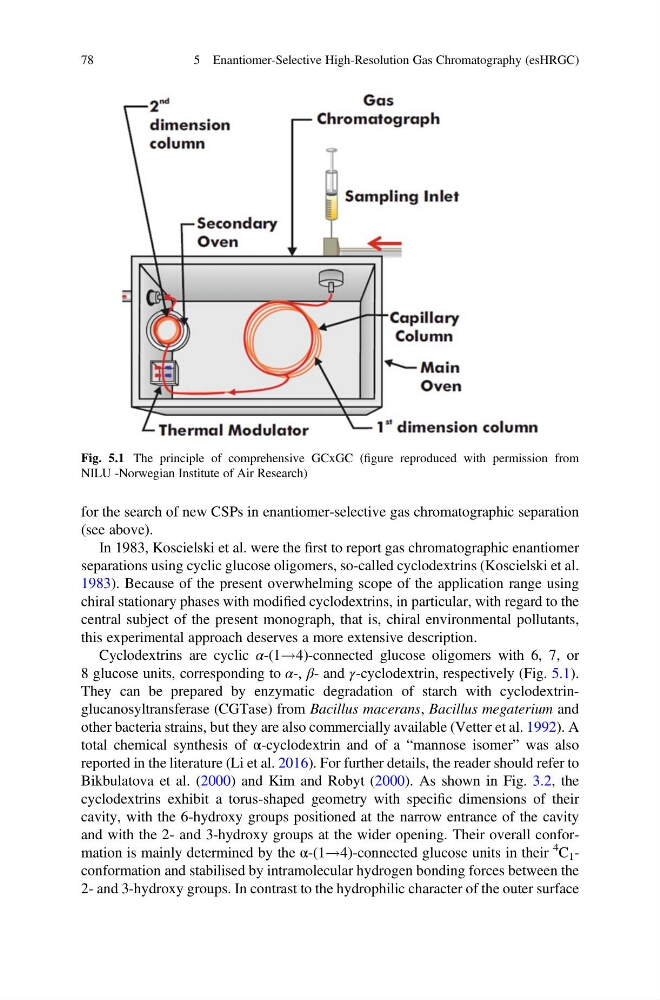
Fig. 5.1 The principle of comprehensive GCxGC (figure reproduced with permission from
NILU -Norwegian Institute of Air Research)
78
5 Enantiomer-Selective High-Resolution Gas Chromatography (esHRGC)
(see above).
In 1983, Koscielski et al. were the first to report gas chromatographic enantiomer
separations using cyclic glucose oligomers, so-called cyclodextrins (Koscielski et al.
1983). Because of the present overwhelming scope of the application range using
chiral stationary phases with modified cyclodextrins, in particular, with regard to the
central subject of the present monograph, that is, chiral environmental pollutants,
this experimental approach deserves a more extensive description.
Cyclodextrins are cyclic α-(1!4)-connected glucose oligomers with 6, 7, or
8 glucose units, corresponding to α-, β- and γ-cyclodextrin, respectively (Fig. 5.1).
They can be prepared by enzymatic degradation of starch with cyclodextringlucanosyltransferase (CGTase) from Bacillus macerans, Bacillus megaterium and
other bacteria strains, but they are also commercially available (Vetter et al. 1992). A
total chemical synthesis of α-cyclodextrin and of a “mannose isomer” was also
reported in the literature (Li et al. 2016). For further details, the reader should refer to
Bikbulatova et al. (2000) and Kim and Robyt (2000). As shown in Fig. 3.2, the
cyclodextrins exhibit a torus-shaped geometry with specific dimensions of their
cavity, with the 6-hydroxy groups positioned at the narrow entrance of the cavity
and with the 2- and 3-hydroxy groups at the wider opening. Their overall conformation is mainly determined by the α-(1!4)-connected glucose units in their
4 C 1 -
conformation and stabilised by intramolecular hydrogen bonding forces between the
2- and 3-hydroxy groups. In contrast to the hydrophilic character of the outer surface
Fig. 5.1 The principle of comprehensive GCxGC (figure reproduced with permission from
NILU -Norwegian Institute of Air Research)
78
5 Enantiomer-Selective High-Resolution Gas Chromatography (esHRGC)