

9.5 Polychlorinated Biphenyls
Polychlorinated biphenyls (PCBs) were synthesised at a large scale as industrial
chemical mixtures until the 1970s due to their wide range of applications. PCBs were
extensively used as dielectric and cooling fluids in electrical equipment, cutting
fluids for machining operations, carbonless copy paper in heat-transfer fluids,
insulating fluids (transformer oil) (Canada. PCB Board of Review and Canada
1980; Canada. Environmental Protection Service 1981; United States. Congress.
House. Committee on Government Operations. Environment Energy and Natural
Resources Subcommittee 1986). Besides, PCB mixtures were also used as
plasticisers in cements and paints, stabilising additives in flexible PVC coatings of
electrical cables and electronic components, pesticide extenders, reactive lubricating
oils, flame retardants, hydraulic fluids and sealants for caulking, wood floor finishes
(Canada. Environmental Protection Service 1981; United States. Congress. House.
Committee on Government Operations. Environment Energy and Natural Resources
Subcommittee 1986), casting agents, waterproofing compounds, de-dusting agents,
vacuum pump fluids, surgical implants and fixatives in microscopy. The numerous
comprehensive international reports of the past 50 years on the environmental fate of
PCBs confirm that this contaminant group is widely distributed and is, thus, considered as a harmful global environmental pollutant (National Research Council (U.S.).
Committee on the Assessment of Polychlorinated Biphenyls in the Environment
1979; Waid 1986; Imperial College of Science Technology and Medicine, Centre for
Environmental Control & Waste Management and Robens Institute of Health and
Safety (University of Surrey) 1993; Smith and Lopipero 2001). The most important
sources are industries, electrical power houses, etc. PCBs have globally contaminated the environment via both use and disposal activities.
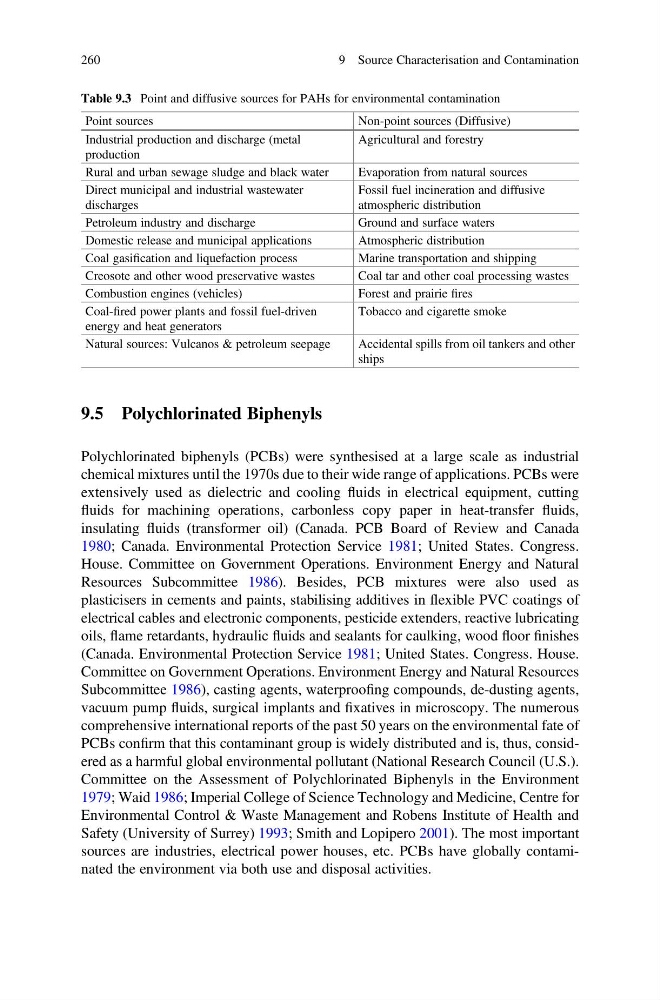
Table 9.3 Point and diffusive sources for PAHs for environmental contamination
Point sources
Non-point sources (Diffusive)
Industrial production and discharge (metal
production
Agricultural and forestry
Rural and urban sewage sludge and black water
Evaporation from natural sources
Direct municipal and industrial wastewater
discharges
Fossil fuel incineration and diffusive
atmospheric distribution
Petroleum industry and discharge
Ground and surface waters
Domestic release and municipal applications
Atmospheric distribution
Coal gasification and liquefaction process
Marine transportation and shipping
Creosote and other wood preservative wastes
Coal tar and other coal processing wastes
Combustion engines (vehicles)
Forest and prairie fires
Coal-fired power plants and fossil fuel-driven
energy and heat generators
Tobacco and cigarette smoke
Natural sources: Vulcanos & petroleum seepage
Accidental spills from oil tankers and other
ships
260
9 Source Characterisation and Contamination
Polychlorinated biphenyls (PCBs) were synthesised at a large scale as industrial
chemical mixtures until the 1970s due to their wide range of applications. PCBs were
extensively used as dielectric and cooling fluids in electrical equipment, cutting
fluids for machining operations, carbonless copy paper in heat-transfer fluids,
insulating fluids (transformer oil) (Canada. PCB Board of Review and Canada
1980; Canada. Environmental Protection Service 1981; United States. Congress.
House. Committee on Government Operations. Environment Energy and Natural
Resources Subcommittee 1986). Besides, PCB mixtures were also used as
plasticisers in cements and paints, stabilising additives in flexible PVC coatings of
electrical cables and electronic components, pesticide extenders, reactive lubricating
oils, flame retardants, hydraulic fluids and sealants for caulking, wood floor finishes
(Canada. Environmental Protection Service 1981; United States. Congress. House.
Committee on Government Operations. Environment Energy and Natural Resources
Subcommittee 1986), casting agents, waterproofing compounds, de-dusting agents,
vacuum pump fluids, surgical implants and fixatives in microscopy. The numerous
comprehensive international reports of the past 50 years on the environmental fate of
PCBs confirm that this contaminant group is widely distributed and is, thus, considered as a harmful global environmental pollutant (National Research Council (U.S.).
Committee on the Assessment of Polychlorinated Biphenyls in the Environment
1979; Waid 1986; Imperial College of Science Technology and Medicine, Centre for
Environmental Control & Waste Management and Robens Institute of Health and
Safety (University of Surrey) 1993; Smith and Lopipero 2001). The most important
sources are industries, electrical power houses, etc. PCBs have globally contaminated the environment via both use and disposal activities.
Table 9.3 Point and diffusive sources for PAHs for environmental contamination
Point sources
Non-point sources (Diffusive)
Industrial production and discharge (metal
production
Agricultural and forestry
Rural and urban sewage sludge and black water
Evaporation from natural sources
Direct municipal and industrial wastewater
discharges
Fossil fuel incineration and diffusive
atmospheric distribution
Petroleum industry and discharge
Ground and surface waters
Domestic release and municipal applications
Atmospheric distribution
Coal gasification and liquefaction process
Marine transportation and shipping
Creosote and other wood preservative wastes
Coal tar and other coal processing wastes
Combustion engines (vehicles)
Forest and prairie fires
Coal-fired power plants and fossil fuel-driven
energy and heat generators
Tobacco and cigarette smoke
Natural sources: Vulcanos & petroleum seepage
Accidental spills from oil tankers and other
ships
260
9 Source Characterisation and Contamination