

concerns and the demand of the regulating authorities to provide effective support
for patient treatment, the pharmaceutical industry is currently obliged to apply
production processes for chiral pharmaceuticals leading to enantiomeric pure end
products. Today, more than 50% of the currently used pharmaceuticals on the market
are chiral compounds and, thus, only one enantiomer is usually active in a therapeutic context (Sanganyado et al. 2017). Therefore, when applying these substances
as medical aids, a non-racemic release in the (aqueous) environment must be
assumed.
Therefore, for environmental risk evaluations and the investigation of bioavailability and transformation potential in biogenic processes, the enantiomeric ratio of
each chiral pollutant/contaminant when released into the environment must be
determined in advance, before any assumptions on potential biological effects are
drawn based on the determination of enantiomeric ratios in biological materials.
7.2 Enantiomeric Ratios or Enantiomeric Fractions?
In stereoselective chemical synthesis, the term “enantiomeric excess (EE)” is usually
applied for demonstrating the enantiomer-selective character of synthetic processes.
EE is expressed as relative (percentage) distribution of the resulting enantiomers [%]
in the enantiomer-selective synthesis.
As demonstrated in the first edition of this monograph, enantiomeric excess (EE) of
chiral pollutants in various environmental matrices is often expressed as enantiomeric
ratios (ER) for the enantiomeric signature in environmental samples. This is also
reflected in the early studies presented in the following chapters. Enantiomeric ratios
are usually calculated by the quotient of the first eluting enantiomer divided by the
second eluting, or the (+)-enantiomer divided by the (À)-enantiomer: ER ¼ E
(+)
/E
(À)
.
However, in comparative studies, where high enantiomeric excess (EE) in biological
tissues indicates biological transformation and enantiomer-selective accumulation, the
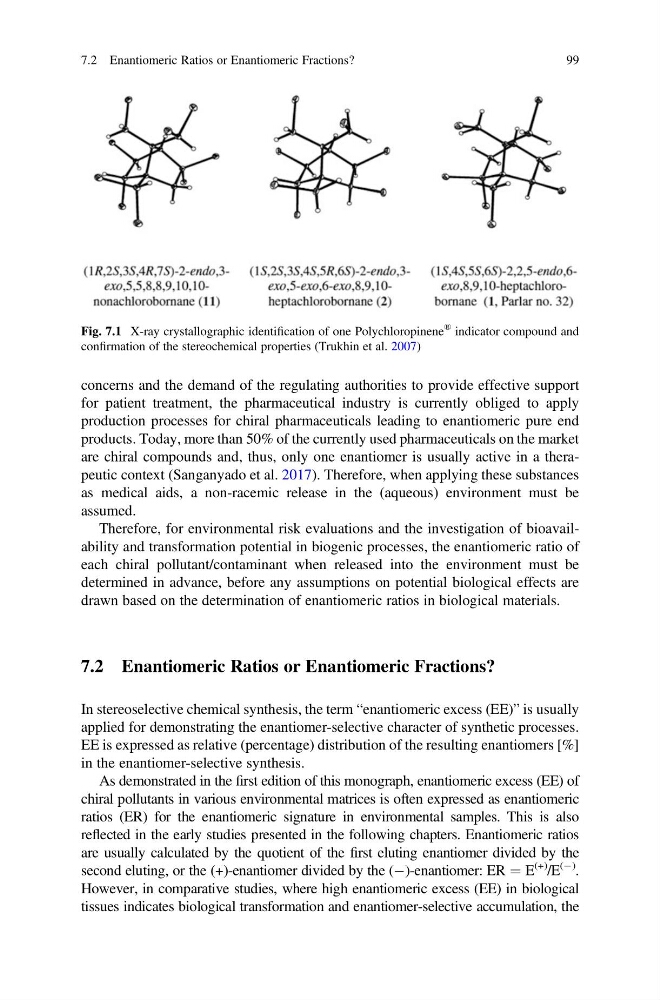
Fig. 7.1 X-ray crystallographic identification of one Polychloropinene
® indicator compound and
confirmation of the stereochemical properties (Trukhin et al. 2007)
7.2 Enantiomeric Ratios or Enantiomeric Fractions?
99
for patient treatment, the pharmaceutical industry is currently obliged to apply
production processes for chiral pharmaceuticals leading to enantiomeric pure end
products. Today, more than 50% of the currently used pharmaceuticals on the market
are chiral compounds and, thus, only one enantiomer is usually active in a therapeutic context (Sanganyado et al. 2017). Therefore, when applying these substances
as medical aids, a non-racemic release in the (aqueous) environment must be
assumed.
Therefore, for environmental risk evaluations and the investigation of bioavailability and transformation potential in biogenic processes, the enantiomeric ratio of
each chiral pollutant/contaminant when released into the environment must be
determined in advance, before any assumptions on potential biological effects are
drawn based on the determination of enantiomeric ratios in biological materials.
7.2 Enantiomeric Ratios or Enantiomeric Fractions?
In stereoselective chemical synthesis, the term “enantiomeric excess (EE)” is usually
applied for demonstrating the enantiomer-selective character of synthetic processes.
EE is expressed as relative (percentage) distribution of the resulting enantiomers [%]
in the enantiomer-selective synthesis.
As demonstrated in the first edition of this monograph, enantiomeric excess (EE) of
chiral pollutants in various environmental matrices is often expressed as enantiomeric
ratios (ER) for the enantiomeric signature in environmental samples. This is also
reflected in the early studies presented in the following chapters. Enantiomeric ratios
are usually calculated by the quotient of the first eluting enantiomer divided by the
second eluting, or the (+)-enantiomer divided by the (À)-enantiomer: ER ¼ E
(+)
/E
(À)
.
However, in comparative studies, where high enantiomeric excess (EE) in biological
tissues indicates biological transformation and enantiomer-selective accumulation, the
Fig. 7.1 X-ray crystallographic identification of one Polychloropinene
® indicator compound and
confirmation of the stereochemical properties (Trukhin et al. 2007)
7.2 Enantiomeric Ratios or Enantiomeric Fractions?
99