

420
a hydrophilic initiator to the external phase of a micro-emulsion (thermodynamically stable) having swollen micelles. The polymerization process begins from this
spontaneously formed thermodynamically stable state and based on increased
amounts of surfactants, which have an interfacial tension interface ~0 at the internalexternal phase interface. Surfactants completely cover the particles as the surfactants are used in high amounts. The advantages of miniemulsion and microemulsion
are as given below:
• miniemulsion and microemulsion are considered better than classical emulsions
[17, 51].
Emulsifier
Emulsifier
Monomer
Monomer
Monomer
Water
Water
Polymerization
Miniemulsification
High pressure homogenizer or
ultrasound
Polymer
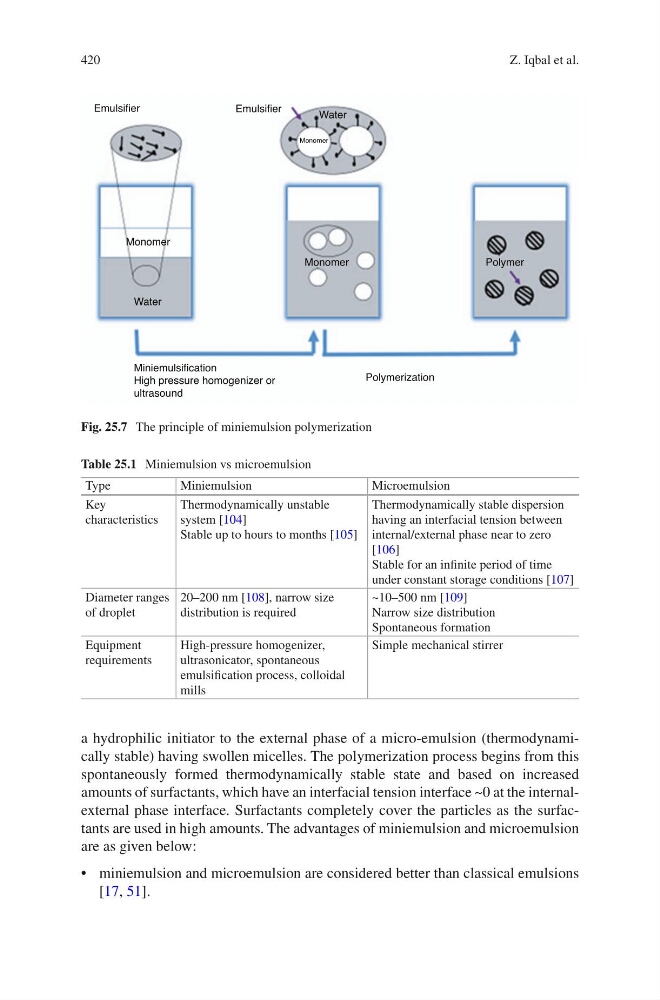
Fig. 25.7 The principle of miniemulsion polymerization
Table 25.1 Miniemulsion vs microemulsion
Type
Miniemulsion
Microemulsion
Key
characteristics
Thermodynamically unstable
system [104]
Stable up to hours to months [105]
Thermodynamically stable dispersion
having an interfacial tension between
internal/external phase near to zero
[106]
Stable for an infinite period of time
under constant storage conditions [107]
Diameter ranges
of droplet
20–200 nm [108], narrow size
distribution is required
~10–500 nm [109]
Narrow size distribution
Spontaneous formation
Equipment
requirements
High-pressure homogenizer,
ultrasonicator, spontaneous
emulsification process, colloidal
mills
Simple mechanical stirrer
Z. Iqbal et al.
a hydrophilic initiator to the external phase of a micro-emulsion (thermodynamically stable) having swollen micelles. The polymerization process begins from this
spontaneously formed thermodynamically stable state and based on increased
amounts of surfactants, which have an interfacial tension interface ~0 at the internalexternal phase interface. Surfactants completely cover the particles as the surfactants are used in high amounts. The advantages of miniemulsion and microemulsion
are as given below:
• miniemulsion and microemulsion are considered better than classical emulsions
[17, 51].
Emulsifier
Emulsifier
Monomer
Monomer
Monomer
Water
Water
Polymerization
Miniemulsification
High pressure homogenizer or
ultrasound
Polymer
Fig. 25.7 The principle of miniemulsion polymerization
Table 25.1 Miniemulsion vs microemulsion
Type
Miniemulsion
Microemulsion
Key
characteristics
Thermodynamically unstable
system [104]
Stable up to hours to months [105]
Thermodynamically stable dispersion
having an interfacial tension between
internal/external phase near to zero
[106]
Stable for an infinite period of time
under constant storage conditions [107]
Diameter ranges
of droplet
20–200 nm [108], narrow size
distribution is required
~10–500 nm [109]
Narrow size distribution
Spontaneous formation
Equipment
requirements
High-pressure homogenizer,
ultrasonicator, spontaneous
emulsification process, colloidal
mills
Simple mechanical stirrer
Z. Iqbal et al.