

351
species (ROS) and others chemicals that are responsible for oxidative damage and
persuade insulin resistance and oxidative stress [45]. Due to toxic chemicals such as
cigarette/tobacco smoke, can develop a link between immunity, metabolic disorders, obesity, and oxidative stress in an organism, and immune system is weak and
vulnerable to affect due to oxidative stress because of a proliferation of ROS production in organism [45, 46]. Oxidative stress through smoking is responsible to the
generation of various antioxidant exhaustion and endoplasmic distress, cell death,
mitochondrial dysfunction, and mutation in cell signaling, enzymatic and metabolic
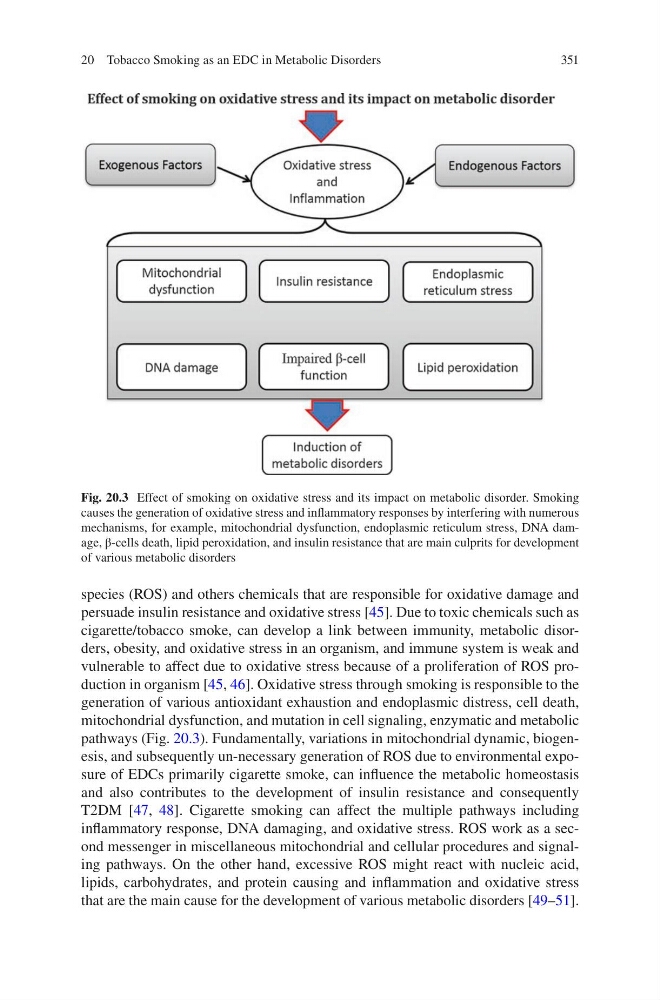
pathways (Fig. 20.3). Fundamentally, variations in mitochondrial dynamic, biogenesis, and subsequently un-necessary generation of ROS due to environmental exposure of EDCs primarily cigarette smoke, can influence the metabolic homeostasis
and also contributes to the development of insulin resistance and consequently
T2DM [47, 48]. Cigarette smoking can affect the multiple pathways including
inflammatory response, DNA damaging, and oxidative stress. ROS work as a second messenger in miscellaneous mitochondrial and cellular procedures and signaling pathways. On the other hand, excessive ROS might react with nucleic acid,
lipids, carbohydrates, and protein causing and inflammation and oxidative stress
that are the main cause for the development of various metabolic disorders [49–51].
Fig. 20.3 Effect of smoking on oxidative stress and its impact on metabolic disorder. Smoking
causes the generation of oxidative stress and inflammatory responses by interfering with numerous
mechanisms, for example, mitochondrial dysfunction, endoplasmic reticulum stress, DNA damage, β-cells death, lipid peroxidation, and insulin resistance that are main culprits for development
of various metabolic disorders
20 Tobacco Smoking as an EDC in Metabolic Disorders
species (ROS) and others chemicals that are responsible for oxidative damage and
persuade insulin resistance and oxidative stress [45]. Due to toxic chemicals such as
cigarette/tobacco smoke, can develop a link between immunity, metabolic disorders, obesity, and oxidative stress in an organism, and immune system is weak and
vulnerable to affect due to oxidative stress because of a proliferation of ROS production in organism [45, 46]. Oxidative stress through smoking is responsible to the
generation of various antioxidant exhaustion and endoplasmic distress, cell death,
mitochondrial dysfunction, and mutation in cell signaling, enzymatic and metabolic
pathways (Fig. 20.3). Fundamentally, variations in mitochondrial dynamic, biogenesis, and subsequently un-necessary generation of ROS due to environmental exposure of EDCs primarily cigarette smoke, can influence the metabolic homeostasis
and also contributes to the development of insulin resistance and consequently
T2DM [47, 48]. Cigarette smoking can affect the multiple pathways including
inflammatory response, DNA damaging, and oxidative stress. ROS work as a second messenger in miscellaneous mitochondrial and cellular procedures and signaling pathways. On the other hand, excessive ROS might react with nucleic acid,
lipids, carbohydrates, and protein causing and inflammation and oxidative stress
that are the main cause for the development of various metabolic disorders [49–51].
Fig. 20.3 Effect of smoking on oxidative stress and its impact on metabolic disorder. Smoking
causes the generation of oxidative stress and inflammatory responses by interfering with numerous
mechanisms, for example, mitochondrial dysfunction, endoplasmic reticulum stress, DNA damage, β-cells death, lipid peroxidation, and insulin resistance that are main culprits for development
of various metabolic disorders
20 Tobacco Smoking as an EDC in Metabolic Disorders