

224
Halogenated FRs
Halogenated FRs interrupt combustion of materials mostly in their vapor phase.
Most notable halogenated FRs are those which are based on chlorine or bromine;
however, brominated chemicals remained the most used FRs. Chlorinated FRs
include 1,4-di(2-hydroxyethoxy)-2,3,5,6-tetrachlorobenzene (TCHQD) and
1,4-di(ethoxycarbonylmethoxy)-2,3,5,6-tetrachlorobenzene (TCHQA). Among
various brominated FRs (BFRs), the most notable are polybromodiphenyl ethers
(PBDPE), polybrominated biphenyls (PBBP), decabromodiphenyl ethane
(DBDPEh), tetrabromobisphenol A (TBBPA), brominated epoxy resin (BEP), and
hexabromocyclododecane (HBCD) [18].
Organophosphate FRs
Due to restriction in the use of PBDPE as an FR, focus has been shifted toward the
use of alternative FRs commercially [20]. Phosphorous is an abundant element, thus
widely employed in various chemicals that have shown potential as FRs. For example phosphines, phosphine oxides, phosphonium compounds, phosphonates, phosphites, and phosphate are widely utilized as polymeric composites for fire
retardancy [21].
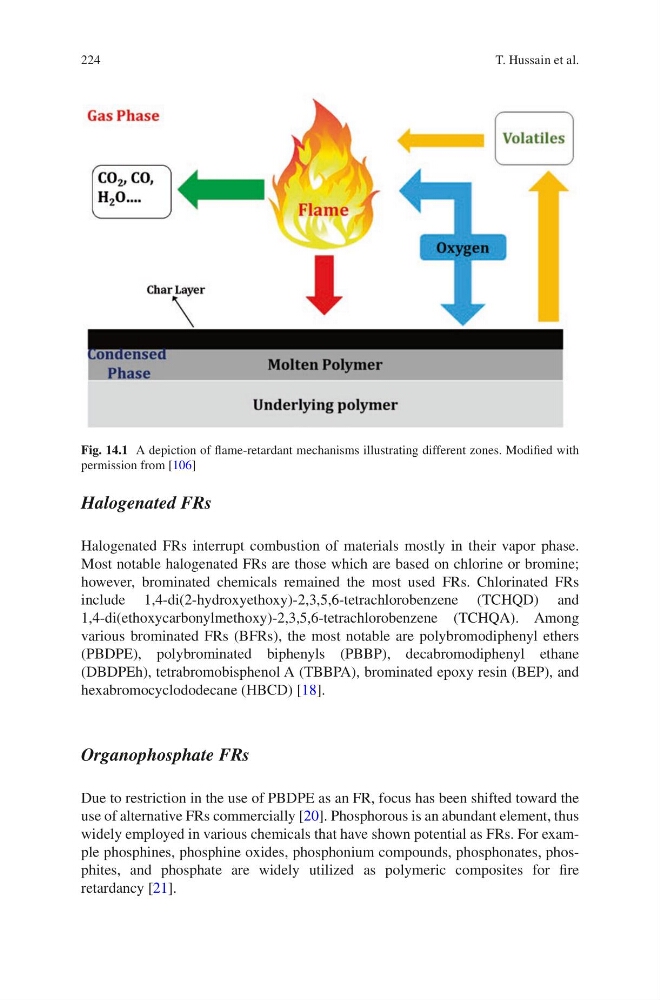
Fig. 14.1 A depiction of flame-retardant mechanisms illustrating different zones. Modified with
permission from [106]
T. Hussain et al.
Halogenated FRs
Halogenated FRs interrupt combustion of materials mostly in their vapor phase.
Most notable halogenated FRs are those which are based on chlorine or bromine;
however, brominated chemicals remained the most used FRs. Chlorinated FRs
include 1,4-di(2-hydroxyethoxy)-2,3,5,6-tetrachlorobenzene (TCHQD) and
1,4-di(ethoxycarbonylmethoxy)-2,3,5,6-tetrachlorobenzene (TCHQA). Among
various brominated FRs (BFRs), the most notable are polybromodiphenyl ethers
(PBDPE), polybrominated biphenyls (PBBP), decabromodiphenyl ethane
(DBDPEh), tetrabromobisphenol A (TBBPA), brominated epoxy resin (BEP), and
hexabromocyclododecane (HBCD) [18].
Organophosphate FRs
Due to restriction in the use of PBDPE as an FR, focus has been shifted toward the
use of alternative FRs commercially [20]. Phosphorous is an abundant element, thus
widely employed in various chemicals that have shown potential as FRs. For example phosphines, phosphine oxides, phosphonium compounds, phosphonates, phosphites, and phosphate are widely utilized as polymeric composites for fire
retardancy [21].
Fig. 14.1 A depiction of flame-retardant mechanisms illustrating different zones. Modified with
permission from [106]
T. Hussain et al.