

151
organotin, and non-steroidal estrogens. The aforementioned EDCs can be the cause
of obesity through affecting one of these traits:
• Hyperplasia or hypertrophy of adipose tissues
• Abnormality in adipocyte functioning
• Induction of hyperlipidemia
• Interruption in hormonal mechanism
• Enhanced preadipocyte differentiation
• Increased adipogenic differentiation of mesenchymal stem cells [19]
Association of Endocrine Disrupting Chemicals
with Childhood Obesity
Childhood Obesity
According to Centers for Disease Control and Prevention (CDC), obesity in children is defined as “BMI greater or equal to 95th percentile for children and teens of
the same age and sex,” whereas overweight is defined as “BMI greater or equal to
85th percentile and less than 95th percentile for children and teens of the same age
and sex.” Globally obesity and overweight are considered to be the fifth leading
cause of death in children [20]. Considering WHO statistics, the number of obese
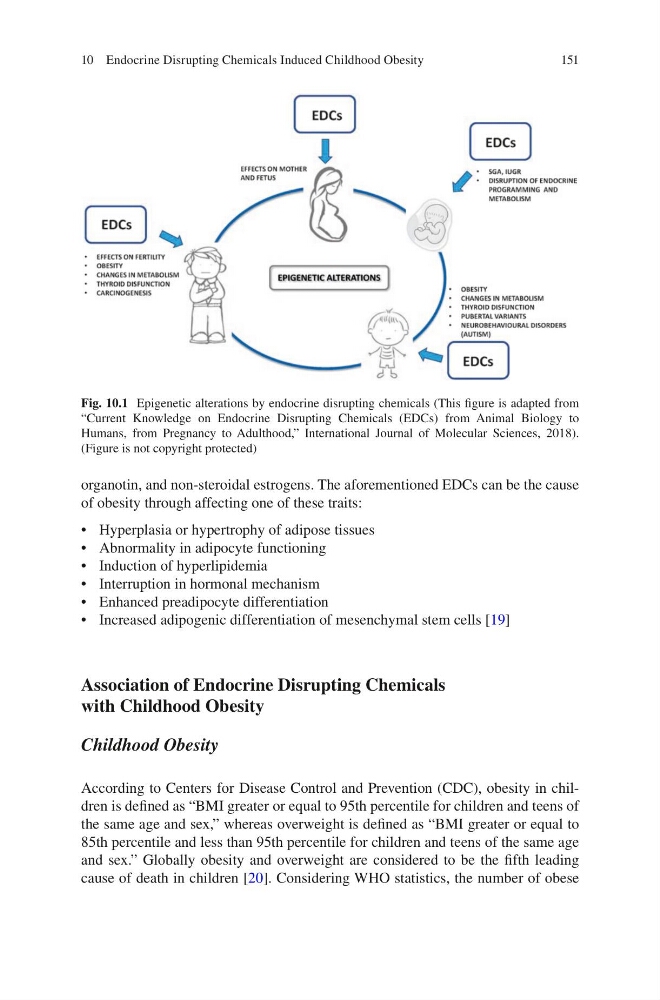
Fig. 10.1 Epigenetic alterations by endocrine disrupting chemicals (This figure is adapted from
“Current Knowledge on Endocrine Disrupting Chemicals (EDCs) from Animal Biology to
Humans, from Pregnancy to Adulthood,” International Journal of Molecular Sciences, 2018).
(Figure is not copyright protected)
10 Endocrine Disrupting Chemicals Induced Childhood Obesity
organotin, and non-steroidal estrogens. The aforementioned EDCs can be the cause
of obesity through affecting one of these traits:
• Hyperplasia or hypertrophy of adipose tissues
• Abnormality in adipocyte functioning
• Induction of hyperlipidemia
• Interruption in hormonal mechanism
• Enhanced preadipocyte differentiation
• Increased adipogenic differentiation of mesenchymal stem cells [19]
Association of Endocrine Disrupting Chemicals
with Childhood Obesity
Childhood Obesity
According to Centers for Disease Control and Prevention (CDC), obesity in children is defined as “BMI greater or equal to 95th percentile for children and teens of
the same age and sex,” whereas overweight is defined as “BMI greater or equal to
85th percentile and less than 95th percentile for children and teens of the same age
and sex.” Globally obesity and overweight are considered to be the fifth leading
cause of death in children [20]. Considering WHO statistics, the number of obese
Fig. 10.1 Epigenetic alterations by endocrine disrupting chemicals (This figure is adapted from
“Current Knowledge on Endocrine Disrupting Chemicals (EDCs) from Animal Biology to
Humans, from Pregnancy to Adulthood,” International Journal of Molecular Sciences, 2018).
(Figure is not copyright protected)
10 Endocrine Disrupting Chemicals Induced Childhood Obesity