

108
Thyroid Dysfunction and Bone Metabolism
Increased levels of thyroid hormones result in the increased risk of fractures. It
causes a marked increase in the levels of interleukin-6 (IL-6), which stimulates
osteoclasts formation and ultimate less bone mineral density. This impaired bone
metabolism is further aggravated by hyperthyroidism induced changes in calcium
homeostasis with resultant negative calcium balance, hypercalcaemia and hypercalciuria [24]. Subclinical hyperthyroidism causes decreased bone mineral density in
males and females after menopause. Hypothyroidism is also believed to have detrimental effect on bone mineral density although the underlying mechanism is not
clear [24, 25].
Conclusion
Thyroid hormones regulate the cellular and intracellular functions of body by playing an important role in normal metabolic pathways. It is important to note that a
bidirectional relationship exists between thyroid dysfunction and metabolic disorders such as obesity and diabetes. Obesity results in increased TRH and TSH,
while diabetes causes decreased TRH response and TSH level. Insulin resistance in
binding of LDL to
LDL-receptors
number of
LDL-receptors
Hypothyroidism
degradation of LDL
in fibroblasts
reaidence
in serum
foam cell
generation
susceptibility
oxidation
expression mRNA
LDL-receptors
t1/2 LDL
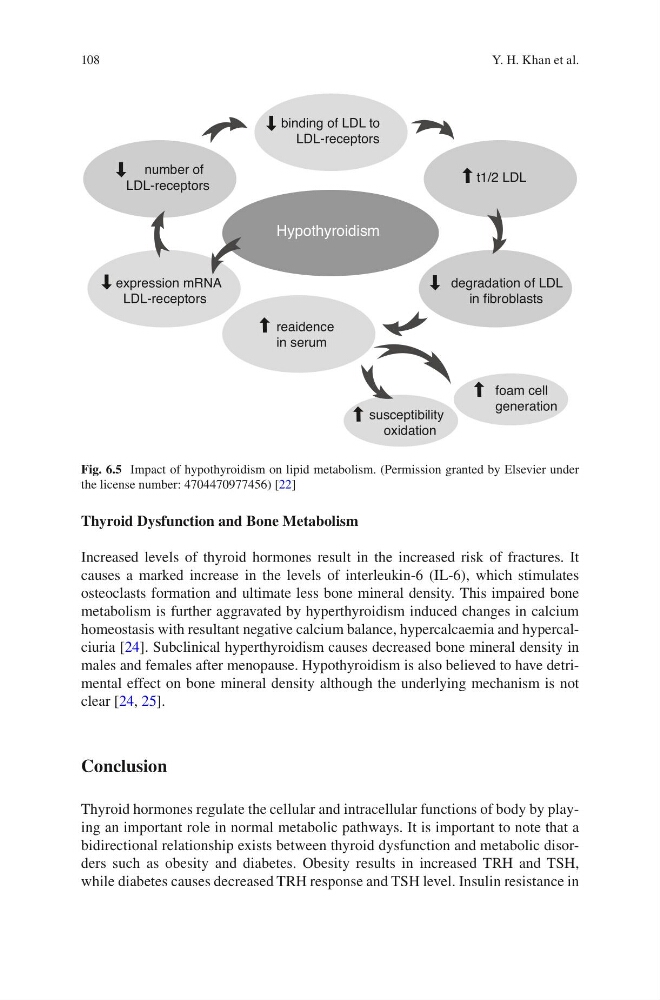
Fig. 6.5 Impact of hypothyroidism on lipid metabolism. (Permission granted by Elsevier under
the license number: 4704470977456) [22]
Y. H. Khan et al.
Thyroid Dysfunction and Bone Metabolism
Increased levels of thyroid hormones result in the increased risk of fractures. It
causes a marked increase in the levels of interleukin-6 (IL-6), which stimulates
osteoclasts formation and ultimate less bone mineral density. This impaired bone
metabolism is further aggravated by hyperthyroidism induced changes in calcium
homeostasis with resultant negative calcium balance, hypercalcaemia and hypercalciuria [24]. Subclinical hyperthyroidism causes decreased bone mineral density in
males and females after menopause. Hypothyroidism is also believed to have detrimental effect on bone mineral density although the underlying mechanism is not
clear [24, 25].
Conclusion
Thyroid hormones regulate the cellular and intracellular functions of body by playing an important role in normal metabolic pathways. It is important to note that a
bidirectional relationship exists between thyroid dysfunction and metabolic disorders such as obesity and diabetes. Obesity results in increased TRH and TSH,
while diabetes causes decreased TRH response and TSH level. Insulin resistance in
binding of LDL to
LDL-receptors
number of
LDL-receptors
Hypothyroidism
degradation of LDL
in fibroblasts
reaidence
in serum
foam cell
generation
susceptibility
oxidation
expression mRNA
LDL-receptors
t1/2 LDL
Fig. 6.5 Impact of hypothyroidism on lipid metabolism. (Permission granted by Elsevier under
the license number: 4704470977456) [22]
Y. H. Khan et al.