

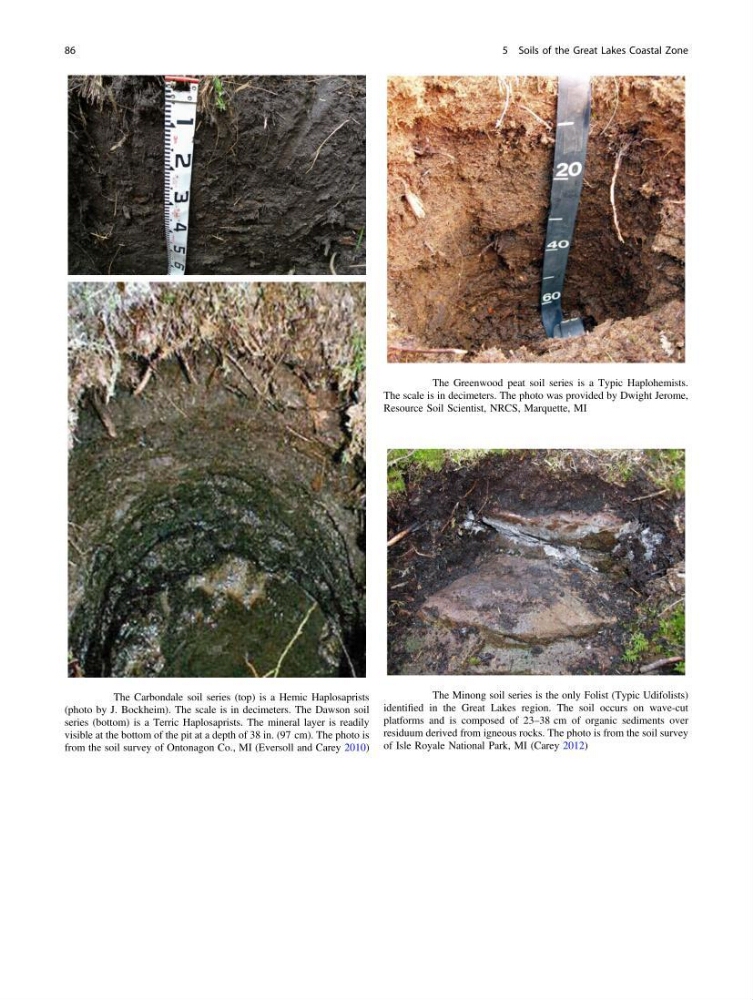
Fig. 5.22 The Carbondale soil series (top) is a Hemic Haplosaprists
(photo by J. Bockheim). The scale is in decimeters. The Dawson soil
series (bottom) is a Terric Haplosaprists. The mineral layer is readily
visible at the bottom of the pit at a depth of 38 in. (97 cm). The photo is
from the soil survey of Ontonagon Co., MI (Eversoll and Carey 2010)
Fig. 5.23 The Greenwood peat soil series is a Typic Haplohemists.
The scale is in decimeters. The photo was provided by Dwight Jerome,
Resource Soil Scientist, NRCS, Marquette, MI
Fig. 5.24 The Minong soil series is the only Folist (Typic Udifolists)
identified in the Great Lakes region. The soil occurs on wave-cut
platforms and is composed of 23–38 cm of organic sediments over
residuum derived from igneous rocks. The photo is from the soil survey
of Isle Royale National Park, MI (Carey 2012)
86
5 Soils of the Great Lakes Coastal Zone
(photo by J. Bockheim). The scale is in decimeters. The Dawson soil
series (bottom) is a Terric Haplosaprists. The mineral layer is readily
visible at the bottom of the pit at a depth of 38 in. (97 cm). The photo is
from the soil survey of Ontonagon Co., MI (Eversoll and Carey 2010)
Fig. 5.23 The Greenwood peat soil series is a Typic Haplohemists.
The scale is in decimeters. The photo was provided by Dwight Jerome,
Resource Soil Scientist, NRCS, Marquette, MI
Fig. 5.24 The Minong soil series is the only Folist (Typic Udifolists)
identified in the Great Lakes region. The soil occurs on wave-cut
platforms and is composed of 23–38 cm of organic sediments over
residuum derived from igneous rocks. The photo is from the soil survey
of Isle Royale National Park, MI (Carey 2012)
86
5 Soils of the Great Lakes Coastal Zone