

(Oi horizon) over hemic materials (intermediate stage of
decomposition) that extend beyond 24 in. (60 cm).
The Minong soil series (Fig. 5.24) is the only Folist
identified in the Great Lakes region. Classified as a Lithic
Udifolists. The Minong soil series occurs only on Isle
Royale and is derived from organic materials that have
accumulated since the Nipissing lake stage on wave-cut
platforms. The Minong profile has 12 in. (30 cm) of brown
organic materials over igneous bedrock.
Histosols in the GLCZ most commonly (69%) have a
frigid soil-temperature regime; the remaining soil series
(31%) occur in the mesic soil-temperature class. More than
three-quarters (77%) of the Histosols are in the euic soil
reaction class, meaning that they have a pH of 4.5 or more;
the remaining Histosols are dysic, i.e., they have a lower pH.
The most common vegetation on Great Lakes Histosols is
lowland mixed forest (50%), followed by roughly equal
amounts of lowland conifer forest, lowland broad-leaved
forests, and nonforested wetlands. The parent materials are
organic materials that range from 40 to over 200 cm in
thickness. The most common landforms are lake
terraces-plains (77%) and glacial lake benches (15%). Histosols require a minimum of 5.3 kyr to form but are most
common on surfaces that are either 11.2 or 12.4 kyr in age
(see Figs. 4.16 and 4.17).
Analytical data for soil series representative of the three
great groups of Histosols in the GLCZ are provided in
Table 5.6. The key property is the presence of organic
materials that are at least 40 cm thick. Haplosaprists contain
highly decomposed organic remains (sapric materials), and
Haplohemists contain a predominance of materials intermediate in decomposition stage (hemic materials). Histosols
in Terric subgroups have a mineral layer 30 cm thick
within the control section (normally the upper 130 to
160 cm). All of the Histosol pedons in Table 5.6 are euic,
meaning that they have a pH of 4.5 (dysic is less
than 4.5).
5.8
Conclusions
In this chapter, the beauty and diversity of soils in the Great
Lakes Coastal Zone is richly illustrated by digital images of
soil profiles representative of Alfisols, Spodosols, Inceptisols, Entisols, Mollisols, and Histosols. The soil horizons
and taxa are readily evidenced by differences in color,
structure, redoximorphic features, glossic features, and secondary carbonates.
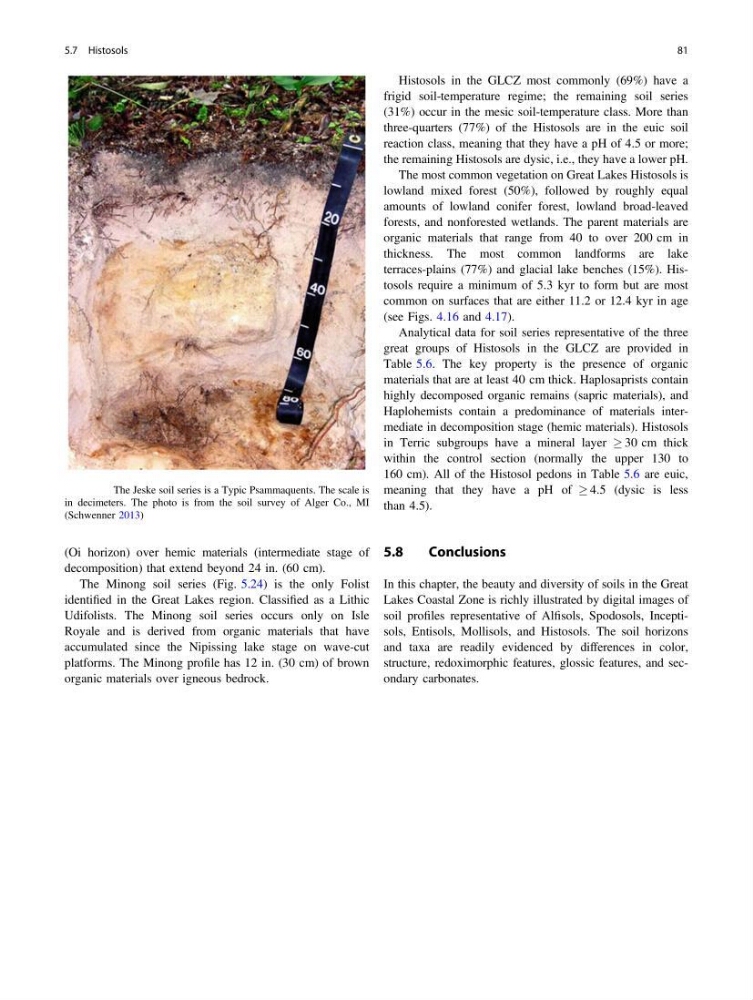
Fig. 5.18 The Jeske soil series is a Typic Psammaquents. The scale is
in decimeters. The photo is from the soil survey of Alger Co., MI
(Schwenner 2013)
5.7 Histosols
81
decomposition) that extend beyond 24 in. (60 cm).
The Minong soil series (Fig. 5.24) is the only Folist
identified in the Great Lakes region. Classified as a Lithic
Udifolists. The Minong soil series occurs only on Isle
Royale and is derived from organic materials that have
accumulated since the Nipissing lake stage on wave-cut
platforms. The Minong profile has 12 in. (30 cm) of brown
organic materials over igneous bedrock.
Histosols in the GLCZ most commonly (69%) have a
frigid soil-temperature regime; the remaining soil series
(31%) occur in the mesic soil-temperature class. More than
three-quarters (77%) of the Histosols are in the euic soil
reaction class, meaning that they have a pH of 4.5 or more;
the remaining Histosols are dysic, i.e., they have a lower pH.
The most common vegetation on Great Lakes Histosols is
lowland mixed forest (50%), followed by roughly equal
amounts of lowland conifer forest, lowland broad-leaved
forests, and nonforested wetlands. The parent materials are
organic materials that range from 40 to over 200 cm in
thickness. The most common landforms are lake
terraces-plains (77%) and glacial lake benches (15%). Histosols require a minimum of 5.3 kyr to form but are most
common on surfaces that are either 11.2 or 12.4 kyr in age
(see Figs. 4.16 and 4.17).
Analytical data for soil series representative of the three
great groups of Histosols in the GLCZ are provided in
Table 5.6. The key property is the presence of organic
materials that are at least 40 cm thick. Haplosaprists contain
highly decomposed organic remains (sapric materials), and
Haplohemists contain a predominance of materials intermediate in decomposition stage (hemic materials). Histosols
in Terric subgroups have a mineral layer 30 cm thick
within the control section (normally the upper 130 to
160 cm). All of the Histosol pedons in Table 5.6 are euic,
meaning that they have a pH of 4.5 (dysic is less
than 4.5).
5.8
Conclusions
In this chapter, the beauty and diversity of soils in the Great
Lakes Coastal Zone is richly illustrated by digital images of
soil profiles representative of Alfisols, Spodosols, Inceptisols, Entisols, Mollisols, and Histosols. The soil horizons
and taxa are readily evidenced by differences in color,
structure, redoximorphic features, glossic features, and secondary carbonates.
Fig. 5.18 The Jeske soil series is a Typic Psammaquents. The scale is
in decimeters. The photo is from the soil survey of Alger Co., MI
(Schwenner 2013)
5.7 Histosols
81