

visible in Fig. 5.21), an OC 0.6%, and a base
saturation 50%.
5.7
Histosols
Histosols are the least abundant of the six soil orders present
in the GLCZ. These soils occur most commonly on Lakes
Superior, Michigan, and Huron and least commonly on
Lakes Erie and Ontario. All of the 26 soil series except the
Minong series are in wetlands. The great groups are distributed Haplosaprists (81%), Haplohemists (15%), and
Udifolists (4%).
Extensive Haplosaprists include the Cathro, Tawas,
Lupton, Carbondale, Markey, Dawson, Houghton, and
Carlisle soil series. The Carbondale and Dawson mucks are
shown in Fig. 5.22. The Carbondale soil series (Fig. 5.22a)
is a Hemic Haplosaprists with a sapric horizon (Oa) to 24 in.
(60 cm) (bottom of tape). The Dawson soil series
(Fig. 5.22b) is a Terric Haplosaprists with a dark reddish
brown Oi horizon to 8 in. (20 cm), a black Oa to 38 in.
(97 cm), and an A horizon at the bottom of the pit.
The Rifle soil series is the most common Haplohemists.
The Greenwood peat also is a Typic Haplohemist that occurs
around Lakes Superior, Michigan, and Michigan (Fig. 5.23).
The Greenwood peat contains 6 in. (15 cm) of fibric material
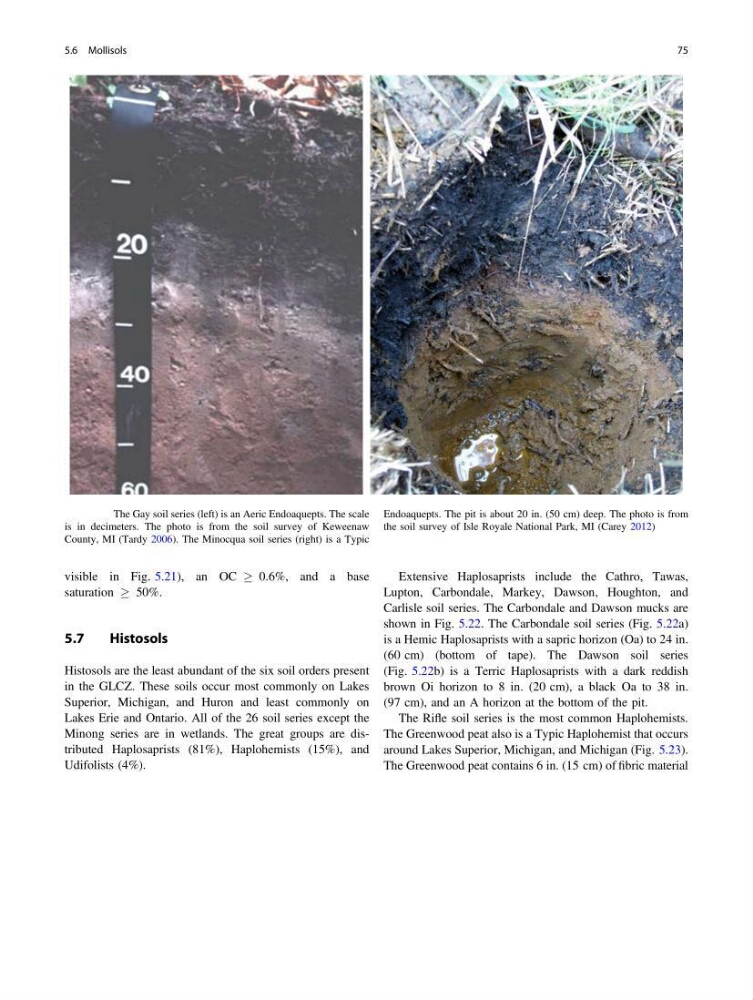
Fig. 5.12 The Gay soil series (left) is an Aeric Endoaquepts. The scale
is in decimeters. The photo is from the soil survey of Keweenaw
County, MI (Tardy 2006). The Minocqua soil series (right) is a Typic
Endoaquepts. The pit is about 20 in. (50 cm) deep. The photo is from
the soil survey of Isle Royale National Park, MI (Carey 2012)
5.6 Mollisols
75
saturation 50%.
5.7
Histosols
Histosols are the least abundant of the six soil orders present
in the GLCZ. These soils occur most commonly on Lakes
Superior, Michigan, and Huron and least commonly on
Lakes Erie and Ontario. All of the 26 soil series except the
Minong series are in wetlands. The great groups are distributed Haplosaprists (81%), Haplohemists (15%), and
Udifolists (4%).
Extensive Haplosaprists include the Cathro, Tawas,
Lupton, Carbondale, Markey, Dawson, Houghton, and
Carlisle soil series. The Carbondale and Dawson mucks are
shown in Fig. 5.22. The Carbondale soil series (Fig. 5.22a)
is a Hemic Haplosaprists with a sapric horizon (Oa) to 24 in.
(60 cm) (bottom of tape). The Dawson soil series
(Fig. 5.22b) is a Terric Haplosaprists with a dark reddish
brown Oi horizon to 8 in. (20 cm), a black Oa to 38 in.
(97 cm), and an A horizon at the bottom of the pit.
The Rifle soil series is the most common Haplohemists.
The Greenwood peat also is a Typic Haplohemist that occurs
around Lakes Superior, Michigan, and Michigan (Fig. 5.23).
The Greenwood peat contains 6 in. (15 cm) of fibric material
Fig. 5.12 The Gay soil series (left) is an Aeric Endoaquepts. The scale
is in decimeters. The photo is from the soil survey of Keweenaw
County, MI (Tardy 2006). The Minocqua soil series (right) is a Typic
Endoaquepts. The pit is about 20 in. (50 cm) deep. The photo is from
the soil survey of Isle Royale National Park, MI (Carey 2012)
5.6 Mollisols
75