

the shovel), and a brown C horizon from 40 in. (102 cm) to
the base of the pit.
The Cuttre and Londo soil series are commonly occurring
Glossaqualfs, especially around Lakes Superior and Huron.
The Cuttre soil series is an Aeric Glossaqualfs (Fig. 5.5).
The Cuttre soil is derived from clayey till and has a dark
reddish brown A horizon from 0 to 3 in. (0–8 cm) (the rule is
in inches), a glossic horizon (E/B and B/E) with brown
(B) and pinkish gray (E) zones from 3 to 12 in. (8–30 cm),
and dark reddish brown Bt horizons from 12 in. (30 cm) to
the bottom of the pit. The whitish color between 22 and 44
in. (56–110 cm) are soft masses of calcium carbonate.
More than two-thirds (70%) of the Alfisol soil series have
a mesic soil-temperature regime; the remaining 30% are in
the frigid soil-temperature class (see Fig. 4.4). Nearly half
(49%) of the Alfisol soil series are in loamy particle-size
classes and 37% are in clayey (clayey, fine, very-fine)
classes. Alfisols in the GLCZ invariably have a mixed
mineralogy (84%); 16% contain primarily illite. Nearly two
thirds (63%) of the Alfisols are in active or superactive
cation-exchange capacity activity classes.
Alfisols in the GLCZ feature mainly temperate broadleaved forest (58% of soil series) or temperate mixed coniferous and broad-leaved forest (34%). The parent materials are
primarily till (43%), lacustrine-glaciolacustrine (40%), and
outwash (11%). The landforms featuring Alfisols are primarily till plains (48%) and lake plains (40%). Alfisols occur on
landforms that are 11.2 kyr in age or more (see Fig. 4.6).
a
b
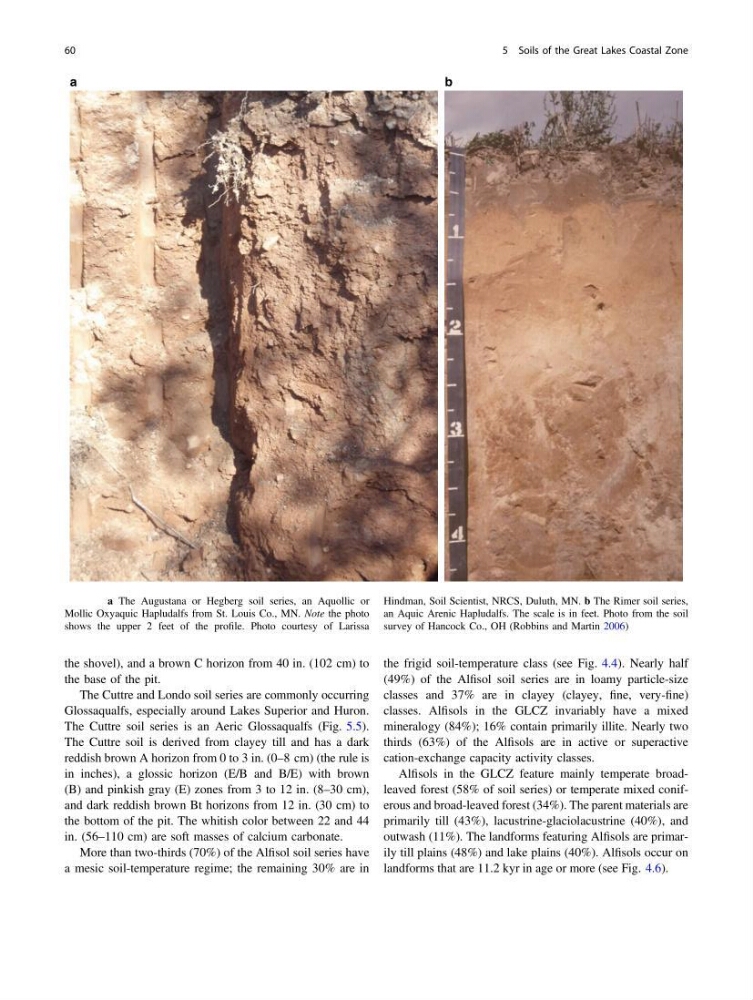
Fig. 5.1 a The Augustana or Hegberg soil series, an Aquollic or
Mollic Oxyaquic Hapludalfs from St. Louis Co., MN. Note the photo
shows the upper 2 feet of the profile. Photo courtesy of Larissa
Hindman, Soil Scientist, NRCS, Duluth, MN. b The Rimer soil series,
an Aquic Arenic Hapludalfs. The scale is in feet. Photo from the soil
survey of Hancock Co., OH (Robbins and Martin 2006)
60
5 Soils of the Great Lakes Coastal Zone
the base of the pit.
The Cuttre and Londo soil series are commonly occurring
Glossaqualfs, especially around Lakes Superior and Huron.
The Cuttre soil series is an Aeric Glossaqualfs (Fig. 5.5).
The Cuttre soil is derived from clayey till and has a dark
reddish brown A horizon from 0 to 3 in. (0–8 cm) (the rule is
in inches), a glossic horizon (E/B and B/E) with brown
(B) and pinkish gray (E) zones from 3 to 12 in. (8–30 cm),
and dark reddish brown Bt horizons from 12 in. (30 cm) to
the bottom of the pit. The whitish color between 22 and 44
in. (56–110 cm) are soft masses of calcium carbonate.
More than two-thirds (70%) of the Alfisol soil series have
a mesic soil-temperature regime; the remaining 30% are in
the frigid soil-temperature class (see Fig. 4.4). Nearly half
(49%) of the Alfisol soil series are in loamy particle-size
classes and 37% are in clayey (clayey, fine, very-fine)
classes. Alfisols in the GLCZ invariably have a mixed
mineralogy (84%); 16% contain primarily illite. Nearly two
thirds (63%) of the Alfisols are in active or superactive
cation-exchange capacity activity classes.
Alfisols in the GLCZ feature mainly temperate broadleaved forest (58% of soil series) or temperate mixed coniferous and broad-leaved forest (34%). The parent materials are
primarily till (43%), lacustrine-glaciolacustrine (40%), and
outwash (11%). The landforms featuring Alfisols are primarily till plains (48%) and lake plains (40%). Alfisols occur on
landforms that are 11.2 kyr in age or more (see Fig. 4.6).
a
b
Fig. 5.1 a The Augustana or Hegberg soil series, an Aquollic or
Mollic Oxyaquic Hapludalfs from St. Louis Co., MN. Note the photo
shows the upper 2 feet of the profile. Photo courtesy of Larissa
Hindman, Soil Scientist, NRCS, Duluth, MN. b The Rimer soil series,
an Aquic Arenic Hapludalfs. The scale is in feet. Photo from the soil
survey of Hancock Co., OH (Robbins and Martin 2006)
60
5 Soils of the Great Lakes Coastal Zone