

Breypen, and Osprey soil series), Hapudalfs (Vincent,
Vasey, and Tioga), Endo-, Epiaquepts (Lily and Gwillbury),
Endo-, Epiaquolls (Wiarton and Parkhill), Humaquepts
(Elderslie), Endo-, Epiaqualfs (Brisbane), and Dystrudepts
(Wyevale). Stabilized dunes supporting Udipsamments
(Eastport soil series) occur along Nottawasaga Bay.
The last segment, which extends from Port Elgin to
Sarnia, contains silty and loamy till, glaciolacustrine sediments, and some sandy stabilized dunes (Fig. 8.9). The
dominant soils great groups are Endo-, Epiaqualfs (Brady,
Brisbane, Listowel, and Perth soil series), Hapludalfs (Fox,
Plainfield, and Waterloo), Hapludolls (Sargent and Sullivan),
Endo-, Epiaquolls (Kemble and Toledo), along with Eutrudepts (Brighton), Humaquepts (Elderslie), and Endo-, Epiaquepts (Brookston). Udipsamments (Eastport) occupy
beach ridges and stabilized sand dunes. Major sand-dune
areas occur at Pinery Provincial Park and Lambton Shores.
8.3
Conclusions
The Lake Huron Coastal Zone can be divided into eight
natural resource segments. Haplorthods are the dominant
soil great group, followed by Haplosaprists, Endoaquods,
Endoaquolls, and Eutrudepts. These soils occur primarily on
lacustrine deposits with textures ranging from sandy to
clayey and varying thicknesses of sandy loam till. Bedrock
commonly occurs near the surface in soils around Georgian
Bay. The soils are used for forestry and agriculture.
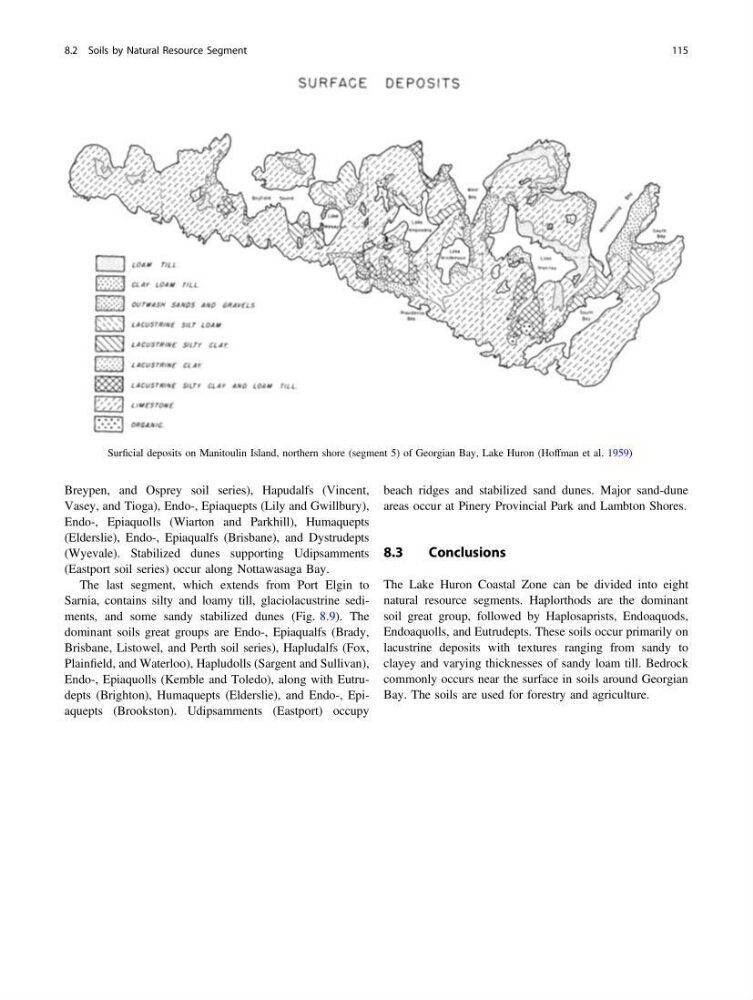
Fig. 8.6 Surficial deposits on Manitoulin Island, northern shore (segment 5) of Georgian Bay, Lake Huron (Hoffman et al. 1959)
8.2 Soils by Natural Resource Segment
115
Vasey, and Tioga), Endo-, Epiaquepts (Lily and Gwillbury),
Endo-, Epiaquolls (Wiarton and Parkhill), Humaquepts
(Elderslie), Endo-, Epiaqualfs (Brisbane), and Dystrudepts
(Wyevale). Stabilized dunes supporting Udipsamments
(Eastport soil series) occur along Nottawasaga Bay.
The last segment, which extends from Port Elgin to
Sarnia, contains silty and loamy till, glaciolacustrine sediments, and some sandy stabilized dunes (Fig. 8.9). The
dominant soils great groups are Endo-, Epiaqualfs (Brady,
Brisbane, Listowel, and Perth soil series), Hapludalfs (Fox,
Plainfield, and Waterloo), Hapludolls (Sargent and Sullivan),
Endo-, Epiaquolls (Kemble and Toledo), along with Eutrudepts (Brighton), Humaquepts (Elderslie), and Endo-, Epiaquepts (Brookston). Udipsamments (Eastport) occupy
beach ridges and stabilized sand dunes. Major sand-dune
areas occur at Pinery Provincial Park and Lambton Shores.
8.3
Conclusions
The Lake Huron Coastal Zone can be divided into eight
natural resource segments. Haplorthods are the dominant
soil great group, followed by Haplosaprists, Endoaquods,
Endoaquolls, and Eutrudepts. These soils occur primarily on
lacustrine deposits with textures ranging from sandy to
clayey and varying thicknesses of sandy loam till. Bedrock
commonly occurs near the surface in soils around Georgian
Bay. The soils are used for forestry and agriculture.
Fig. 8.6 Surficial deposits on Manitoulin Island, northern shore (segment 5) of Georgian Bay, Lake Huron (Hoffman et al. 1959)
8.2 Soils by Natural Resource Segment
115