

80
S. H. Sadeghi and E. Sharifi Moghadam
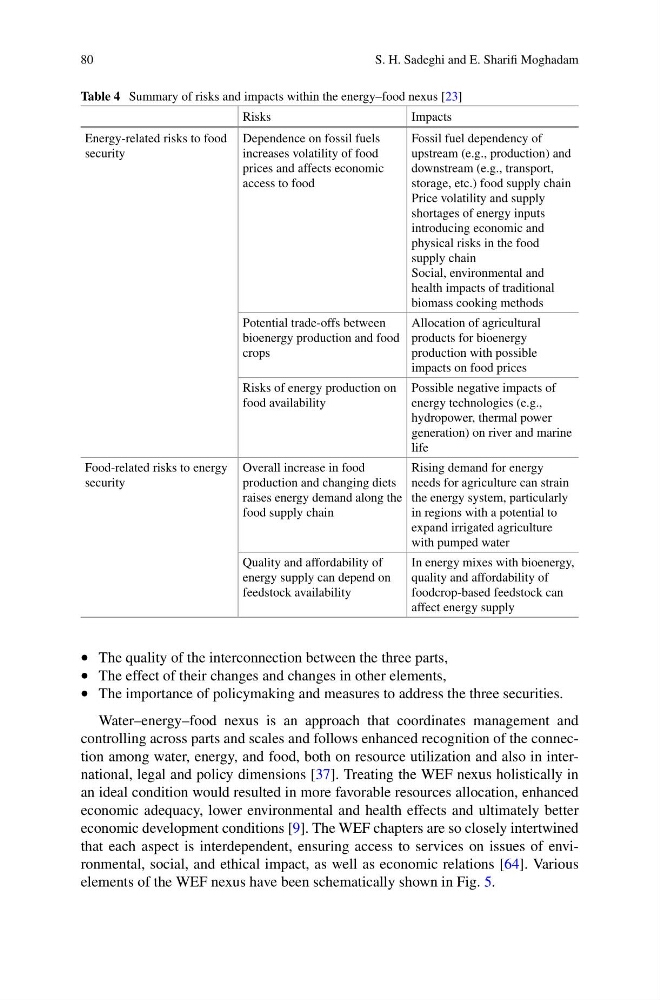
Table 4 Summary of risks and impacts within the energy–food nexus [23]
Risks
Impacts
Energy-related risks to food
security
Dependence on fossil fuels
increases volatility of food
prices and affects economic
access to food
Fossil fuel dependency of
upstream (e.g., production) and
downstream (e.g., transport,
storage, etc.) food supply chain
Price volatility and supply
shortages of energy inputs
introducing economic and
physical risks in the food
supply chain
Social, environmental and
health impacts of traditional
biomass cooking methods
Potential trade-offs between
bioenergy production and food
crops
Allocation of agricultural
products for bioenergy
production with possible
impacts on food prices
Risks of energy production on
food availability
Possible negative impacts of
energy technologies (e.g.,
hydropower, thermal power
generation) on river and marine
life
Food-related risks to energy
security
Overall increase in food
production and changing diets
raises energy demand along the
food supply chain
Rising demand for energy
needs for agriculture can strain
the energy system, particularly
in regions with a potential to
expand irrigated agriculture
with pumped water
Quality and affordability of
energy supply can depend on
feedstock availability
In energy mixes with bioenergy,
quality and affordability of
foodcrop-based feedstock can
affect energy supply
• The quality of the interconnection between the three parts,
• The effect of their changes and changes in other elements,
• The importance of policymaking and measures to address the three securities.
Water–energy–food nexus is an approach that coordinates management and
controlling across parts and scales and follows enhanced recognition of the connection among water, energy, and food, both on resource utilization and also in international, legal and policy dimensions [37]. Treating the WEF nexus holistically in
an ideal condition would resulted in more favorable resources allocation, enhanced
economic adequacy, lower environmental and health effects and ultimately better
economic development conditions [9]. The WEF chapters are so closely intertwined
that each aspect is interdependent, ensuring access to services on issues of environmental, social, and ethical impact, as well as economic relations [64]. Various
elements of the WEF nexus have been schematically shown in Fig. 5.
S. H. Sadeghi and E. Sharifi Moghadam
Table 4 Summary of risks and impacts within the energy–food nexus [23]
Risks
Impacts
Energy-related risks to food
security
Dependence on fossil fuels
increases volatility of food
prices and affects economic
access to food
Fossil fuel dependency of
upstream (e.g., production) and
downstream (e.g., transport,
storage, etc.) food supply chain
Price volatility and supply
shortages of energy inputs
introducing economic and
physical risks in the food
supply chain
Social, environmental and
health impacts of traditional
biomass cooking methods
Potential trade-offs between
bioenergy production and food
crops
Allocation of agricultural
products for bioenergy
production with possible
impacts on food prices
Risks of energy production on
food availability
Possible negative impacts of
energy technologies (e.g.,
hydropower, thermal power
generation) on river and marine
life
Food-related risks to energy
security
Overall increase in food
production and changing diets
raises energy demand along the
food supply chain
Rising demand for energy
needs for agriculture can strain
the energy system, particularly
in regions with a potential to
expand irrigated agriculture
with pumped water
Quality and affordability of
energy supply can depend on
feedstock availability
In energy mixes with bioenergy,
quality and affordability of
foodcrop-based feedstock can
affect energy supply
• The quality of the interconnection between the three parts,
• The effect of their changes and changes in other elements,
• The importance of policymaking and measures to address the three securities.
Water–energy–food nexus is an approach that coordinates management and
controlling across parts and scales and follows enhanced recognition of the connection among water, energy, and food, both on resource utilization and also in international, legal and policy dimensions [37]. Treating the WEF nexus holistically in
an ideal condition would resulted in more favorable resources allocation, enhanced
economic adequacy, lower environmental and health effects and ultimately better
economic development conditions [9]. The WEF chapters are so closely intertwined
that each aspect is interdependent, ensuring access to services on issues of environmental, social, and ethical impact, as well as economic relations [64]. Various
elements of the WEF nexus have been schematically shown in Fig. 5.