

Reflections About the Food–Energy–Water Nexus in a World …
17
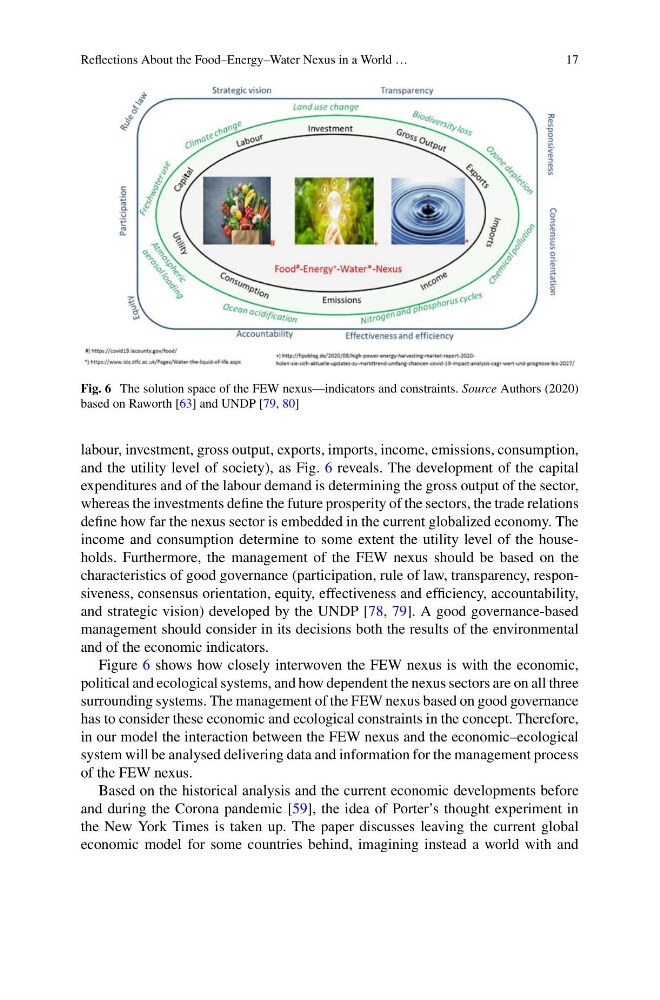
Fig. 6 The solution space of the FEW nexus—indicators and constraints. Source Authors (2020)
based on Raworth [63] and UNDP [79, 80]
labour, investment, gross output, exports, imports, income, emissions, consumption,
and the utility level of society), as Fig. 6 reveals. The development of the capital
expenditures and of the labour demand is determining the gross output of the sector,
whereas the investments define the future prosperity of the sectors, the trade relations
define how far the nexus sector is embedded in the current globalized economy. The
income and consumption determine to some extent the utility level of the households. Furthermore, the management of the FEW nexus should be based on the
characteristics of good governance (participation, rule of law, transparency, responsiveness, consensus orientation, equity, effectiveness and efficiency, accountability,
and strategic vision) developed by the UNDP [78, 79]. A good governance-based
management should consider in its decisions both the results of the environmental
and of the economic indicators.
Figure 6 shows how closely interwoven the FEW nexus is with the economic,
political and ecological systems, and how dependent the nexus sectors are on all three
surrounding systems. The management of the FEW nexus based on good governance
has to consider these economic and ecological constraints in the concept. Therefore,
in our model the interaction between the FEW nexus and the economic–ecological
system will be analysed delivering data and information for the management process
of the FEW nexus.
Based on the historical analysis and the current economic developments before
and during the Corona pandemic [59], the idea of Porter’s thought experiment in
the New York Times is taken up. The paper discusses leaving the current global
economic model for some countries behind, imagining instead a world with and
17
Fig. 6 The solution space of the FEW nexus—indicators and constraints. Source Authors (2020)
based on Raworth [63] and UNDP [79, 80]
labour, investment, gross output, exports, imports, income, emissions, consumption,
and the utility level of society), as Fig. 6 reveals. The development of the capital
expenditures and of the labour demand is determining the gross output of the sector,
whereas the investments define the future prosperity of the sectors, the trade relations
define how far the nexus sector is embedded in the current globalized economy. The
income and consumption determine to some extent the utility level of the households. Furthermore, the management of the FEW nexus should be based on the
characteristics of good governance (participation, rule of law, transparency, responsiveness, consensus orientation, equity, effectiveness and efficiency, accountability,
and strategic vision) developed by the UNDP [78, 79]. A good governance-based
management should consider in its decisions both the results of the environmental
and of the economic indicators.
Figure 6 shows how closely interwoven the FEW nexus is with the economic,
political and ecological systems, and how dependent the nexus sectors are on all three
surrounding systems. The management of the FEW nexus based on good governance
has to consider these economic and ecological constraints in the concept. Therefore,
in our model the interaction between the FEW nexus and the economic–ecological
system will be analysed delivering data and information for the management process
of the FEW nexus.
Based on the historical analysis and the current economic developments before
and during the Corona pandemic [59], the idea of Porter’s thought experiment in
the New York Times is taken up. The paper discusses leaving the current global
economic model for some countries behind, imagining instead a world with and