

The Social Network Analysis to Study Discourse …
135
Janeiro, and then updated with data published up to December 2019, provided by the
University of São Paulo. All this data constitutes our corpus for the analysis. In this
study, we used T-Lab to lemmatization, text treatment and adjacent matrix creation
to network analysis, and SocneTv to network visualization. There are several other
open-source software packages that can be used, for example, Iramuteq or Unicet.
This type of analysis of documents from different social actors has been important
to unveil conditions that corroborate certain reductionism regarding the inherent
complexity of productive chains. For example, although bioenergy production alone
is really important as a global guideline for reducing GHG emissions, this segment
may be developing in a way that ignores water scarcity or inherent trade-offs and
competition with land demand for food production. In this sense, this study explored
hypotheses regarding the distinct roles and discourses of different social actors (such
as media, government, and companies). It can contribute to understand of the need
to identify insufficient discourses, which in turn correspond to incomplete (or even
competing) agendas in the face of the breadth and interdependence that must be
recognized in the pursuit of sustainable development.
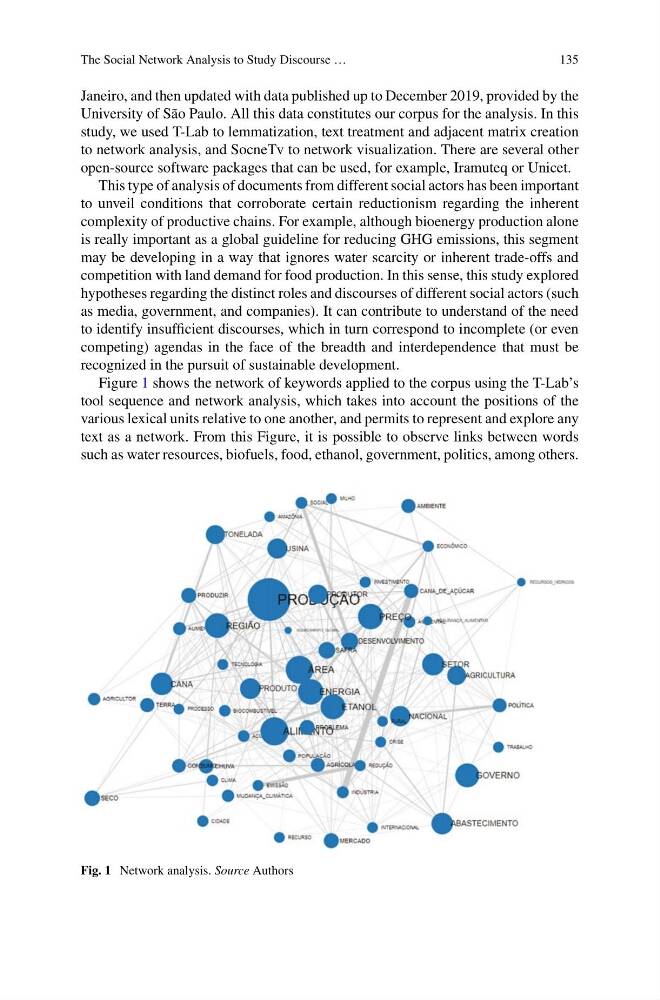
Figure 1 shows the network of keywords applied to the corpus using the T-Lab’s
tool sequence and network analysis, which takes into account the positions of the
various lexical units relative to one another, and permits to represent and explore any
text as a network. From this Figure, it is possible to observe links between words
such as water resources, biofuels, food, ethanol, government, politics, among others.
Fig. 1 Network analysis. Source Authors
135
Janeiro, and then updated with data published up to December 2019, provided by the
University of São Paulo. All this data constitutes our corpus for the analysis. In this
study, we used T-Lab to lemmatization, text treatment and adjacent matrix creation
to network analysis, and SocneTv to network visualization. There are several other
open-source software packages that can be used, for example, Iramuteq or Unicet.
This type of analysis of documents from different social actors has been important
to unveil conditions that corroborate certain reductionism regarding the inherent
complexity of productive chains. For example, although bioenergy production alone
is really important as a global guideline for reducing GHG emissions, this segment
may be developing in a way that ignores water scarcity or inherent trade-offs and
competition with land demand for food production. In this sense, this study explored
hypotheses regarding the distinct roles and discourses of different social actors (such
as media, government, and companies). It can contribute to understand of the need
to identify insufficient discourses, which in turn correspond to incomplete (or even
competing) agendas in the face of the breadth and interdependence that must be
recognized in the pursuit of sustainable development.
Figure 1 shows the network of keywords applied to the corpus using the T-Lab’s
tool sequence and network analysis, which takes into account the positions of the
various lexical units relative to one another, and permits to represent and explore any
text as a network. From this Figure, it is possible to observe links between words
such as water resources, biofuels, food, ethanol, government, politics, among others.
Fig. 1 Network analysis. Source Authors