

10
1.6 A Pattern Language Approach
This topic of the regeneration of built and natural environments and forging human-nature interconnectedness with ecological systems, fundamentally initiating a different approach to sustainability, is
indeed not an easy task. In the first instance this dynamic and major shift requires a new world view,
the development of ecological thinking and the acknowledgement that we as humans are part of
nature and not above it. As noted by DeKay (2011), this change is a shift to integral awareness, where
cultural and psychological references are based on ecological thinking that sees the world in systems
terms (DeKay, 2011, p. 60). To be able to do this is to add the perspective of ‘wholeness’, in essence
the understanding of an ecosystems model where living systems are organised in patterns, and these
patterns form networks and ultimately create a language.
As we are dealing with humans and their designed built environments and connections to the natural world, the structure and the narrative of this book adopted a similar approach to A Pattern Language
as defined by Christopher Alexander (Alexander, 1979; Alexander et al., 1977). Further, the development of a regenerative- adaptive pattern language followed suit and structured the patterns in a similar fashion, as described in detail in Chaps. 10 and 11.
A typical pattern language is a process of describing a set of patterns or good design practices of
useful organisation within a field of expertise. In this context, the regenerative- adaptive pattern language provides a more holistic process and framework by describing a set of patterns and adaptation
practices in a useful, organised way for sustainable development, regeneration, design and planning.
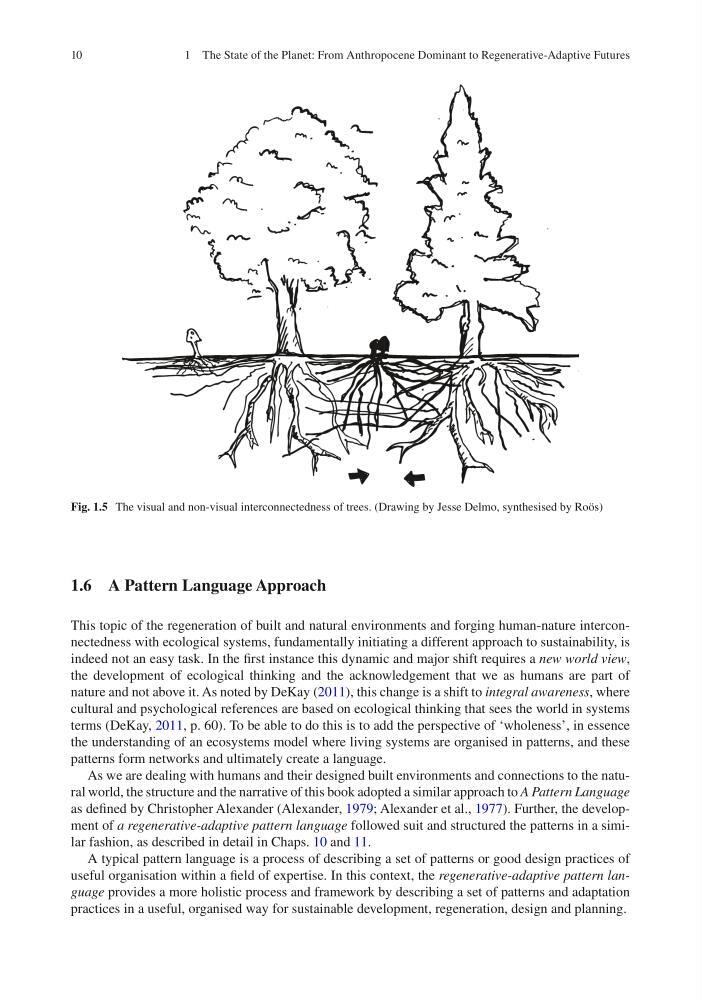
Fig. 1.5 The visual and non-visual interconnectedness of trees. (Drawing by Jesse Delmo, synthesised by Roös)
1 The State of the Planet: From Anthropocene Dominant to Regenerative-Adaptive Futures
1.6 A Pattern Language Approach
This topic of the regeneration of built and natural environments and forging human-nature interconnectedness with ecological systems, fundamentally initiating a different approach to sustainability, is
indeed not an easy task. In the first instance this dynamic and major shift requires a new world view,
the development of ecological thinking and the acknowledgement that we as humans are part of
nature and not above it. As noted by DeKay (2011), this change is a shift to integral awareness, where
cultural and psychological references are based on ecological thinking that sees the world in systems
terms (DeKay, 2011, p. 60). To be able to do this is to add the perspective of ‘wholeness’, in essence
the understanding of an ecosystems model where living systems are organised in patterns, and these
patterns form networks and ultimately create a language.
As we are dealing with humans and their designed built environments and connections to the natural world, the structure and the narrative of this book adopted a similar approach to A Pattern Language
as defined by Christopher Alexander (Alexander, 1979; Alexander et al., 1977). Further, the development of a regenerative- adaptive pattern language followed suit and structured the patterns in a similar fashion, as described in detail in Chaps. 10 and 11.
A typical pattern language is a process of describing a set of patterns or good design practices of
useful organisation within a field of expertise. In this context, the regenerative- adaptive pattern language provides a more holistic process and framework by describing a set of patterns and adaptation
practices in a useful, organised way for sustainable development, regeneration, design and planning.
Fig. 1.5 The visual and non-visual interconnectedness of trees. (Drawing by Jesse Delmo, synthesised by Roös)
1 The State of the Planet: From Anthropocene Dominant to Regenerative-Adaptive Futures