

6
1.3 The Challenge of Climate Change
The warming of the climate system with its related effects will continue. The modern industrial and
techno-scientific capacity of the human species, developed to support and build mega cities to house
the increased world population, is now estimated to reach a booming 9.8 billion people
7
on earth as
early as the year 2050, and is continuously contributing to climate change. The built environment
alone is contributing at least 30% of the total anthropogenic Global Greenhouse Gas (GHG) emissions, which come from the construction and the operations of buildings, and is consuming at least
40% of all energy (De la Rue Du Can & Price, 2008; Satterthwaite, 2008; UNEP, 2009). Estimates of
how high the contribution to global GHG emissions from cities will increase vary from 30% to as high
as 80% (Spiegelhalter & Arch, 2010). To put this in absolute terms, the IPCC (2014) estimated
building- related GHG emissions have been around 8.6 million metric tons CO 2 equivalent in 2004,
and under the high growth scenario (A2-ASF),
8
this figure could increase dramatically to 15.6 billion
metric tons CO 2 equivalent in the year 2030 (Levine et al., 2007). Further, additional to GHG emissions, the building sector is also responsible for significant emissions of other harmful gases such as
halocarbons, CFCs, HCFCs and hydrofluorocarbons (HFCs) through refrigeration and cooling applications and insulation materials (UNEP, 2009, p. 9).
7 United Nations Population Division projects a world population growth with an estimated population between 8.3 and
9.8 billion by the year 2050 (UN, 2013; World Population Prospects: The 2017 Revision, UN, 2017)
8 IPCC emission scenarios: The A2 scenario family includes slow improvements in the energy supply efficiency and a
relatively slow convergence of end-use energy efficiency in the industrial, commercial, residential, and transportation
sectors between regions. A combination of slow technological progress, more limited environmental concerns, and low
land availability because of high population growth means that the energy needs of the A2 world are satisfied primarily
by fossil (mostly coal) and nuclear energy. Source: IPCC Emission Scenarios, http://www.ipcc.ch/ipccreports/sres/
emission/index.php?idp=98
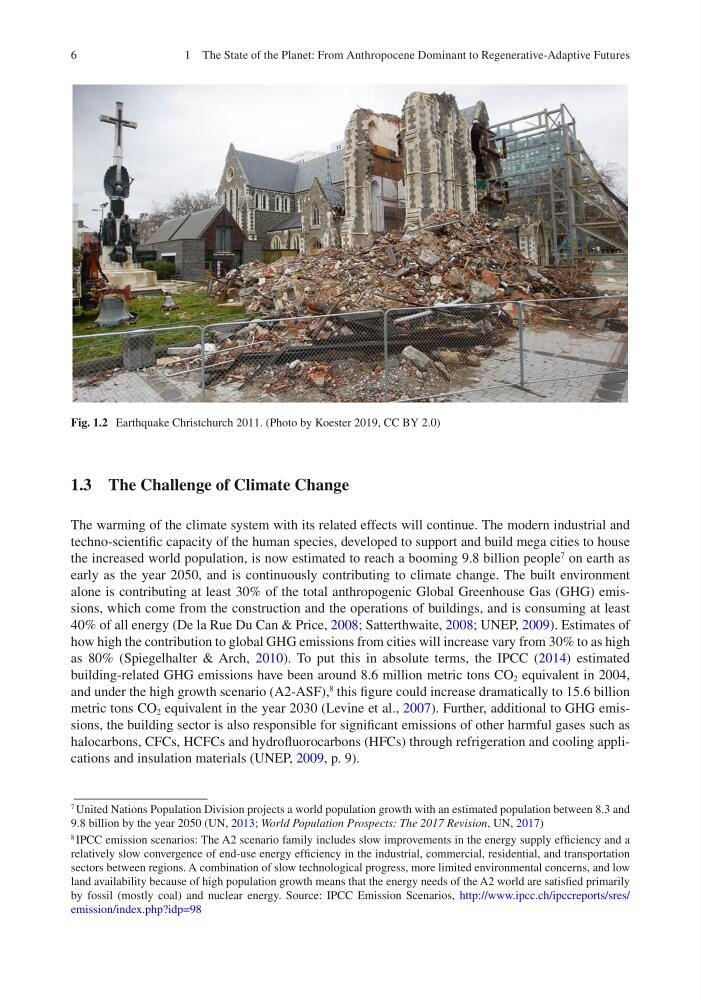
Fig. 1.2 Earthquake Christchurch 2011. (Photo by Koester 2019, CC BY 2.0)
1 The State of the Planet: From Anthropocene Dominant to Regenerative-Adaptive Futures
1.3 The Challenge of Climate Change
The warming of the climate system with its related effects will continue. The modern industrial and
techno-scientific capacity of the human species, developed to support and build mega cities to house
the increased world population, is now estimated to reach a booming 9.8 billion people
7
on earth as
early as the year 2050, and is continuously contributing to climate change. The built environment
alone is contributing at least 30% of the total anthropogenic Global Greenhouse Gas (GHG) emissions, which come from the construction and the operations of buildings, and is consuming at least
40% of all energy (De la Rue Du Can & Price, 2008; Satterthwaite, 2008; UNEP, 2009). Estimates of
how high the contribution to global GHG emissions from cities will increase vary from 30% to as high
as 80% (Spiegelhalter & Arch, 2010). To put this in absolute terms, the IPCC (2014) estimated
building- related GHG emissions have been around 8.6 million metric tons CO 2 equivalent in 2004,
and under the high growth scenario (A2-ASF),
8
this figure could increase dramatically to 15.6 billion
metric tons CO 2 equivalent in the year 2030 (Levine et al., 2007). Further, additional to GHG emissions, the building sector is also responsible for significant emissions of other harmful gases such as
halocarbons, CFCs, HCFCs and hydrofluorocarbons (HFCs) through refrigeration and cooling applications and insulation materials (UNEP, 2009, p. 9).
7 United Nations Population Division projects a world population growth with an estimated population between 8.3 and
9.8 billion by the year 2050 (UN, 2013; World Population Prospects: The 2017 Revision, UN, 2017)
8 IPCC emission scenarios: The A2 scenario family includes slow improvements in the energy supply efficiency and a
relatively slow convergence of end-use energy efficiency in the industrial, commercial, residential, and transportation
sectors between regions. A combination of slow technological progress, more limited environmental concerns, and low
land availability because of high population growth means that the energy needs of the A2 world are satisfied primarily
by fossil (mostly coal) and nuclear energy. Source: IPCC Emission Scenarios, http://www.ipcc.ch/ipccreports/sres/
emission/index.php?idp=98
Fig. 1.2 Earthquake Christchurch 2011. (Photo by Koester 2019, CC BY 2.0)
1 The State of the Planet: From Anthropocene Dominant to Regenerative-Adaptive Futures