

142
References
Addison, P. (1997). Fractals and chaos: An illustrated course. Edinburgh, UK: IOP Publishing – Napier University.
Alexander, C. (1964). Notes on the synthesis of form. Cambridge, MA: Harverd University Press.
Alexander, C. (1979). The timeless way of building (Vol. 1). New York: Oxford University Press.
Alexander, C., Neis, H., Anninou, A., & King, I. (1987). A new theory of urban design (Center for Environmental
Structure). New York, Oxford: Oxford University Press.
Alexander, C. (2004). Sustainability and morphogenesis: The birth of a living world. Berkeley, CA: Centre for
Environmental Structure.
Alexander, C., Schmidt, M., Alexander, M., Hanson, B., & Mehaffy, M. (2005). Generative codes: The path to building
welcoming, beautiful, sustainable neighbourhoods. Berkley, CA: Centre for Environmental Structure.
Alexander, C. (2001–2005a). The nature of order – An essay on the art of building and the nature of the universe, book
one: The phenomenon of life. Berkeley, CA: The Center for Environmental Structure
Alexander, C. (2001–2005b). The nature of order – An essay on the art of building and the nature of the universe, book
two: The process of creating life. Berkeley, CA: The Center for Environmental Structure.
Alexander, C., Ishikawa, S., Silverstein, M., Jacobson, M., Fiksdahl-King, I., & Angel, S. (1977). A pattern language:
Towns, buildings, construction. New York: Oxford University Press.
Alexander, C., Neis, H. J., & Moore Alexander, M. (2012). The battle for the life and beauty of the earth: A struggle
between two world-systems. New York: Oxford University Press.
Ball, P. (2009). Shapes: Natures patterns: A tapestry in three parts. London: Oxford University Press.
Borchers, J. (2008). A pattern approach to interaction design. In P. G. Satinder (Ed.), Cognition, communication and
interaction: Transdisciplinary perspectives on interactive technology (pp. 114–129). London: Springer.
Bortroft, H. (1996). The wholeness of nature. Hudson, NY: Lindesfarne Press.
Bortroft, H, (1971). The Whole: Counterfeit and Authentic. Systematics, 9(2), 43–73.
DeKay, M. (2011). Integral sustainable design: Transformative perspectives. London/Washington, DC: Earthscan.
Eglash, R. (1999). African fractals: Modern computing and indigenous design. New Brunswick, NJ: Rutgers University
Press.
Gleick, J. (1988). Chaos making a new science. New York: Penguin.
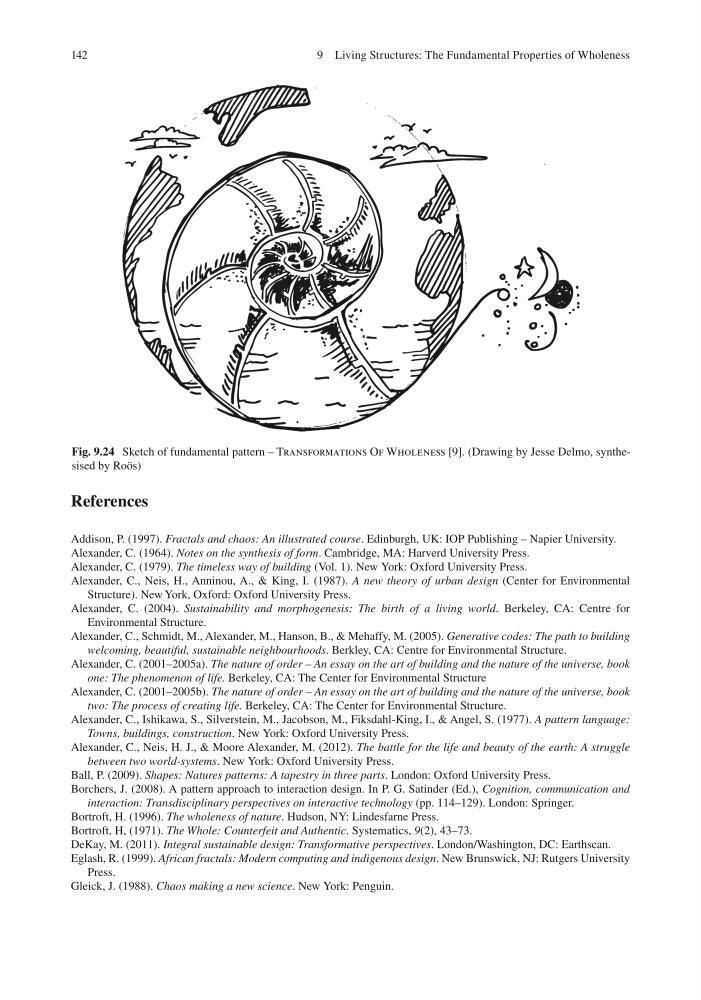
Fig. 9.24 Sketch of fundamental pattern – Transformations Of Wholeness [9]. (Drawing by Jesse Delmo, synthesised by Roös)
9 Living Structures: The Fundamental Properties of Wholeness
References
Addison, P. (1997). Fractals and chaos: An illustrated course. Edinburgh, UK: IOP Publishing – Napier University.
Alexander, C. (1964). Notes on the synthesis of form. Cambridge, MA: Harverd University Press.
Alexander, C. (1979). The timeless way of building (Vol. 1). New York: Oxford University Press.
Alexander, C., Neis, H., Anninou, A., & King, I. (1987). A new theory of urban design (Center for Environmental
Structure). New York, Oxford: Oxford University Press.
Alexander, C. (2004). Sustainability and morphogenesis: The birth of a living world. Berkeley, CA: Centre for
Environmental Structure.
Alexander, C., Schmidt, M., Alexander, M., Hanson, B., & Mehaffy, M. (2005). Generative codes: The path to building
welcoming, beautiful, sustainable neighbourhoods. Berkley, CA: Centre for Environmental Structure.
Alexander, C. (2001–2005a). The nature of order – An essay on the art of building and the nature of the universe, book
one: The phenomenon of life. Berkeley, CA: The Center for Environmental Structure
Alexander, C. (2001–2005b). The nature of order – An essay on the art of building and the nature of the universe, book
two: The process of creating life. Berkeley, CA: The Center for Environmental Structure.
Alexander, C., Ishikawa, S., Silverstein, M., Jacobson, M., Fiksdahl-King, I., & Angel, S. (1977). A pattern language:
Towns, buildings, construction. New York: Oxford University Press.
Alexander, C., Neis, H. J., & Moore Alexander, M. (2012). The battle for the life and beauty of the earth: A struggle
between two world-systems. New York: Oxford University Press.
Ball, P. (2009). Shapes: Natures patterns: A tapestry in three parts. London: Oxford University Press.
Borchers, J. (2008). A pattern approach to interaction design. In P. G. Satinder (Ed.), Cognition, communication and
interaction: Transdisciplinary perspectives on interactive technology (pp. 114–129). London: Springer.
Bortroft, H. (1996). The wholeness of nature. Hudson, NY: Lindesfarne Press.
Bortroft, H, (1971). The Whole: Counterfeit and Authentic. Systematics, 9(2), 43–73.
DeKay, M. (2011). Integral sustainable design: Transformative perspectives. London/Washington, DC: Earthscan.
Eglash, R. (1999). African fractals: Modern computing and indigenous design. New Brunswick, NJ: Rutgers University
Press.
Gleick, J. (1988). Chaos making a new science. New York: Penguin.
Fig. 9.24 Sketch of fundamental pattern – Transformations Of Wholeness [9]. (Drawing by Jesse Delmo, synthesised by Roös)
9 Living Structures: The Fundamental Properties of Wholeness