

91
7.4 Back to Nature
Lack of confidence in scientific and technological processes emerged in the late 1960s and early
1970s, and ‘back to nature’ became a strong belief embodied in the ‘hippie era’. Inspiration was often
drawn from Eastern cultures, where harmony with nature was considered essential for human wellbeing as well as to keep a cosmic balance. It can be strongly argued that it was a period when new theories of ecological design, landscape planning and urban design were initiated – theories that have
evolved ever since. Work by McHarg established the foundations for ecological design in the context
of landscape planning, through Design with Nature (1992 [1969]), while Alexander established a new
perspective on the processes of architecture and planning in The Timeless Way of Building (Alexander,
1979), which eventually led to his famous, and also controversial, A Pattern Language (Alexander
et al., 1977). Subsequently, A New Theory of Urban Design (1987) by Alexander, Neis, Anninou, and
King (1987) expressed renewed interest in urbanism and articulated an understanding of generative
processes as being a fundamental part of urban design.
During this period other theorists emerged using ecology as a focus, including Soleri who coined
the term ‘Arcology’ (Architecture and Ecology) and who built Arcosanti in the desert, a city designed
to maximise human population and ecology interactions (Soleri, 1969). In the “Gaia Hypothesis”
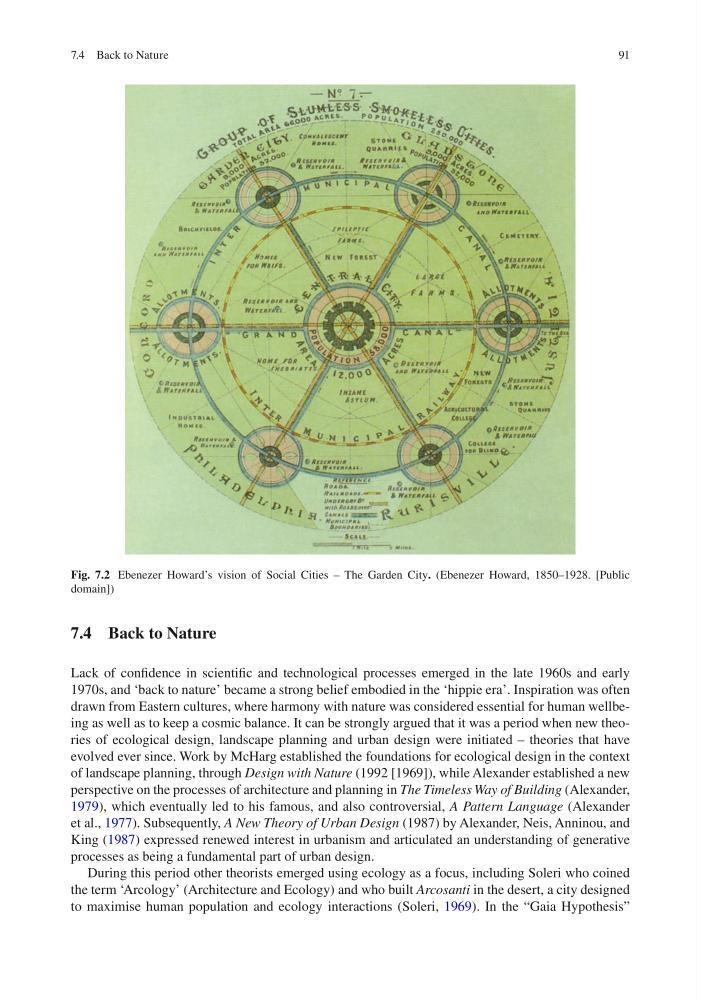
Fig. 7.2 Ebenezer Howard’s vision of Social Cities – The Garden City. (Ebenezer Howard, 1850–1928. [Public
domain])
7.4 Back to Nature
7.4 Back to Nature
Lack of confidence in scientific and technological processes emerged in the late 1960s and early
1970s, and ‘back to nature’ became a strong belief embodied in the ‘hippie era’. Inspiration was often
drawn from Eastern cultures, where harmony with nature was considered essential for human wellbeing as well as to keep a cosmic balance. It can be strongly argued that it was a period when new theories of ecological design, landscape planning and urban design were initiated – theories that have
evolved ever since. Work by McHarg established the foundations for ecological design in the context
of landscape planning, through Design with Nature (1992 [1969]), while Alexander established a new
perspective on the processes of architecture and planning in The Timeless Way of Building (Alexander,
1979), which eventually led to his famous, and also controversial, A Pattern Language (Alexander
et al., 1977). Subsequently, A New Theory of Urban Design (1987) by Alexander, Neis, Anninou, and
King (1987) expressed renewed interest in urbanism and articulated an understanding of generative
processes as being a fundamental part of urban design.
During this period other theorists emerged using ecology as a focus, including Soleri who coined
the term ‘Arcology’ (Architecture and Ecology) and who built Arcosanti in the desert, a city designed
to maximise human population and ecology interactions (Soleri, 1969). In the “Gaia Hypothesis”
Fig. 7.2 Ebenezer Howard’s vision of Social Cities – The Garden City. (Ebenezer Howard, 1850–1928. [Public
domain])
7.4 Back to Nature