

81
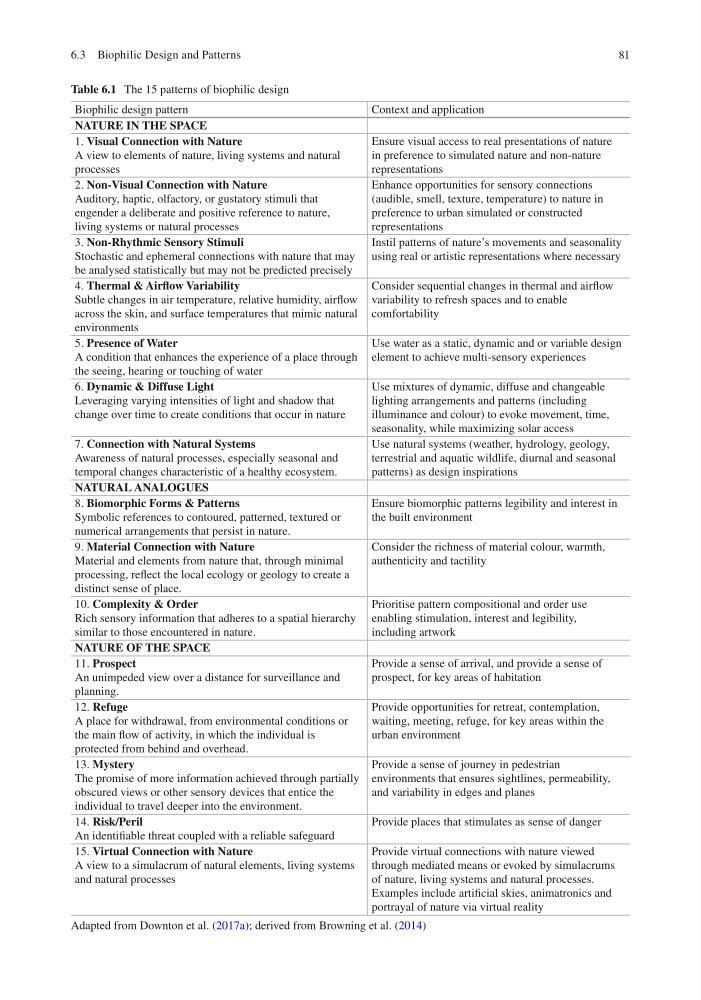
Table 6.1 The 15 patterns of biophilic design
Biophilic design pattern
Context and application
NATURE IN THE SPACE
1. Visual Connection with Nature
A view to elements of nature, living systems and natural
processes
Ensure visual access to real presentations of nature
in preference to simulated nature and non-nature
representations
2. Non-Visual Connection with Nature
Auditory, haptic, olfactory, or gustatory stimuli that
engender a deliberate and positive reference to nature,
living systems or natural processes
Enhance opportunities for sensory connections
(audible, smell, texture, temperature) to nature in
preference to urban simulated or constructed
representations
3. Non-Rhythmic Sensory Stimuli
Stochastic and ephemeral connections with nature that may
be analysed statistically but may not be predicted precisely
Instil patterns of nature’s movements and seasonality
using real or artistic representations where necessary
4. Thermal & Airflow Variability
Subtle changes in air temperature, relative humidity, airflow
across the skin, and surface temperatures that mimic natural
environments
Consider sequential changes in thermal and airflow
variability to refresh spaces and to enable
comfortability
5. Presence of Water
A condition that enhances the experience of a place through
the seeing, hearing or touching of water
Use water as a static, dynamic and or variable design
element to achieve multi-sensory experiences
6. Dynamic & Diffuse Light
Leveraging varying intensities of light and shadow that
change over time to create conditions that occur in nature
Use mixtures of dynamic, diffuse and changeable
lighting arrangements and patterns (including
illuminance and colour) to evoke movement, time,
seasonality, while maximizing solar access
7. Connection with Natural Systems
Awareness of natural processes, especially seasonal and
temporal changes characteristic of a healthy ecosystem.
Use natural systems (weather, hydrology, geology,
terrestrial and aquatic wildlife, diurnal and seasonal
patterns) as design inspirations
NATURAL ANALOGUES
8. Biomorphic Forms & Patterns
Symbolic references to contoured, patterned, textured or
numerical arrangements that persist in nature.
Ensure biomorphic patterns legibility and interest in
the built environment
9. Material Connection with Nature
Material and elements from nature that, through minimal
processing, reflect the local ecology or geology to create a
distinct sense of place.
Consider the richness of material colour, warmth,
authenticity and tactility
10. Complexity & Order
Rich sensory information that adheres to a spatial hierarchy
similar to those encountered in nature.
Prioritise pattern compositional and order use
enabling stimulation, interest and legibility,
including artwork
NATURE OF THE SPACE
11. Prospect
An unimpeded view over a distance for surveillance and
planning.
Provide a sense of arrival, and provide a sense of
prospect, for key areas of habitation
12. Refuge
A place for withdrawal, from environmental conditions or
the main flow of activity, in which the individual is
protected from behind and overhead.
Provide opportunities for retreat, contemplation,
waiting, meeting, refuge, for key areas within the
urban environment
13. Mystery
The promise of more information achieved through partially
obscured views or other sensory devices that entice the
individual to travel deeper into the environment.
Provide a sense of journey in pedestrian
environments that ensures sightlines, permeability,
and variability in edges and planes
14. Risk/Peril
An identifiable threat coupled with a reliable safeguard
Provide places that stimulates as sense of danger
15. Virtual Connection with Nature
A view to a simulacrum of natural elements, living systems
and natural processes
Provide virtual connections with nature viewed
through mediated means or evoked by simulacrums
of nature, living systems and natural processes.
Examples include artificial skies, animatronics and
portrayal of nature via virtual reality
Adapted from Downton et al. (2017a); derived from Browning et al. (2014)
6.3 Biophilic Design and Patterns
Table 6.1 The 15 patterns of biophilic design
Biophilic design pattern
Context and application
NATURE IN THE SPACE
1. Visual Connection with Nature
A view to elements of nature, living systems and natural
processes
Ensure visual access to real presentations of nature
in preference to simulated nature and non-nature
representations
2. Non-Visual Connection with Nature
Auditory, haptic, olfactory, or gustatory stimuli that
engender a deliberate and positive reference to nature,
living systems or natural processes
Enhance opportunities for sensory connections
(audible, smell, texture, temperature) to nature in
preference to urban simulated or constructed
representations
3. Non-Rhythmic Sensory Stimuli
Stochastic and ephemeral connections with nature that may
be analysed statistically but may not be predicted precisely
Instil patterns of nature’s movements and seasonality
using real or artistic representations where necessary
4. Thermal & Airflow Variability
Subtle changes in air temperature, relative humidity, airflow
across the skin, and surface temperatures that mimic natural
environments
Consider sequential changes in thermal and airflow
variability to refresh spaces and to enable
comfortability
5. Presence of Water
A condition that enhances the experience of a place through
the seeing, hearing or touching of water
Use water as a static, dynamic and or variable design
element to achieve multi-sensory experiences
6. Dynamic & Diffuse Light
Leveraging varying intensities of light and shadow that
change over time to create conditions that occur in nature
Use mixtures of dynamic, diffuse and changeable
lighting arrangements and patterns (including
illuminance and colour) to evoke movement, time,
seasonality, while maximizing solar access
7. Connection with Natural Systems
Awareness of natural processes, especially seasonal and
temporal changes characteristic of a healthy ecosystem.
Use natural systems (weather, hydrology, geology,
terrestrial and aquatic wildlife, diurnal and seasonal
patterns) as design inspirations
NATURAL ANALOGUES
8. Biomorphic Forms & Patterns
Symbolic references to contoured, patterned, textured or
numerical arrangements that persist in nature.
Ensure biomorphic patterns legibility and interest in
the built environment
9. Material Connection with Nature
Material and elements from nature that, through minimal
processing, reflect the local ecology or geology to create a
distinct sense of place.
Consider the richness of material colour, warmth,
authenticity and tactility
10. Complexity & Order
Rich sensory information that adheres to a spatial hierarchy
similar to those encountered in nature.
Prioritise pattern compositional and order use
enabling stimulation, interest and legibility,
including artwork
NATURE OF THE SPACE
11. Prospect
An unimpeded view over a distance for surveillance and
planning.
Provide a sense of arrival, and provide a sense of
prospect, for key areas of habitation
12. Refuge
A place for withdrawal, from environmental conditions or
the main flow of activity, in which the individual is
protected from behind and overhead.
Provide opportunities for retreat, contemplation,
waiting, meeting, refuge, for key areas within the
urban environment
13. Mystery
The promise of more information achieved through partially
obscured views or other sensory devices that entice the
individual to travel deeper into the environment.
Provide a sense of journey in pedestrian
environments that ensures sightlines, permeability,
and variability in edges and planes
14. Risk/Peril
An identifiable threat coupled with a reliable safeguard
Provide places that stimulates as sense of danger
15. Virtual Connection with Nature
A view to a simulacrum of natural elements, living systems
and natural processes
Provide virtual connections with nature viewed
through mediated means or evoked by simulacrums
of nature, living systems and natural processes.
Examples include artificial skies, animatronics and
portrayal of nature via virtual reality
Adapted from Downton et al. (2017a); derived from Browning et al. (2014)
6.3 Biophilic Design and Patterns