

242
more. Sunlight penetrates to similar depths and so phytoplankton in the open ocean
mostly live in that surface layer, where they take up and use most of the dissolved
nutrients. In contrast, more than three quarters of the deep ocean is colder than 4°C
(less than 40° Fahrenheit) and contains much higher concentrations of dissolved
nutrients, because there is no sunlight for photosynthesis. Between the warm, thin
surface layer and the cold, massive ocean depths is a region of rapid temperature
change known as the thermocline. And because the phytoplankton in the sunlit surface waters are eaten by zooplankton, which are in turn eaten by fish, many of which
migrate into the deeper, cooler, dark thermocline depths during the day (a phenomenon know as vertical migration), those animals excrete much of their nutrient-rich
wastes at depths where they are inaccessible to phytoplankton. On the eastern sides
of the oceans, strong winds and the influence of the Earth’s rotation move shallow,
warm surface waters offshore, and mix nutrient-rich waters from the uppermost
thermocline into sunlit surface waters, fertilizing phytoplankton that feed zooplankton and fish, resulting in some of the most productive fisheries on Earth. El Niño
conditions include weaker wind systems across the equatorial Pacific and reduced
rates of upwelling, resulting in the sharp decline of fish catches and starvation of
seabirds, for example, along the coasts of Peru, Ecuador and the Galapagos Islands.
But El Niño events have been influencing marine and terrestrial ecosystems on
multi-year cycles for thousands of years. So why did the 1982–1983 event cause
widespread coral bleaching and mortality? What changed that produced damaging
levels of photo-oxidative stress. And why have such events since become increasingly frequent and destructive to coral reefs?
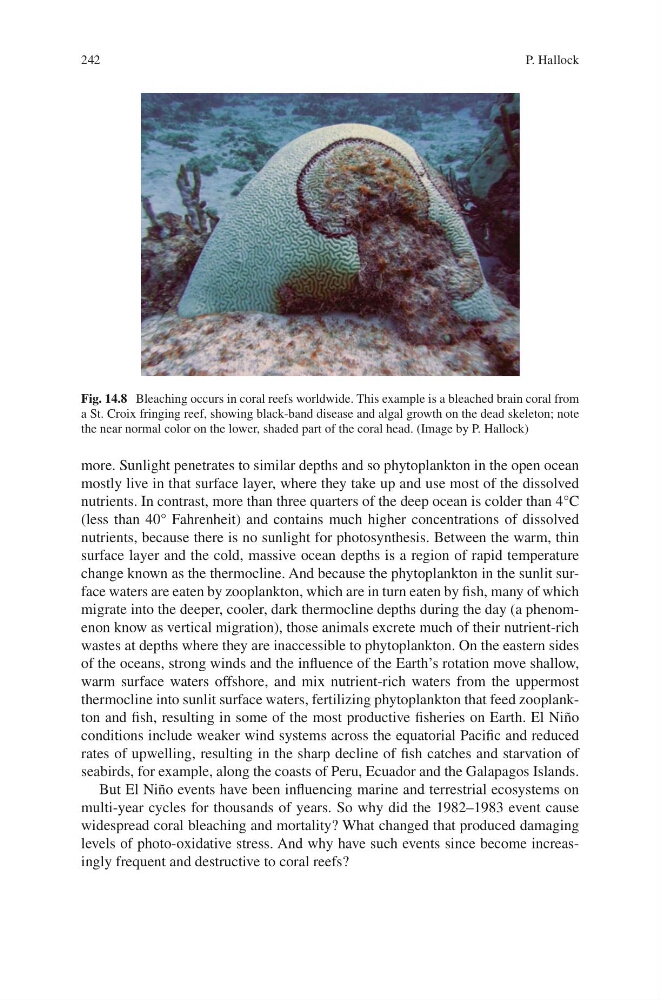
Fig. 14.8 Bleaching occurs in coral reefs worldwide. This example is a bleached brain coral from
a St. Croix fringing reef, showing black-band disease and algal growth on the dead skeleton; note
the near normal color on the lower, shaded part of the coral head. (Image by P. Hallock)
P. Hallock
more. Sunlight penetrates to similar depths and so phytoplankton in the open ocean
mostly live in that surface layer, where they take up and use most of the dissolved
nutrients. In contrast, more than three quarters of the deep ocean is colder than 4°C
(less than 40° Fahrenheit) and contains much higher concentrations of dissolved
nutrients, because there is no sunlight for photosynthesis. Between the warm, thin
surface layer and the cold, massive ocean depths is a region of rapid temperature
change known as the thermocline. And because the phytoplankton in the sunlit surface waters are eaten by zooplankton, which are in turn eaten by fish, many of which
migrate into the deeper, cooler, dark thermocline depths during the day (a phenomenon know as vertical migration), those animals excrete much of their nutrient-rich
wastes at depths where they are inaccessible to phytoplankton. On the eastern sides
of the oceans, strong winds and the influence of the Earth’s rotation move shallow,
warm surface waters offshore, and mix nutrient-rich waters from the uppermost
thermocline into sunlit surface waters, fertilizing phytoplankton that feed zooplankton and fish, resulting in some of the most productive fisheries on Earth. El Niño
conditions include weaker wind systems across the equatorial Pacific and reduced
rates of upwelling, resulting in the sharp decline of fish catches and starvation of
seabirds, for example, along the coasts of Peru, Ecuador and the Galapagos Islands.
But El Niño events have been influencing marine and terrestrial ecosystems on
multi-year cycles for thousands of years. So why did the 1982–1983 event cause
widespread coral bleaching and mortality? What changed that produced damaging
levels of photo-oxidative stress. And why have such events since become increasingly frequent and destructive to coral reefs?
Fig. 14.8 Bleaching occurs in coral reefs worldwide. This example is a bleached brain coral from
a St. Croix fringing reef, showing black-band disease and algal growth on the dead skeleton; note
the near normal color on the lower, shaded part of the coral head. (Image by P. Hallock)
P. Hallock