

222
Sitting on the riverbank next to our tents were hundreds, maybe thousands of mangrove “poles”, long and skinny mangrove stems, that had been confiscated by the
forest department. Harvesting of mangrove “poles” without permits is illegal in
Tanzania, let alone the felling of larger trees, about which we would soon find out.
That afternoon, the professor (University of Dar es Salaam), the soil specialist (US
Forest Service), and the two NASA guys (myself included) went out for a quick
reconnaissance to scope out some of the sites that we had planned to survey the next
day. This is when we realized that the Rufiji would be an interesting challenge. In
much of our previous work in other countries, the mangrove forests we visited were
for the most part, intact. When I say “intact” this means that the forest is in a relatively natural state with little to no evidence of human intervention. The Rufiji was
not intact. The sites we visited the first day, which would turn out to be typical of all
of our sites, had evidence of cutting and in some places, complete timber cutting
operations - cutting platforms, saws, and discarded planks. Many of these areas only
had trees of a specific size and species that were cut, whereas some sites only the
larger trees were cut and at others only the smaller trees. But in some areas, entire
forests had been cleared (Fig. 13.7) where trees had been girdled – a sector of bark
remove around the entire circumference - to make it easier to burn the forest – one
of the fastest ways to clear an area for conversion to other land use types. In this case
the conversion was to rice paddies (Fig. 13.8).
In the morning of our first official field day, we assembled the entire crew to
“calibrate”. After a short walk from our tents down the riverbank we paced out a
plot, a circular area with a diameter of 12 meters. Within that area, each team
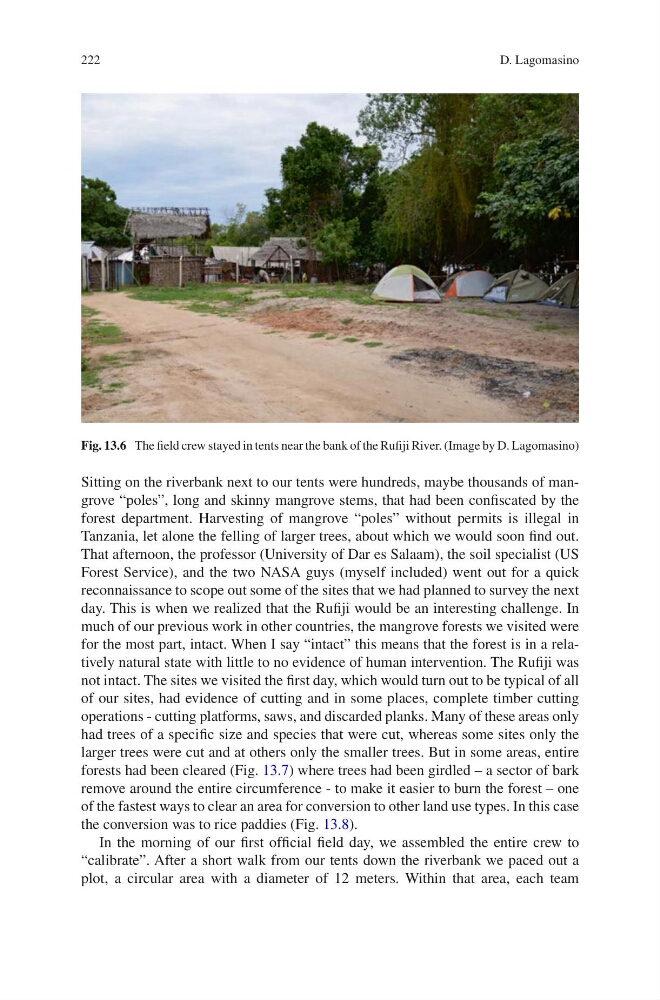
Fig. 13.6 The field crew stayed in tents near the bank of the Rufiji River. (Image by D. Lagomasino)
D. Lagomasino
Sitting on the riverbank next to our tents were hundreds, maybe thousands of mangrove “poles”, long and skinny mangrove stems, that had been confiscated by the
forest department. Harvesting of mangrove “poles” without permits is illegal in
Tanzania, let alone the felling of larger trees, about which we would soon find out.
That afternoon, the professor (University of Dar es Salaam), the soil specialist (US
Forest Service), and the two NASA guys (myself included) went out for a quick
reconnaissance to scope out some of the sites that we had planned to survey the next
day. This is when we realized that the Rufiji would be an interesting challenge. In
much of our previous work in other countries, the mangrove forests we visited were
for the most part, intact. When I say “intact” this means that the forest is in a relatively natural state with little to no evidence of human intervention. The Rufiji was
not intact. The sites we visited the first day, which would turn out to be typical of all
of our sites, had evidence of cutting and in some places, complete timber cutting
operations - cutting platforms, saws, and discarded planks. Many of these areas only
had trees of a specific size and species that were cut, whereas some sites only the
larger trees were cut and at others only the smaller trees. But in some areas, entire
forests had been cleared (Fig. 13.7) where trees had been girdled – a sector of bark
remove around the entire circumference - to make it easier to burn the forest – one
of the fastest ways to clear an area for conversion to other land use types. In this case
the conversion was to rice paddies (Fig. 13.8).
In the morning of our first official field day, we assembled the entire crew to
“calibrate”. After a short walk from our tents down the riverbank we paced out a
plot, a circular area with a diameter of 12 meters. Within that area, each team
Fig. 13.6 The field crew stayed in tents near the bank of the Rufiji River. (Image by D. Lagomasino)
D. Lagomasino