

In the Waikato and Taranaki regions with generally
reliable rainfall, dairy production thrives on Allophanic
Soils. In the Bay of Plenty where there are few frosts, and
good rainfall, kiwifruit, avocados, citrus, and other horticulture crops are all intensively cultivated on Allophanic
Soils. A practice of ‘recontouring’ land supporting Allophanic Soils in the 1970s and early 1980s so as to increase
the area perceived to be suitable for horticultural development, especially kiwifruit vines, in the Te Puke-Tauranga
area, was demonstrated to be deleterious, and subsequently
stopped. As well as creating numerous problems including
altering drainage and compacting soils, the loss of Allophanic Soils, *25,000 years or more in the making, was
regarded as unacceptable (reported by Gary Orbell in 1985).
South of Ruapehu, frost-tolerant root crops such as carrots, potatoes, parsnips, and swedes are grown, all benefitting from the friable, low bulk density, well-drained soil.
Allophanic Soils are also an excellent receiving environment
for irrigation of effluent, particularly because of their ability
to adsorb phosphorus and other anions. An example is the
Rotorua Land Treatment System, developed in part on Vitric
Orthic Allophanic Soils in Whakarewarewa Forest near
Rotorua.
To maintain production there are usually nutrient
requirements for phosphorus, potassium, and magnesium on
dairy farms. Generally, there are no marked trace element
deficiencies except in more strongly leached Allophanic
Soils where cobalt may be required to prevent ‘bush
Table 2.3 Correlation between
Allophanic Soils and equivalent
classes
a of Soil Taxonomy, World
Reference Base, and the earlier
NZ genetic classification
New Zealand Soil
Classification
Soil
Taxonomy
World Reference
Base
NZ genetic soil
classification
Perch-gley Allophanic Soils
Epiaquands
Gleyic Andosols
Yellow-brown loams
Gley Allophanic Soils
Endoaquands
Gleyic Andosols
Yellow-brown loams
Impeded Allophanic Soils
Hapludands
Andosols
Yellow-brown loams
Orthic Allophanic Soils
Hapludands
Andosols
Yellow-brown loams
a The correlations given here are a guide only and for accurate classifications the relevant soil classification
documents should be consulted. The two major international soil classification systems are Soil Taxonomy,
which was developed in the USA, and World Reference Base, which was developed primarily in Europe.
The NZ genetic soil classification was used in NZ prior to 1992
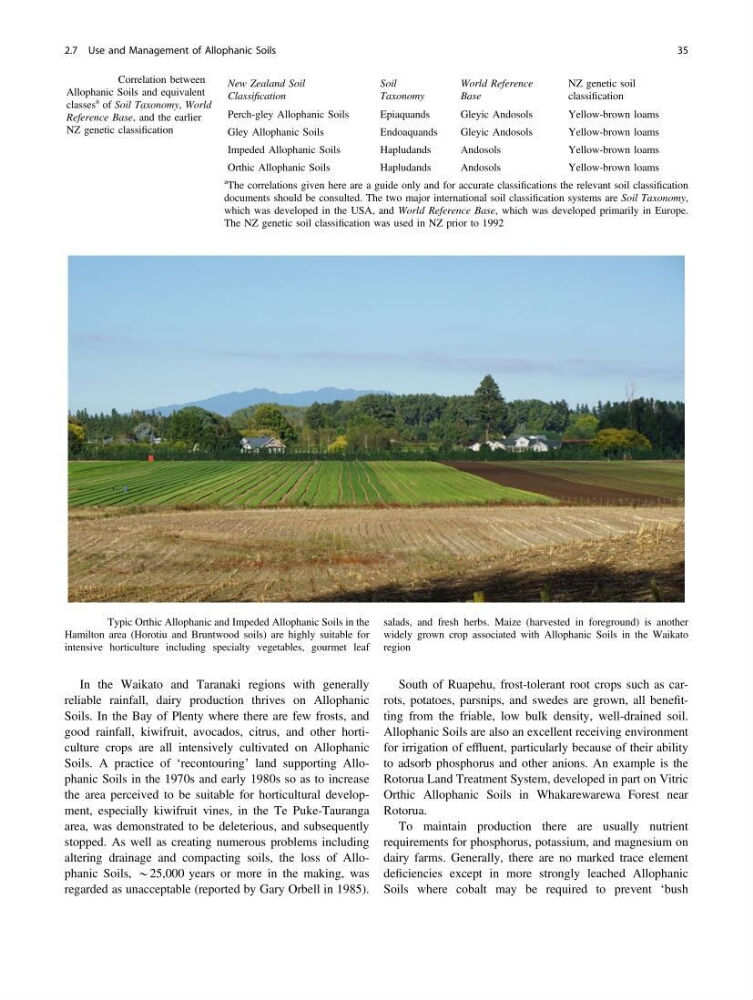
Fig. 2.9 Typic Orthic Allophanic and Impeded Allophanic Soils in the
Hamilton area (Horotiu and Bruntwood soils) are highly suitable for
intensive horticulture including specialty vegetables, gourmet leaf
salads, and fresh herbs. Maize (harvested in foreground) is another
widely grown crop associated with Allophanic Soils in the Waikato
region
2.7 Use and Management of Allophanic Soils
35
reliable rainfall, dairy production thrives on Allophanic
Soils. In the Bay of Plenty where there are few frosts, and
good rainfall, kiwifruit, avocados, citrus, and other horticulture crops are all intensively cultivated on Allophanic
Soils. A practice of ‘recontouring’ land supporting Allophanic Soils in the 1970s and early 1980s so as to increase
the area perceived to be suitable for horticultural development, especially kiwifruit vines, in the Te Puke-Tauranga
area, was demonstrated to be deleterious, and subsequently
stopped. As well as creating numerous problems including
altering drainage and compacting soils, the loss of Allophanic Soils, *25,000 years or more in the making, was
regarded as unacceptable (reported by Gary Orbell in 1985).
South of Ruapehu, frost-tolerant root crops such as carrots, potatoes, parsnips, and swedes are grown, all benefitting from the friable, low bulk density, well-drained soil.
Allophanic Soils are also an excellent receiving environment
for irrigation of effluent, particularly because of their ability
to adsorb phosphorus and other anions. An example is the
Rotorua Land Treatment System, developed in part on Vitric
Orthic Allophanic Soils in Whakarewarewa Forest near
Rotorua.
To maintain production there are usually nutrient
requirements for phosphorus, potassium, and magnesium on
dairy farms. Generally, there are no marked trace element
deficiencies except in more strongly leached Allophanic
Soils where cobalt may be required to prevent ‘bush
Table 2.3 Correlation between
Allophanic Soils and equivalent
classes
a of Soil Taxonomy, World
Reference Base, and the earlier
NZ genetic classification
New Zealand Soil
Classification
Soil
Taxonomy
World Reference
Base
NZ genetic soil
classification
Perch-gley Allophanic Soils
Epiaquands
Gleyic Andosols
Yellow-brown loams
Gley Allophanic Soils
Endoaquands
Gleyic Andosols
Yellow-brown loams
Impeded Allophanic Soils
Hapludands
Andosols
Yellow-brown loams
Orthic Allophanic Soils
Hapludands
Andosols
Yellow-brown loams
a The correlations given here are a guide only and for accurate classifications the relevant soil classification
documents should be consulted. The two major international soil classification systems are Soil Taxonomy,
which was developed in the USA, and World Reference Base, which was developed primarily in Europe.
The NZ genetic soil classification was used in NZ prior to 1992
Fig. 2.9 Typic Orthic Allophanic and Impeded Allophanic Soils in the
Hamilton area (Horotiu and Bruntwood soils) are highly suitable for
intensive horticulture including specialty vegetables, gourmet leaf
salads, and fresh herbs. Maize (harvested in foreground) is another
widely grown crop associated with Allophanic Soils in the Waikato
region
2.7 Use and Management of Allophanic Soils
35