

storm events (such as that of 17–18 July 2020, with a rainfall
of 215 mm in 24 h at Whangarei, and nearly 60 mm at
Kaikohe in 1 h) result in widespread flooding, erosion, and
land-sliding in parts of Northland.
Ultic Soils are generally not well suited to intensive
cropping or horticulture. However, an exception is the
Buried-granular Yellow Ultic Soil (Kainui soil) that occurs
on flat summits or gently sloping shoulders of low hills in
the northern Waikato. The Kainui soils have been used
successfully for market gardening in the Hamilton area,
mainly for summer crops planted early in spring as soon as
the soil becomes sufficiently dry to work. Early planting is
needed to avoid commonly occurring late summer droughts
during which the soils become cracked and hard unless
irrigated (which can generate heavy cropping). Very wet
conditions associated with water perching in winter (on the
impermeable subsoil paleosol on Hamilton Ash) do not
normally allow winter crops to be grown because the sticky,
wet soil usually precludes the use of wheeled vehicles. A tea
plantation has been developed, partly on Kainui soils, north
of Hamilton (Fig. 16.12).
Another example of intensive land use on Ultic Soils is
orcharding in the Mapua area near Nelson. Although posing
significant problems, the wet, acidic, clayey, and enleached
Mottled Albic Ultic Soil (Mapua series, Tables 16.2 and
16.3) is capable of growing high-quality apples.
Plantation forestry (Fig. 16.5) has been utilised successfully on Ultic Soils in Northland. In the context of optimising sustainable forest management, Haydon Jones
examined the likely impacts of forest harvesting on the
properties of Ultic Soils in the southern Mahurangi Forest.
He found that forest harvesting resulted in a decrease in
macroporosity, Bray Mg, and pH, and an increase in mean
total C, Bray P, and K. Jones attributed these changes to
disturbance by harvesting machinery, slash deposition, and
the development of grass cover. The results showed that
forest harvesting had a negative impact on some soil properties, such as causing soil compaction and acidification, and
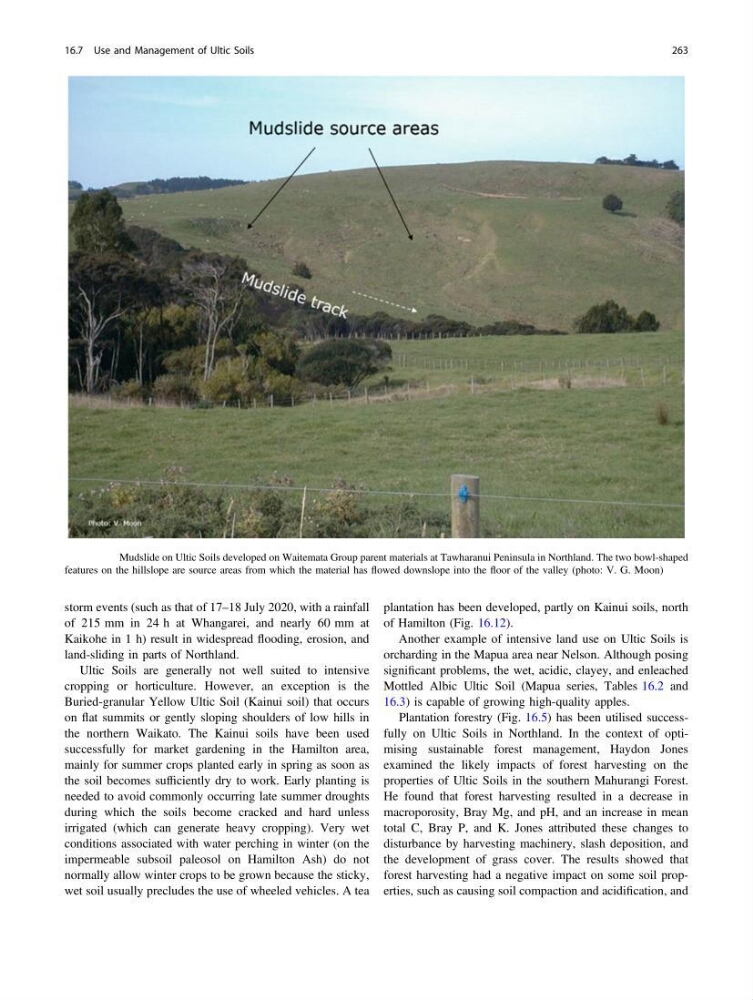
Fig. 16.11 Mudslide on Ultic Soils developed on Waitemata Group parent materials at Tawharanui Peninsula in Northland. The two bowl-shaped
features on the hillslope are source areas from which the material has flowed downslope into the floor of the valley (photo: V. G. Moon)
16.7 Use and Management of Ultic Soils
263
of 215 mm in 24 h at Whangarei, and nearly 60 mm at
Kaikohe in 1 h) result in widespread flooding, erosion, and
land-sliding in parts of Northland.
Ultic Soils are generally not well suited to intensive
cropping or horticulture. However, an exception is the
Buried-granular Yellow Ultic Soil (Kainui soil) that occurs
on flat summits or gently sloping shoulders of low hills in
the northern Waikato. The Kainui soils have been used
successfully for market gardening in the Hamilton area,
mainly for summer crops planted early in spring as soon as
the soil becomes sufficiently dry to work. Early planting is
needed to avoid commonly occurring late summer droughts
during which the soils become cracked and hard unless
irrigated (which can generate heavy cropping). Very wet
conditions associated with water perching in winter (on the
impermeable subsoil paleosol on Hamilton Ash) do not
normally allow winter crops to be grown because the sticky,
wet soil usually precludes the use of wheeled vehicles. A tea
plantation has been developed, partly on Kainui soils, north
of Hamilton (Fig. 16.12).
Another example of intensive land use on Ultic Soils is
orcharding in the Mapua area near Nelson. Although posing
significant problems, the wet, acidic, clayey, and enleached
Mottled Albic Ultic Soil (Mapua series, Tables 16.2 and
16.3) is capable of growing high-quality apples.
Plantation forestry (Fig. 16.5) has been utilised successfully on Ultic Soils in Northland. In the context of optimising sustainable forest management, Haydon Jones
examined the likely impacts of forest harvesting on the
properties of Ultic Soils in the southern Mahurangi Forest.
He found that forest harvesting resulted in a decrease in
macroporosity, Bray Mg, and pH, and an increase in mean
total C, Bray P, and K. Jones attributed these changes to
disturbance by harvesting machinery, slash deposition, and
the development of grass cover. The results showed that
forest harvesting had a negative impact on some soil properties, such as causing soil compaction and acidification, and
Fig. 16.11 Mudslide on Ultic Soils developed on Waitemata Group parent materials at Tawharanui Peninsula in Northland. The two bowl-shaped
features on the hillslope are source areas from which the material has flowed downslope into the floor of the valley (photo: V. G. Moon)
16.7 Use and Management of Ultic Soils
263