

clay-vermiculite. That montmorillonite and halloysite are
swelling clays has implications for slope stability. Small
amounts of crystalline iron oxides, including lepidocrocite
(in orange mottles) and goethite (in yellowish-coloured
horizons), occur and reddish horizons contain haematite.
16.4.2 Physical Properties
Ultic Soils are have some of the highest clay contents of any
soils in New Zealand (Fig. 16.9, Table 16.2). The effect of
clay having been moved down through the soil profile is
evident with clay contents of about 25–50% in topsoils and
about 50–75% in subsoils. Much of the translocated clay is
likely to be fine clay (<0.2 lm) because the fine clay/total
clay ratio increases in Bt horizons (e.g. the ratio essentially
doubles from 0.2 to 0.4 in the Waikare soil, a Perch-gleyed
Albic Ultic Soil). The soil dry bulk density peaks just below
the topsoil where a densipan occurs in many Ultic Soils.
However, soil dry bulk densities remain high (1.2–
1.4 t m
−3 ) throughout the subsoil. Topsoils have a greater
porosity and this is reflected in the lower soil dry bulk
density (about 1.0 t m
−3 ), and higher water holding capacity
(about 30%), in the topsoil than in subsoils. The heavy clay
subsoils have relatively low total available water-holding
capacity as there is a lack of pore space and the clay strongly
adsorbs any water that is in the subsoil (Fig. 16.9).
A layer with slower permeability (Bt horizons) occurs in
most Ultic Soil profiles, thus the majority of soils are
imperfectly to poorly drained, although a few are well
drained. Soil water movement is mainly along planar voids
which open up as the soil dries in summer, but in winter as
the soil wets up, the common smectite clays and halloysite
swell and voids are closed, leaving the soil with only very
low hydraulic conductivity. Surface horizons, especially
silty ones, are dispersible and are thus particularly prone to
water erosion where the surface vegetation has been
removed.
16.4.3 Chemical Properties
The pH of topsoil is, like base saturation, strongly affected by
fertiliser and lime use. Subsoil pH values tend to be strongly,
or, extremely acid (pH <5.5). Subsoils with pH values less
than about 4.8 are likely to be affected by toxic levels of
plant-available aluminium which may inhibit root function and
contribute to shallow rooting habits in aluminium-sensitive
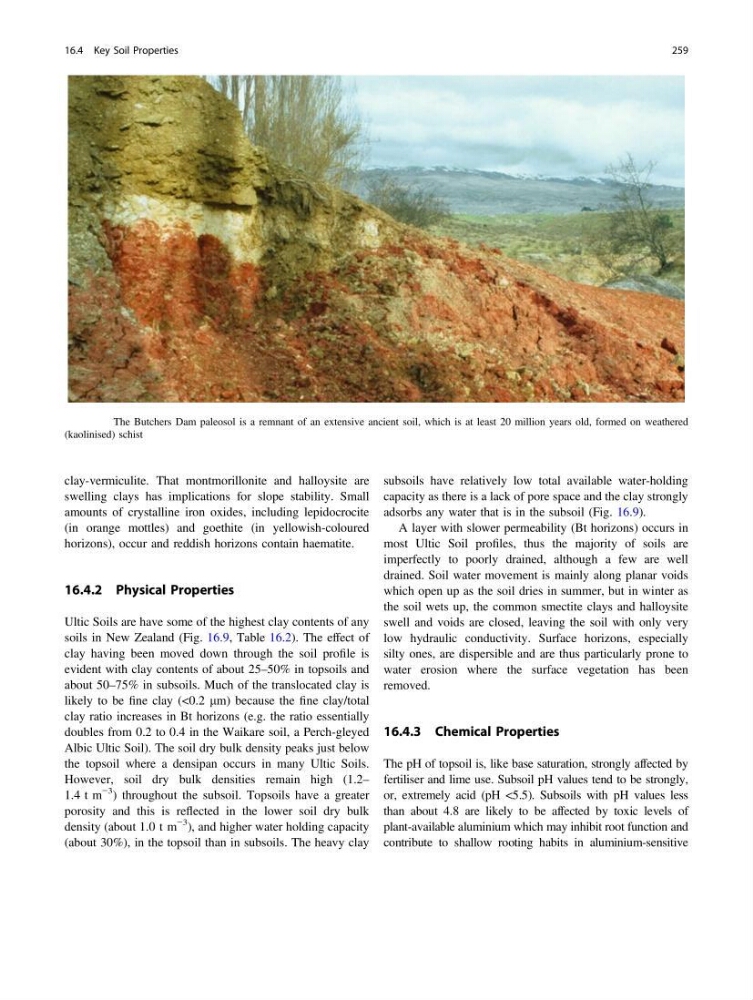
Fig. 16.8 The Butchers Dam paleosol is a remnant of an extensive ancient soil, which is at least 20 million years old, formed on weathered
(kaolinised) schist
16.4 Key Soil Properties
259
swelling clays has implications for slope stability. Small
amounts of crystalline iron oxides, including lepidocrocite
(in orange mottles) and goethite (in yellowish-coloured
horizons), occur and reddish horizons contain haematite.
16.4.2 Physical Properties
Ultic Soils are have some of the highest clay contents of any
soils in New Zealand (Fig. 16.9, Table 16.2). The effect of
clay having been moved down through the soil profile is
evident with clay contents of about 25–50% in topsoils and
about 50–75% in subsoils. Much of the translocated clay is
likely to be fine clay (<0.2 lm) because the fine clay/total
clay ratio increases in Bt horizons (e.g. the ratio essentially
doubles from 0.2 to 0.4 in the Waikare soil, a Perch-gleyed
Albic Ultic Soil). The soil dry bulk density peaks just below
the topsoil where a densipan occurs in many Ultic Soils.
However, soil dry bulk densities remain high (1.2–
1.4 t m
−3 ) throughout the subsoil. Topsoils have a greater
porosity and this is reflected in the lower soil dry bulk
density (about 1.0 t m
−3 ), and higher water holding capacity
(about 30%), in the topsoil than in subsoils. The heavy clay
subsoils have relatively low total available water-holding
capacity as there is a lack of pore space and the clay strongly
adsorbs any water that is in the subsoil (Fig. 16.9).
A layer with slower permeability (Bt horizons) occurs in
most Ultic Soil profiles, thus the majority of soils are
imperfectly to poorly drained, although a few are well
drained. Soil water movement is mainly along planar voids
which open up as the soil dries in summer, but in winter as
the soil wets up, the common smectite clays and halloysite
swell and voids are closed, leaving the soil with only very
low hydraulic conductivity. Surface horizons, especially
silty ones, are dispersible and are thus particularly prone to
water erosion where the surface vegetation has been
removed.
16.4.3 Chemical Properties
The pH of topsoil is, like base saturation, strongly affected by
fertiliser and lime use. Subsoil pH values tend to be strongly,
or, extremely acid (pH <5.5). Subsoils with pH values less
than about 4.8 are likely to be affected by toxic levels of
plant-available aluminium which may inhibit root function and
contribute to shallow rooting habits in aluminium-sensitive
Fig. 16.8 The Butchers Dam paleosol is a remnant of an extensive ancient soil, which is at least 20 million years old, formed on weathered
(kaolinised) schist
16.4 Key Soil Properties
259