

and a resultant multi-layered Buried-allophanic Orthic
Pumice Soil.
Soon after emplacement, the pumiceous deposits are
subjected to the onset of weathering and soil-forming processes operating from the land surface downwards (topdown
pedogenesis). The Pumice Soil develops from an initial Raw
Soil, through Recent Soil, and eventually to Pumice Soil.
Given further time, and depending on environmental conditions, the Pumice Soils may eventually develop into
Allophanic, and ultimately Granular Soils. Some have
already developed into Podzol Soils where elevation and
rainfall are high (Chap. 11).
The pumiceous parent material, like the typically finer
grained rhyolitic and andesitic tephra deposits in which
Allophanic Soils are formed, is dominated by volcanic glass
(Sect. 12.4). Hence in most cases, the processes that form the
nanocrystalline clays, allophane and ferrihydrite, are followed
(Chap. 2). Gradually, vegetation becomes established on the
new materials, starting with tough pioneer species of lichens
and plants such as bracken that are tolerant of low-nutrient,
low-moisture environments. The pioneer plants stabilise the
Raw Soil surface and plant materials break down to provide
organic matter, especially nitrogen, that supports growth of a
wider range of plants. Over time the plant community
strengthens and organic matter starts to accumulate in the soil,
leading to the development of an A horizon (the process of
melanisation) and thus formation of a Recent Soil.
Chemical and physical weathering processes are aided by
weakly acidified water leaching through the soil. Carbon
dioxide, from the atmosphere and from soil microbial respiration, dissolves in water to form carbonic acid (H 2 CO 3 )
which, along with organic acids from plants, acidifies the
soil water. The weakly acidic soil solution weathers volcanic
glass (as well as mafic and felsic minerals, such as feldspar)
in the tephra by hydrolysis. Hydrolysis occurs because
hydrogen ions (H
+
) are continuously released from the acids,
and attack the easily weathered glass fragments and mineral
grains to release silicon, aluminium, and various cations into
the soil solution. The silicon solutes form silicic acid
(H 4 SiO 4 ) and the aluminium forms an Al-rich gibbsite-like
product, and these precipitate together as allophane and
imogolite. Ferrihydrite is formed in small amounts as a
nanocrystalline, iron-rich, oxide clay equivalent to
allophane.
Clay formation is rapid in Pumice Soils, because volcanic
glass is thermodynamically unstable and vesicular pumice
fragments have a high surface area and are porous. The
relatively warm, humid, climate in central North Island also
supports relatively rapid chemical weathering processes.
A weathered-B horizon (Bw) will, therefore, form relatively quickly with the small amounts of clays coating the
particle surfaces and imparting yellowish-brown colours (a
process known as brunification). To qualify as a Pumice
Soil, a Bw horizon at least 5 cm thick must have formed.
That such a soil horizon can form in barely 700 years (the
age of the Kaharoa tephra deposits) attests to the rapidity of
pedogenesis in the pumice materials in the North Island
environment.
On the 1800-year-old Taupo deposits, profile morphologies differ according to increasing elevation and rainfall, and
with change in forest-type cover, so that leaching increases
markedly. Wim Rijkse and Brian Daly showed that on a
sequence of soils on Taupo pumice materials, the B horizons
changed from a thin, yellowish-brown (10YR) Bw horizon
under 1200 mm annual rainfall (at 150–450 m elevation)
though to a thick, reddish-brown (7.5YR to 5YR) Bs horizon
under 1500–2000 mm rainfall (at >550 m elevation and
under podocarp-dominated forest, such as on the Mamaku
Plateau—Chap. 11). Thus, the three soils, identical in age
and parent material, have developed into an Orthic Pumice
Soil, a Podzolic Pumice Soil, and an Orthic Podzol Soil as
leaching and podzolisation increased.
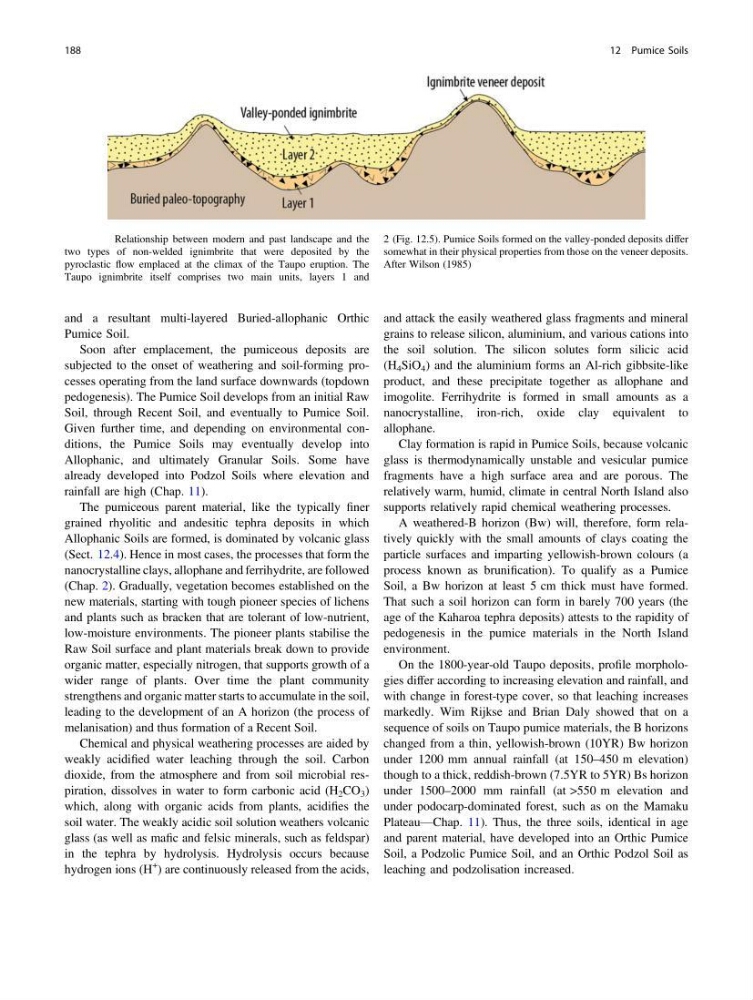
Fig. 12.9 Relationship between modern and past landscape and the
two types of non-welded ignimbrite that were deposited by the
pyroclastic flow emplaced at the climax of the Taupo eruption. The
Taupo ignimbrite itself comprises two main units, layers 1 and
2 (Fig. 12.5). Pumice Soils formed on the valley-ponded deposits differ
somewhat in their physical properties from those on the veneer deposits.
After Wilson (1985)
188
12 Pumice Soils
Pumice Soil.
Soon after emplacement, the pumiceous deposits are
subjected to the onset of weathering and soil-forming processes operating from the land surface downwards (topdown
pedogenesis). The Pumice Soil develops from an initial Raw
Soil, through Recent Soil, and eventually to Pumice Soil.
Given further time, and depending on environmental conditions, the Pumice Soils may eventually develop into
Allophanic, and ultimately Granular Soils. Some have
already developed into Podzol Soils where elevation and
rainfall are high (Chap. 11).
The pumiceous parent material, like the typically finer
grained rhyolitic and andesitic tephra deposits in which
Allophanic Soils are formed, is dominated by volcanic glass
(Sect. 12.4). Hence in most cases, the processes that form the
nanocrystalline clays, allophane and ferrihydrite, are followed
(Chap. 2). Gradually, vegetation becomes established on the
new materials, starting with tough pioneer species of lichens
and plants such as bracken that are tolerant of low-nutrient,
low-moisture environments. The pioneer plants stabilise the
Raw Soil surface and plant materials break down to provide
organic matter, especially nitrogen, that supports growth of a
wider range of plants. Over time the plant community
strengthens and organic matter starts to accumulate in the soil,
leading to the development of an A horizon (the process of
melanisation) and thus formation of a Recent Soil.
Chemical and physical weathering processes are aided by
weakly acidified water leaching through the soil. Carbon
dioxide, from the atmosphere and from soil microbial respiration, dissolves in water to form carbonic acid (H 2 CO 3 )
which, along with organic acids from plants, acidifies the
soil water. The weakly acidic soil solution weathers volcanic
glass (as well as mafic and felsic minerals, such as feldspar)
in the tephra by hydrolysis. Hydrolysis occurs because
hydrogen ions (H
+
) are continuously released from the acids,
and attack the easily weathered glass fragments and mineral
grains to release silicon, aluminium, and various cations into
the soil solution. The silicon solutes form silicic acid
(H 4 SiO 4 ) and the aluminium forms an Al-rich gibbsite-like
product, and these precipitate together as allophane and
imogolite. Ferrihydrite is formed in small amounts as a
nanocrystalline, iron-rich, oxide clay equivalent to
allophane.
Clay formation is rapid in Pumice Soils, because volcanic
glass is thermodynamically unstable and vesicular pumice
fragments have a high surface area and are porous. The
relatively warm, humid, climate in central North Island also
supports relatively rapid chemical weathering processes.
A weathered-B horizon (Bw) will, therefore, form relatively quickly with the small amounts of clays coating the
particle surfaces and imparting yellowish-brown colours (a
process known as brunification). To qualify as a Pumice
Soil, a Bw horizon at least 5 cm thick must have formed.
That such a soil horizon can form in barely 700 years (the
age of the Kaharoa tephra deposits) attests to the rapidity of
pedogenesis in the pumice materials in the North Island
environment.
On the 1800-year-old Taupo deposits, profile morphologies differ according to increasing elevation and rainfall, and
with change in forest-type cover, so that leaching increases
markedly. Wim Rijkse and Brian Daly showed that on a
sequence of soils on Taupo pumice materials, the B horizons
changed from a thin, yellowish-brown (10YR) Bw horizon
under 1200 mm annual rainfall (at 150–450 m elevation)
though to a thick, reddish-brown (7.5YR to 5YR) Bs horizon
under 1500–2000 mm rainfall (at >550 m elevation and
under podocarp-dominated forest, such as on the Mamaku
Plateau—Chap. 11). Thus, the three soils, identical in age
and parent material, have developed into an Orthic Pumice
Soil, a Podzolic Pumice Soil, and an Orthic Podzol Soil as
leaching and podzolisation increased.
Fig. 12.9 Relationship between modern and past landscape and the
two types of non-welded ignimbrite that were deposited by the
pyroclastic flow emplaced at the climax of the Taupo eruption. The
Taupo ignimbrite itself comprises two main units, layers 1 and
2 (Fig. 12.5). Pumice Soils formed on the valley-ponded deposits differ
somewhat in their physical properties from those on the veneer deposits.
After Wilson (1985)
188
12 Pumice Soils