

Zealand and are similar to Oxisols of subtropical and tropical
environments throughout the world. Just like old iron having
been left outside too long—they have effectively ‘rusted’.
Oxidic Soils are about as weathered as a soil can get, the Aland Fe-rich oxides being thermodynamically very stable in
the prevailing conditions.
Oxidic Soils contain appreciable amounts of iron and
aluminium oxides. Despite high clay contents the soils are
friable with low plasticity. The soils typically have a
well-formed, stable, fine polyhedral structure that crushes,
with friable failure, to microaggregates with diameters of
2 mm or less. The fine structure is stabilised by the iron and
aluminium oxides, thus providing good physical properties
for plant growth. Some soils are characterised by the formation of iron- and/or aluminium-rich nodules that are
segregations of hard, rounded, subrounded, or irregularly
shaped materials, which are typically *0.5–5 cm in size
and which (unlike concretions) lack internal concentric
banding. In some soils, the nodules are sufficiently abundant
to be referred to as ‘ironstone’ or, where aluminium is
dominant, to be considered as ‘bauxite’ (an aluminium-rich
ore). Nodular horizons are *45 cm thick on average (range
20–75 cm), and usually occur below *40 cm from the
surface, and have *15–75% nodules by volume.
Natural fertility is low and so Oxidic Soils require added
fertiliser, and good fertility management, to be productive.
Because they occur in the warm and humid climates of
Northland and Auckland, and have good physical properties,
Oxidic Soils are valued for horticulture especially kiwifruit,
citrus, tamarillo, and, increasingly, avocado.
9.1.2 Areas of Occurrence
Oxidic Soils are only known in the Auckland and Northland
regions (Fig. 9.2). They cover <1% of New Zealand. The
Oxidic Soils form in small pockets throughout Northland,
with the largest areas concentrated in the Bay of Islands near
Kerikeri.
9.1.3 Variation Within the Oxidic Soil Order
The following soil groups are defined within the New
Zealand Soil Classification (Fig. 9.3):
Perch-gley Oxidic Soils—periodic wetness caused by a
perched water table,
Nodular Oxidic Soils—prominent segregated accumulations
mainly of iron oxides and/or gibbsite, and
Orthic Oxidic Soil—other Oxidic Soils.
The subgroups include Nodular (containing a layer at
least 10 cm thick with at least 15% iron- or aluminium-rich
nodules), Mottled (with a rust-coloured (redox-mottled)
horizon, or a pale-coloured greyish horizon above a slowly
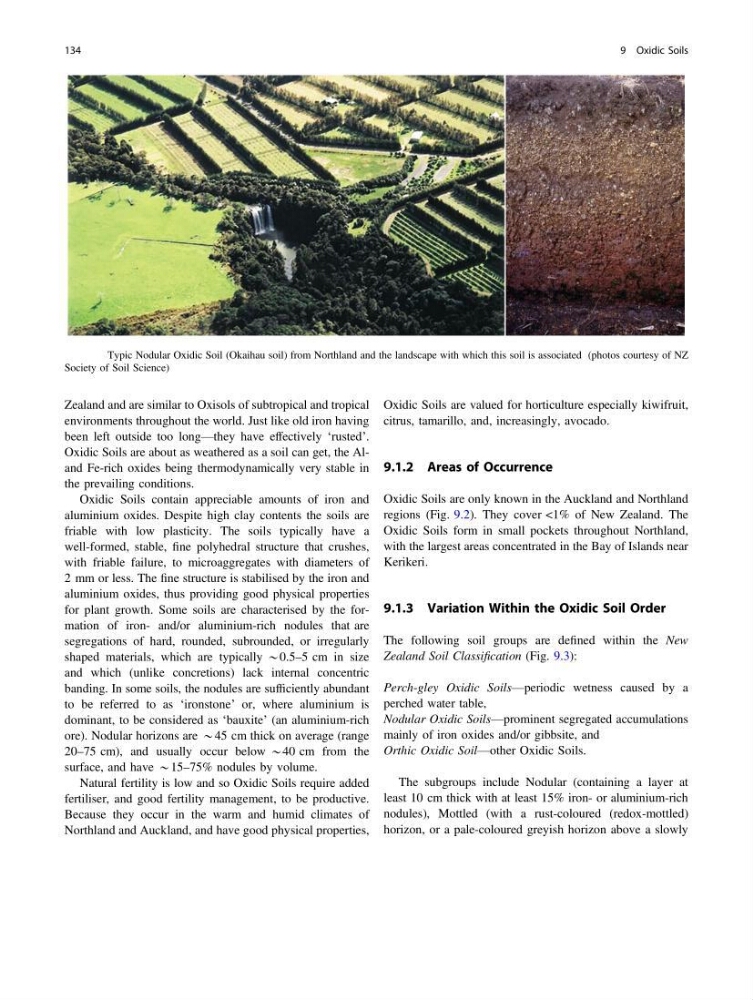
Fig. 9.1 Typic Nodular Oxidic Soil (Okaihau soil) from Northland and the landscape with which this soil is associated (photos courtesy of NZ
Society of Soil Science)
134
9 Oxidic Soils
environments throughout the world. Just like old iron having
been left outside too long—they have effectively ‘rusted’.
Oxidic Soils are about as weathered as a soil can get, the Aland Fe-rich oxides being thermodynamically very stable in
the prevailing conditions.
Oxidic Soils contain appreciable amounts of iron and
aluminium oxides. Despite high clay contents the soils are
friable with low plasticity. The soils typically have a
well-formed, stable, fine polyhedral structure that crushes,
with friable failure, to microaggregates with diameters of
2 mm or less. The fine structure is stabilised by the iron and
aluminium oxides, thus providing good physical properties
for plant growth. Some soils are characterised by the formation of iron- and/or aluminium-rich nodules that are
segregations of hard, rounded, subrounded, or irregularly
shaped materials, which are typically *0.5–5 cm in size
and which (unlike concretions) lack internal concentric
banding. In some soils, the nodules are sufficiently abundant
to be referred to as ‘ironstone’ or, where aluminium is
dominant, to be considered as ‘bauxite’ (an aluminium-rich
ore). Nodular horizons are *45 cm thick on average (range
20–75 cm), and usually occur below *40 cm from the
surface, and have *15–75% nodules by volume.
Natural fertility is low and so Oxidic Soils require added
fertiliser, and good fertility management, to be productive.
Because they occur in the warm and humid climates of
Northland and Auckland, and have good physical properties,
Oxidic Soils are valued for horticulture especially kiwifruit,
citrus, tamarillo, and, increasingly, avocado.
9.1.2 Areas of Occurrence
Oxidic Soils are only known in the Auckland and Northland
regions (Fig. 9.2). They cover <1% of New Zealand. The
Oxidic Soils form in small pockets throughout Northland,
with the largest areas concentrated in the Bay of Islands near
Kerikeri.
9.1.3 Variation Within the Oxidic Soil Order
The following soil groups are defined within the New
Zealand Soil Classification (Fig. 9.3):
Perch-gley Oxidic Soils—periodic wetness caused by a
perched water table,
Nodular Oxidic Soils—prominent segregated accumulations
mainly of iron oxides and/or gibbsite, and
Orthic Oxidic Soil—other Oxidic Soils.
The subgroups include Nodular (containing a layer at
least 10 cm thick with at least 15% iron- or aluminium-rich
nodules), Mottled (with a rust-coloured (redox-mottled)
horizon, or a pale-coloured greyish horizon above a slowly
Fig. 9.1 Typic Nodular Oxidic Soil (Okaihau soil) from Northland and the landscape with which this soil is associated (photos courtesy of NZ
Society of Soil Science)
134
9 Oxidic Soils