

plants of the Southern Hemisphere Restionaceae family,
which are common in New Zealand), sedges, shrubs, and/or
trees. Although some mineral material (such as flood deposited alluvium or tephra-fall deposits) may be mixed
through the organic material, or present as thin interbedded
mineral layers, the soil as a whole is dominated by organic
matter. Thus the soil properties are markedly different from
those of mineral soils. Soils on peat are characterised by O
horizons and those on forest litter by L, F, and H horizons.
8.1.2 Areas of Occurrence
Organic Soils occur in wetlands, or under forests that produce
thick acid litter, most commonly in areas of high rainfall
and/or with a high frequency of rain-days. Organic Soils
cover 1% of New Zealand, with an estimated total area of
260 000 ha, of which 190000 ha (72%) are under agricultural production (Fig. 8.2). The most extensive areas are in
the Waikato lowlands, Westland, Southland, and the Otago
uplands. However, Organic Soils occur in small pockets
throughout New Zealand where water is trapped at the land
surface. Together with Gley Soils, the peat-derived Organic
Soils represent the original extent of New Zealand wetlands.
8.1.3 Variation Within the Organic Soil Order
Four soil groups (Fig. 8.3) are defined within the Organic
Soils in the New Zealand Soil Classification. The groups
distinguish between litter-derived (forest) and peat-derived
(wetland) soils and further distinguish the degree of
decomposition of the soil organic matter as follows:
Litter Organic Soils—partly or fully decomposed litter
! 40 cm thick that has accumulated under forest,
Fibric Organic Soils—in peat with plant fibres that are only
weakly decomposed,
Mesic Organic Soils—in peat that is moderately decomposed, and
Humic Organic Soils—in peat that is strongly decomposed
where plant material is no longer recognisable.
The degree of decomposition of organic soil material is
determined by the proportion of a sample that can be
recognised as plant fibres. A judgement of the amount of
fibres can be made by first rubbing the fibres in the hand,
then manipulating the sample in the fist, and then squeezing
it firmly. The decomposed material will be forced between
the fingers as a black, or dark-brown, slurry leaving the
fibrous plant material in the hand. For humic soil materials,
less than 15% of the material is left as fibres in the hand. For
fibric soil materials, 75% or more of the soil remains in the
fist as fibres. Peats with between 15 and 75% fibres are
identified as mesic. Although the test is easy it can be
somewhat messy.
Soil subgroups include Acidic (with pH predominantly
less than 4.5 in top 60 cm of soil) and mellow (pH >4.5).
Sphagnic subgroups are dominated by sphagnum moss.
Buried-podzol, Buried-gley, and Orthic subgroups are
identified within the Litter Organic Soils, formed in forests,
to recognise the underlying mineral soils.
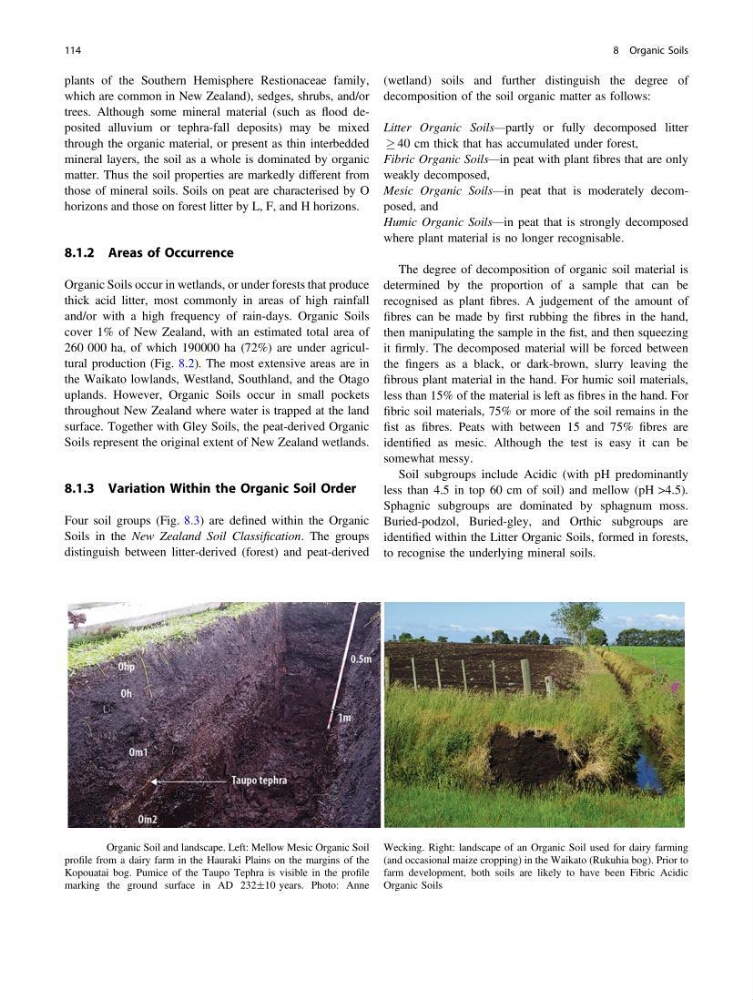
Fig. 8.1 Organic Soil and landscape. Left: Mellow Mesic Organic Soil
profile from a dairy farm in the Hauraki Plains on the margins of the
Kopouatai bog. Pumice of the Taupo Tephra is visible in the profile
marking the ground surface in AD 232±10 years. Photo: Anne
Wecking. Right: landscape of an Organic Soil used for dairy farming
(and occasional maize cropping) in the Waikato (Rukuhia bog). Prior to
farm development, both soils are likely to have been Fibric Acidic
Organic Soils
114
8 Organic Soils
which are common in New Zealand), sedges, shrubs, and/or
trees. Although some mineral material (such as flood deposited alluvium or tephra-fall deposits) may be mixed
through the organic material, or present as thin interbedded
mineral layers, the soil as a whole is dominated by organic
matter. Thus the soil properties are markedly different from
those of mineral soils. Soils on peat are characterised by O
horizons and those on forest litter by L, F, and H horizons.
8.1.2 Areas of Occurrence
Organic Soils occur in wetlands, or under forests that produce
thick acid litter, most commonly in areas of high rainfall
and/or with a high frequency of rain-days. Organic Soils
cover 1% of New Zealand, with an estimated total area of
260 000 ha, of which 190000 ha (72%) are under agricultural production (Fig. 8.2). The most extensive areas are in
the Waikato lowlands, Westland, Southland, and the Otago
uplands. However, Organic Soils occur in small pockets
throughout New Zealand where water is trapped at the land
surface. Together with Gley Soils, the peat-derived Organic
Soils represent the original extent of New Zealand wetlands.
8.1.3 Variation Within the Organic Soil Order
Four soil groups (Fig. 8.3) are defined within the Organic
Soils in the New Zealand Soil Classification. The groups
distinguish between litter-derived (forest) and peat-derived
(wetland) soils and further distinguish the degree of
decomposition of the soil organic matter as follows:
Litter Organic Soils—partly or fully decomposed litter
! 40 cm thick that has accumulated under forest,
Fibric Organic Soils—in peat with plant fibres that are only
weakly decomposed,
Mesic Organic Soils—in peat that is moderately decomposed, and
Humic Organic Soils—in peat that is strongly decomposed
where plant material is no longer recognisable.
The degree of decomposition of organic soil material is
determined by the proportion of a sample that can be
recognised as plant fibres. A judgement of the amount of
fibres can be made by first rubbing the fibres in the hand,
then manipulating the sample in the fist, and then squeezing
it firmly. The decomposed material will be forced between
the fingers as a black, or dark-brown, slurry leaving the
fibrous plant material in the hand. For humic soil materials,
less than 15% of the material is left as fibres in the hand. For
fibric soil materials, 75% or more of the soil remains in the
fist as fibres. Peats with between 15 and 75% fibres are
identified as mesic. Although the test is easy it can be
somewhat messy.
Soil subgroups include Acidic (with pH predominantly
less than 4.5 in top 60 cm of soil) and mellow (pH >4.5).
Sphagnic subgroups are dominated by sphagnum moss.
Buried-podzol, Buried-gley, and Orthic subgroups are
identified within the Litter Organic Soils, formed in forests,
to recognise the underlying mineral soils.
Fig. 8.1 Organic Soil and landscape. Left: Mellow Mesic Organic Soil
profile from a dairy farm in the Hauraki Plains on the margins of the
Kopouatai bog. Pumice of the Taupo Tephra is visible in the profile
marking the ground surface in AD 232±10 years. Photo: Anne
Wecking. Right: landscape of an Organic Soil used for dairy farming
(and occasional maize cropping) in the Waikato (Rukuhia bog). Prior to
farm development, both soils are likely to have been Fibric Acidic
Organic Soils
114
8 Organic Soils