

Nick Kim and Matthew Taylor have suggested that possible
impacts could include increased toxicity to grazing animals
(e.g. chronic fluorosis), altered soil chemistry and functioning
(e.g. reduced organic matter turnover, accelerated weathering), and increased deleterious effects on the wider environment (e.g. contamination of groundwater).
There is increasing concern about off-site environmental
effects, not only related to sediment in waterways and harbours, but also issues of nutrients (nitrogen and phosphorus)
and pesticides leaching to groundwater or reaching waterways through runoff. Various strategies to reduce N leaching, especially during winter, are useful. One is to apply N
fertiliser about a month after planting potatoes, not at the
time of planting, because potatoes only start taking up N
after 30 days. Similarly, growing cover crops during autumn
fallow periods adds organic matter to the soil and the cover
crops will also take up potentially leachable N from the soil.
Further Reading
Bakker L, Lowe DJ, Jongmans AG (1996) A micromorphological
study of pedogenic processes in an evolutionary soil sequence
formed on Late Quaternary rhyolitic tephra deposits, North Island,
New Zealand. Q Int 34–36:249–261
Basher LR, Ross CW (2002) Soil erosion rates under intensive
vegetable production on clay loam, strongly structured soils at
Pukekohe, New Zealand. Australian J Soil Res 40(6):947–961
Basher LR, Ross CW (2010) Progress in understanding erosion rates
and management at Pukekohe. In: Lowe DJ, Neall VE, Hedley M
et al (eds) Guidebook for pre-conference North Island, New Zealand
‘Volcanoes to Ocean’ field tour (27–30 July, 2010). 19th World
Soils Congress, International Union of Soil Sciences, Brisbane. Soil
and Earth Sciences Occasional Publication No 3, Massey University, Palmerston North, pp 1.4–1.11
Basher LR, Moores J, McLean G (2016) Scientific basis for erosion and
sediment control practices in New Zealand. Report prepared for
Tasman District Council. Landcare Research Ltd, 121p. http://
www.tasman.govt.nz/tasman/projects/environmental-projects/
erosion-and-sediment-control-science-review/
Briggs RM, Okada T, Itaya T et al (1994) K-Ar ages, paleomagnetism,
and geochemistry of the South Auckland volcanic field, North
Island, New Zealand. N Z J Geol Geophys 37:143–153
Bruce JG (1978) Soils of Part Raglan County, South Auckland, New
Zealand. New Zealand Soil Bureau Bulletin 41. DSIR Wellington.
Maps + 102p
Bruce JG (1979) Soils of Hamilton City, North Island, New Zealand.
New Zealand Soil Survey Report 31. 65 pp + 1 sheet 1: 20,000
Curran-Cournane F, Fraser S, Hicks D et al (2013) Changes in soil
quality and land use in grazed pasture within rural Auckland. N Z J
Agricu Res 56:102–116
Curran-Cournane F, Vaughan M, Memon A et al (2014) Trade-offs
between high class land and development: recent and future pressures
on Auckland’s valuable soil resources. Land Use Policy 39:146–154
Curran-Cournane F, Golubiewski N, Buckthought L (2018) The odds
appear stacked against versatile land: can we change them? N Z J
Agricu Res 61:315–326. https://doi.org/10.1080/00288233.2018.
1430590
Deloitte (2018) New Zealand’s food story: The Pukekohe hub. Report
prepared for Horticulture New Zealand, August 2018. http://www.
knowledgeauckland.org.nz/assets/publications/New-Zealands-foodstory-Pukekohe-hub-Hort-NZ-Deloitte-Aug-2018.pdf
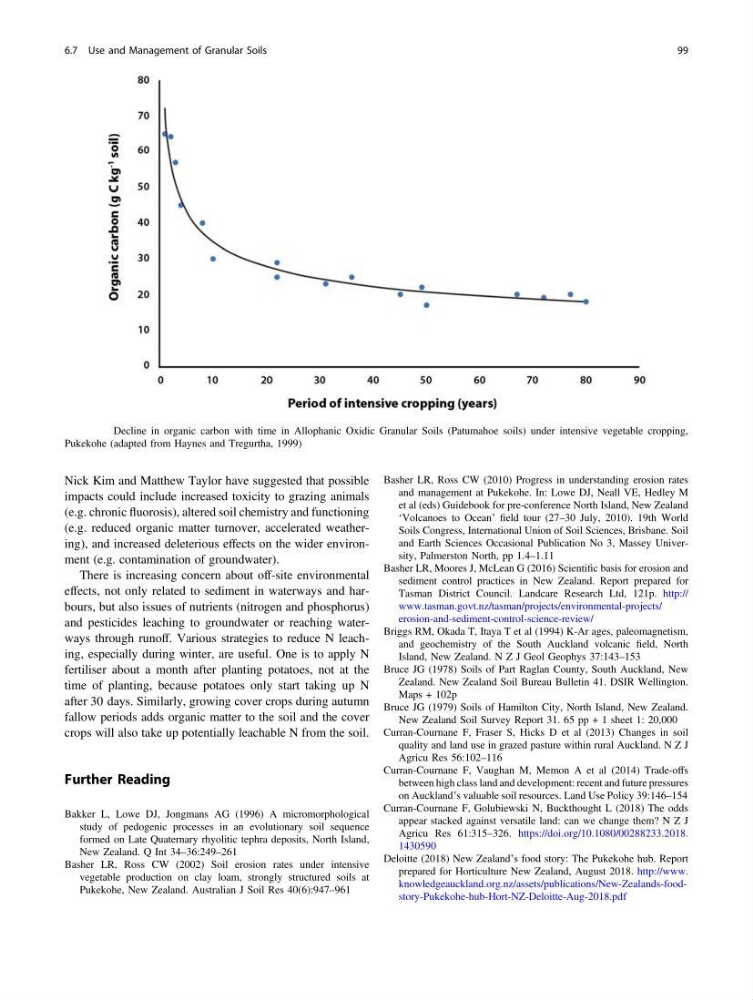
Fig. 6.10 Decline in organic carbon with time in Allophanic Oxidic Granular Soils (Patumahoe soils) under intensive vegetable cropping,
Pukekohe (adapted from Haynes and Tregurtha, 1999)
6.7 Use and Management of Granular Soils
99
impacts could include increased toxicity to grazing animals
(e.g. chronic fluorosis), altered soil chemistry and functioning
(e.g. reduced organic matter turnover, accelerated weathering), and increased deleterious effects on the wider environment (e.g. contamination of groundwater).
There is increasing concern about off-site environmental
effects, not only related to sediment in waterways and harbours, but also issues of nutrients (nitrogen and phosphorus)
and pesticides leaching to groundwater or reaching waterways through runoff. Various strategies to reduce N leaching, especially during winter, are useful. One is to apply N
fertiliser about a month after planting potatoes, not at the
time of planting, because potatoes only start taking up N
after 30 days. Similarly, growing cover crops during autumn
fallow periods adds organic matter to the soil and the cover
crops will also take up potentially leachable N from the soil.
Further Reading
Bakker L, Lowe DJ, Jongmans AG (1996) A micromorphological
study of pedogenic processes in an evolutionary soil sequence
formed on Late Quaternary rhyolitic tephra deposits, North Island,
New Zealand. Q Int 34–36:249–261
Basher LR, Ross CW (2002) Soil erosion rates under intensive
vegetable production on clay loam, strongly structured soils at
Pukekohe, New Zealand. Australian J Soil Res 40(6):947–961
Basher LR, Ross CW (2010) Progress in understanding erosion rates
and management at Pukekohe. In: Lowe DJ, Neall VE, Hedley M
et al (eds) Guidebook for pre-conference North Island, New Zealand
‘Volcanoes to Ocean’ field tour (27–30 July, 2010). 19th World
Soils Congress, International Union of Soil Sciences, Brisbane. Soil
and Earth Sciences Occasional Publication No 3, Massey University, Palmerston North, pp 1.4–1.11
Basher LR, Moores J, McLean G (2016) Scientific basis for erosion and
sediment control practices in New Zealand. Report prepared for
Tasman District Council. Landcare Research Ltd, 121p. http://
www.tasman.govt.nz/tasman/projects/environmental-projects/
erosion-and-sediment-control-science-review/
Briggs RM, Okada T, Itaya T et al (1994) K-Ar ages, paleomagnetism,
and geochemistry of the South Auckland volcanic field, North
Island, New Zealand. N Z J Geol Geophys 37:143–153
Bruce JG (1978) Soils of Part Raglan County, South Auckland, New
Zealand. New Zealand Soil Bureau Bulletin 41. DSIR Wellington.
Maps + 102p
Bruce JG (1979) Soils of Hamilton City, North Island, New Zealand.
New Zealand Soil Survey Report 31. 65 pp + 1 sheet 1: 20,000
Curran-Cournane F, Fraser S, Hicks D et al (2013) Changes in soil
quality and land use in grazed pasture within rural Auckland. N Z J
Agricu Res 56:102–116
Curran-Cournane F, Vaughan M, Memon A et al (2014) Trade-offs
between high class land and development: recent and future pressures
on Auckland’s valuable soil resources. Land Use Policy 39:146–154
Curran-Cournane F, Golubiewski N, Buckthought L (2018) The odds
appear stacked against versatile land: can we change them? N Z J
Agricu Res 61:315–326. https://doi.org/10.1080/00288233.2018.
1430590
Deloitte (2018) New Zealand’s food story: The Pukekohe hub. Report
prepared for Horticulture New Zealand, August 2018. http://www.
knowledgeauckland.org.nz/assets/publications/New-Zealands-foodstory-Pukekohe-hub-Hort-NZ-Deloitte-Aug-2018.pdf
Fig. 6.10 Decline in organic carbon with time in Allophanic Oxidic Granular Soils (Patumahoe soils) under intensive vegetable cropping,
Pukekohe (adapted from Haynes and Tregurtha, 1999)
6.7 Use and Management of Granular Soils
99