

18.7.2 Porous Scaffolds/sponges
Porous scaffolds or sponges can provide true 3D scaffolds with desired thickness.
Highly porous scaffolds with interconnected pores can be created by lyophilizing
the biomaterial solution (Petrauskaite et al. 2016), salt extraction (Caspi et al. 2007),
selective laser sintering (Mota et al. 2015) or microfabrication (Engelmayr et al.
2008). Porous scaffolds for cardiac grafts have been most commonly created using
collagen (Copes et al. 2019). Collagen composite with fibrin resulted into compressive stiffness of 18 and 21 kPa comparable to native myocardium for
iPSCs-derived CMs whereas the beating CMs were appeared only on pure collagen
groups (Kaiser et al. 2019). A major limitation of porous scaffolds is difficulty in
uniform seeding of cells into the scaffold (Alaribe et al. 2016) during the cell
culture. Cell seeding generally results in higher cell densities towards the surface
and lower towards core of the scaffolds (Nikolova and Chavali 2019).
18.7.3 Hydrogels
In another approach, cells can be suspended into non-porous, non-fibrous hydrogels, which are then cross-linked for complete encapsulation of the cells into
construct. Hydrogels are cross-linked networks of polymers with high water content
between polymer chains. They not only acts as scaffolds to provide physical support
but also permit the suspended cells to migrate and assemble into contractile tissues
to form spheroid-like micro-tissues (Fang and Eglen 2017). Hydrogels have been
created using natural biomaterials such as fibrin (Myu Mai Ja et al. 2018), collagen
(Hasan et al. 2015), and chitosan (Lu et al. 2009) etc. Composite hydrogels have
also been created by combining natural and synthetic biomaterials such as
PEGylated fibrin (Zhang et al. 2008). Cross-linking of polymers for hydrogel
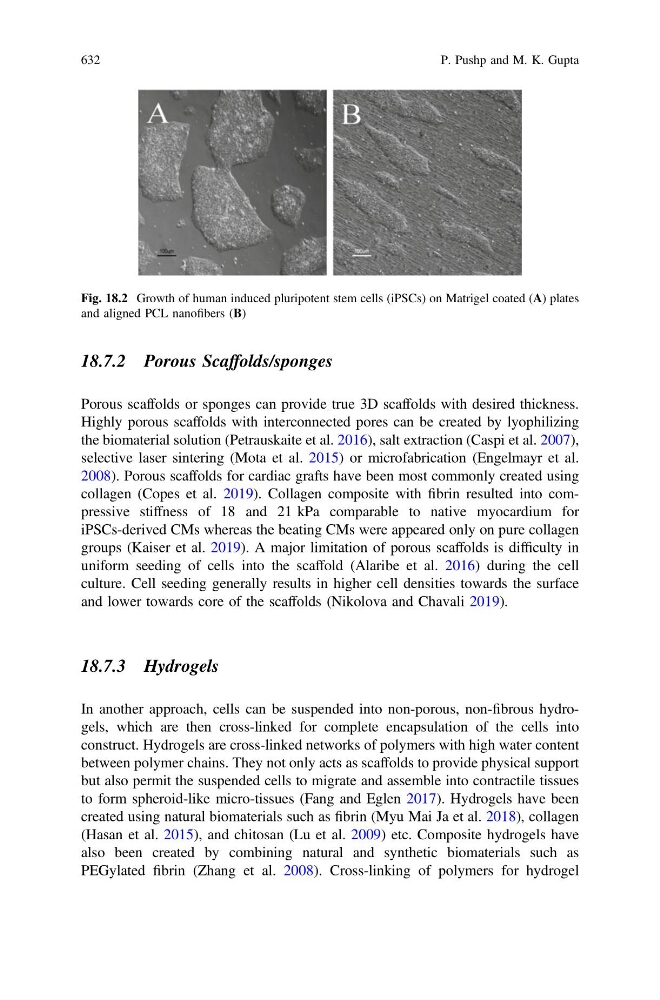
Fig. 18.2 Growth of human induced pluripotent stem cells (iPSCs) on Matrigel coated (A) plates
and aligned PCL nanofibers (B)
632
P. Pushp and M. K. Gupta