

expected with 13 million deaths of cancer patients (Miyashita 2013). However, to
fight with this dreadful disease many chemotherapeutic drugs are currently available in the market but due to their serious side effects they become risky to use for
the cancer patients. Thus, today researches are more focused on natural products
and their derivatives to treat the cancer patients and 60% of drugs from natural
origin have already been documented for cancer treatment (Saha and Pal 2016;
Saha et al. 2017; Sannigrahi et al. 2012). As we know oceans cover more than 70%
of earth’s surface and an exultingly marine source has emerged as a new hope for
cancer treatment. The chemical adaptations generally take the form of so-called
“secondary metabolites” and involve such well-known chemical classes as terpenoids, alkaloids, polypeptides, peptides, shikimic acid derivatives, sugars, steroids and multitude of mixed biogenesis metabolites (Prokschet et al. 2002). Marine
bioactive compounds are self-sufficient to treat cancer by imitating insensitivity to
anti-growth signals evasions of apoptosis, limitless replication, presenting metastasis and tissue invasion.
There are many examples of marine compounds like Parmariapatmate (seaweed) is effective against cancer disease. It inhibits cancer cell proliferation. It has
been already discussed that seaweed is enriched with protein polysaccharides
PUFA, vitamins, and minerals. It is also used for different pharmaceutical purposes,
especially for cancer treatment (Anitha et al. 2010). Among the three types of
seaweeds, phaeophyta (brown seed) has the highest phytochemical content such as
terpenes, carotenoids and phenolic compounds. These phytochemicals exhibit a
potent anticancer activity.
Since past decades marine sponges have been considered as a huge source of
bioactive natural chemical substances. Poriferas is the oldest one with excellent
0
200
400
600
800
1000
1200
Ca
Cu
Mg
Mn
K
Na
Fe
Zn
Chlorella vulgaris (Microalga)
Hypnea valenƟae ( Seaweed)
Ompok bimaculatus
Labeo pangusia
mg/100g
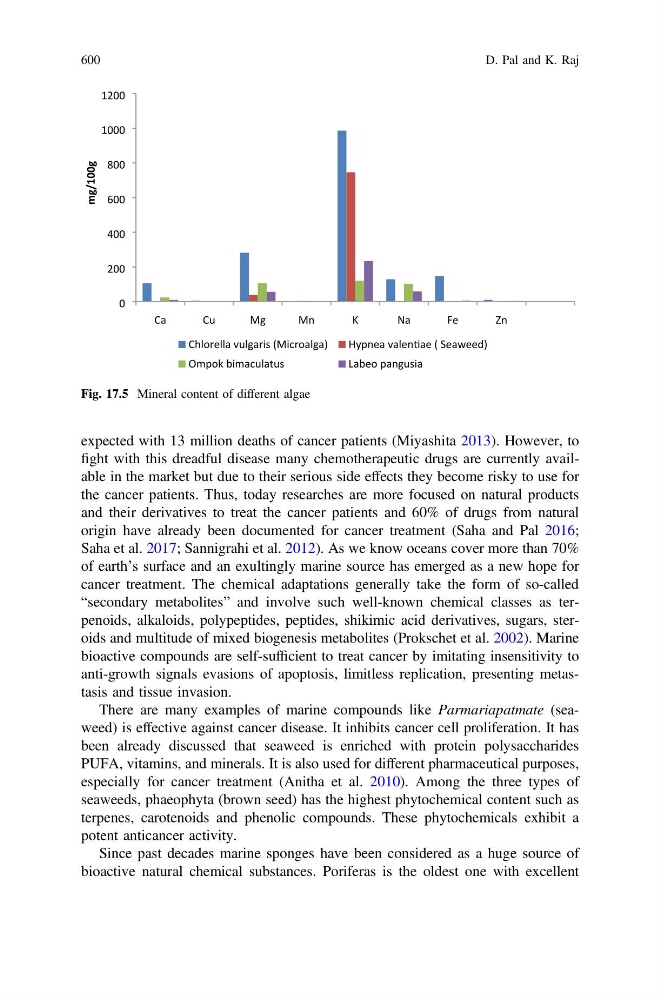
Fig. 17.5 Mineral content of different algae
600
D. Pal and K. Raj
fight with this dreadful disease many chemotherapeutic drugs are currently available in the market but due to their serious side effects they become risky to use for
the cancer patients. Thus, today researches are more focused on natural products
and their derivatives to treat the cancer patients and 60% of drugs from natural
origin have already been documented for cancer treatment (Saha and Pal 2016;
Saha et al. 2017; Sannigrahi et al. 2012). As we know oceans cover more than 70%
of earth’s surface and an exultingly marine source has emerged as a new hope for
cancer treatment. The chemical adaptations generally take the form of so-called
“secondary metabolites” and involve such well-known chemical classes as terpenoids, alkaloids, polypeptides, peptides, shikimic acid derivatives, sugars, steroids and multitude of mixed biogenesis metabolites (Prokschet et al. 2002). Marine
bioactive compounds are self-sufficient to treat cancer by imitating insensitivity to
anti-growth signals evasions of apoptosis, limitless replication, presenting metastasis and tissue invasion.
There are many examples of marine compounds like Parmariapatmate (seaweed) is effective against cancer disease. It inhibits cancer cell proliferation. It has
been already discussed that seaweed is enriched with protein polysaccharides
PUFA, vitamins, and minerals. It is also used for different pharmaceutical purposes,
especially for cancer treatment (Anitha et al. 2010). Among the three types of
seaweeds, phaeophyta (brown seed) has the highest phytochemical content such as
terpenes, carotenoids and phenolic compounds. These phytochemicals exhibit a
potent anticancer activity.
Since past decades marine sponges have been considered as a huge source of
bioactive natural chemical substances. Poriferas is the oldest one with excellent
0
200
400
600
800
1000
1200
Ca
Cu
Mg
Mn
K
Na
Fe
Zn
Chlorella vulgaris (Microalga)
Hypnea valenƟae ( Seaweed)
Ompok bimaculatus
Labeo pangusia
mg/100g
Fig. 17.5 Mineral content of different algae
600
D. Pal and K. Raj