

17.2.4 Carbohydrates
17.2.4.1 Polysaccharides
Polysaccharides (glycan) are a long chain of polymeric carbohydrates composed of
monosaccharide (simple sugar) linked by glycosidic bonds. They are found in high
content in marine seaweed and algae. Some of the examples of polysaccharides
include agar, alginate, carvageen, isolated from macroalgae whereas other
polysaccharides like chitin, chitosan, isolated from cuticles of various crustaceans,
crabs and shrimps (Spolaore et al. 2006). Red algae-like gelidium, arcicilaria,
hypnea, and gigartina are the main source of agar and they are used extensively in
food, pharmaceutical, cosmetic, paper and textiles industries for various purposes
like food gums, emulsifying agent, etc. (Prasad et al. 2006 and Calder 2009).
Various polysaccharides are not digestible for human GIT because of the absence of
suitable degradation enzymes and thus they are regarded as dietary fibre. The total
dietary fiber content of seaweeds (25–75% of the dry weight of marine algae) is
higher than the fiber content of most fruits and vegetables. Dietary fibres are categorized into two classes, one is soluble and another is insoluble. Marine algae are a
reservoir of different types of carbohydrates. For example, Phaeophyta (brown
algae) includes alginates, fucans, laminarans, etc. and all these are soluble fibres.
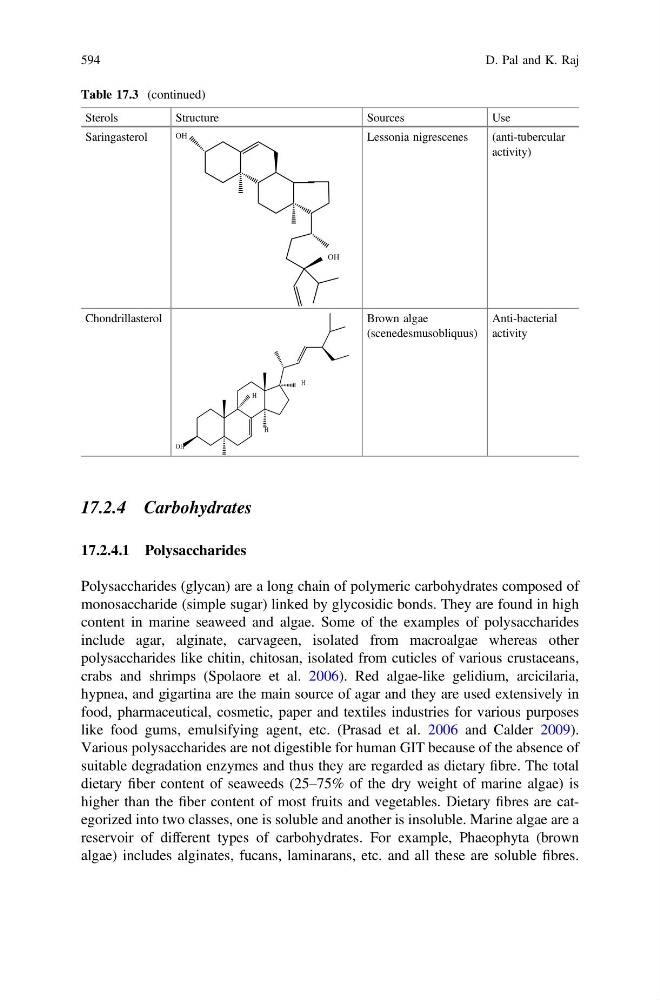
Table 17.3 (continued)
Sterols
Structure
Sources
Use
Saringasterol
OH
OH
Lessonia nigrescenes
(anti-tubercular
activity)
Chondrillasterol
OH
H
H
H
Brown algae
(scenedesmusobliquus)
Anti-bacterial
activity
594
D. Pal and K. Raj
17.2.4.1 Polysaccharides
Polysaccharides (glycan) are a long chain of polymeric carbohydrates composed of
monosaccharide (simple sugar) linked by glycosidic bonds. They are found in high
content in marine seaweed and algae. Some of the examples of polysaccharides
include agar, alginate, carvageen, isolated from macroalgae whereas other
polysaccharides like chitin, chitosan, isolated from cuticles of various crustaceans,
crabs and shrimps (Spolaore et al. 2006). Red algae-like gelidium, arcicilaria,
hypnea, and gigartina are the main source of agar and they are used extensively in
food, pharmaceutical, cosmetic, paper and textiles industries for various purposes
like food gums, emulsifying agent, etc. (Prasad et al. 2006 and Calder 2009).
Various polysaccharides are not digestible for human GIT because of the absence of
suitable degradation enzymes and thus they are regarded as dietary fibre. The total
dietary fiber content of seaweeds (25–75% of the dry weight of marine algae) is
higher than the fiber content of most fruits and vegetables. Dietary fibres are categorized into two classes, one is soluble and another is insoluble. Marine algae are a
reservoir of different types of carbohydrates. For example, Phaeophyta (brown
algae) includes alginates, fucans, laminarans, etc. and all these are soluble fibres.
Table 17.3 (continued)
Sterols
Structure
Sources
Use
Saringasterol
OH
OH
Lessonia nigrescenes
(anti-tubercular
activity)
Chondrillasterol
OH
H
H
H
Brown algae
(scenedesmusobliquus)
Anti-bacterial
activity
594
D. Pal and K. Raj