

14.3.15 Phytochemistry and Pharmacological Activities
of A. Actinophylla
14.3.15.1 Carboxypeptidase U (CPU) Inhibitor Activity
Carroll et al. reported the bioassay-guided isolation for a carboxypeptidase U
(CPU) inhibitors from the aqueous extract of A. actinophylla leaves (Carroll et al.
2005). The study resulted in the identification of actinophyllic acid (373,
Fig. 14.65) as a CPU inhibitor with an IC 50 value of 0.84 µM.
14.4 Pharmacokinetics and Metabolite Identification
There are few studies that explore the pharmacokinetic properties of the Alstoniaderived phytochemicals. These all reported studies are mainly repeated for 20, 24,
30, and 75 (Fig. 14.66).
Cao et al. have characterized the chemical constituents and rat metabolites from
the A. scholaris leaves alkaloid extract (Cao et al. 2016). After the administration of
10 mg/kg b.w per oral of alkaloid fraction, the metabolites were identified by using
an LC/SRM-MS method. Among the 35 metabolites identified, 12 were
picrinine-type 11 scholaricine-type, 9 vallesamine-type, and 3 tubotaiwine-type of
alkaloids. The developed LC/SRM-MS method was able to separate the R and S
confirmation of various components at MS
3 spectra (for scholarsine, echitamidine,
etc.). A total of 25 biotransformed metabolites were characterized in the
Andransinine (366)
O
N
O
O
N
H
O-Acetyl vallesamine (367)
N
H
N
O
O
O
O
Angustilobine A (365)
6,7-Seco-19,20-epoxy
angustilobine B (368)
N
O
O
NHO
O
Condylocarpine (369)
N
N
H
O
O
Angustiphylline (370)
N
H
HO
NH
N
O
O
O
HN
O
O
Yunnanensine (371) Venoterpine (372)
N
OH
O
O
O
N
H
N
N
H
H
N
MeOOC
HO
H
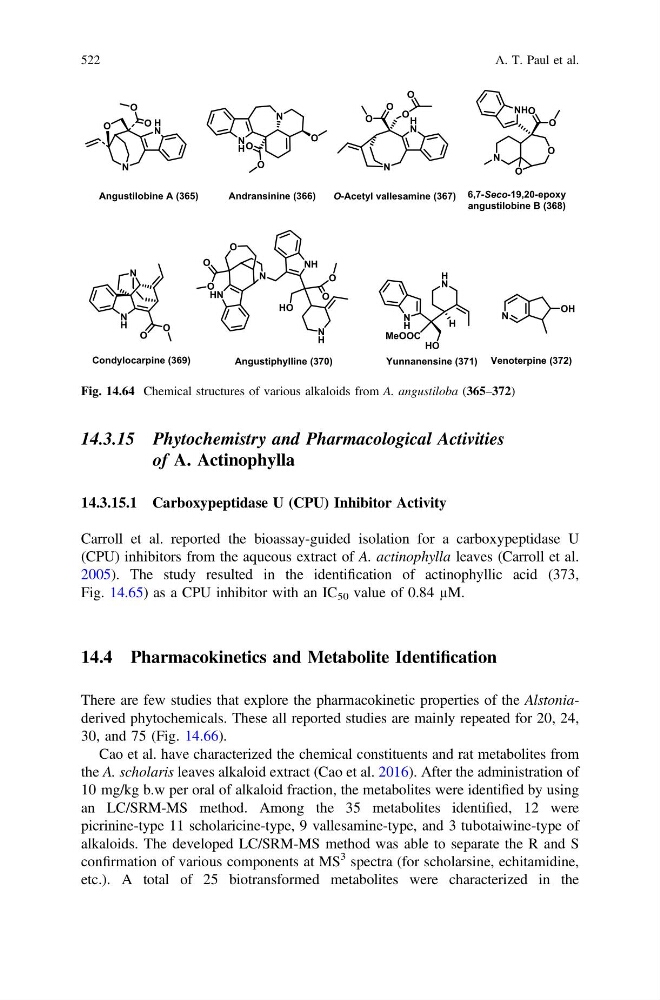
Fig. 14.64 Chemical structures of various alkaloids from A. angustiloba (365–372)
522
A. T. Paul et al.
of A. Actinophylla
14.3.15.1 Carboxypeptidase U (CPU) Inhibitor Activity
Carroll et al. reported the bioassay-guided isolation for a carboxypeptidase U
(CPU) inhibitors from the aqueous extract of A. actinophylla leaves (Carroll et al.
2005). The study resulted in the identification of actinophyllic acid (373,
Fig. 14.65) as a CPU inhibitor with an IC 50 value of 0.84 µM.
14.4 Pharmacokinetics and Metabolite Identification
There are few studies that explore the pharmacokinetic properties of the Alstoniaderived phytochemicals. These all reported studies are mainly repeated for 20, 24,
30, and 75 (Fig. 14.66).
Cao et al. have characterized the chemical constituents and rat metabolites from
the A. scholaris leaves alkaloid extract (Cao et al. 2016). After the administration of
10 mg/kg b.w per oral of alkaloid fraction, the metabolites were identified by using
an LC/SRM-MS method. Among the 35 metabolites identified, 12 were
picrinine-type 11 scholaricine-type, 9 vallesamine-type, and 3 tubotaiwine-type of
alkaloids. The developed LC/SRM-MS method was able to separate the R and S
confirmation of various components at MS
3 spectra (for scholarsine, echitamidine,
etc.). A total of 25 biotransformed metabolites were characterized in the
Andransinine (366)
O
N
O
O
N
H
O-Acetyl vallesamine (367)
N
H
N
O
O
O
O
Angustilobine A (365)
6,7-Seco-19,20-epoxy
angustilobine B (368)
N
O
O
NHO
O
Condylocarpine (369)
N
N
H
O
O
Angustiphylline (370)
N
H
HO
NH
N
O
O
O
HN
O
O
Yunnanensine (371) Venoterpine (372)
N
OH
O
O
O
N
H
N
N
H
H
N
MeOOC
HO
H
Fig. 14.64 Chemical structures of various alkaloids from A. angustiloba (365–372)
522
A. T. Paul et al.