

10.4.5 Tannins
Tannins are the most widely distributed natural compounds found in various
families of higher plants. They are non-crystalline substance and make colloid when
mixed with water. Tannins are available in vacuoles and cell sap. Chemically they
are a mixture of various complex organic compounds containing polyphenols
mainly 1,2-dihydroxy benzene (catechol) or 1,2,3-trihydroxy benzene (pyrogallol).
Tannins are soluble in dilute alkalies, glycerine, and alcohol due to the formation of
hydrogen bonds. Though they are organic compounds, basically they are insoluble
in organic solvents except for acetone. Tannins show some characteristic reactions
such as precipitation of alkaloids and gelatin, precipitated by copper, lead, and tin
salts, as well as concentrated potassium dichromate solution, bluish-black, or
brownish-green color with ferric chloride (Sieniawska et al. 2017).
Tannins containing polyphenols have the capability to precipitate protein. Due to
its ability to convert raw animal skins into leather, and therefore, they are extensively used in leather technology for decades. Tannins crosslink the proteins of
animal hides and therefore hides become more resistant to bacteria, as well as
fungus, resulting in the prevention of putrefaction (Hagerman et al. 1981). Based on
their chemical characteristic and behavior on dry distillation, tannins are generally
divided into two major groups: (a) hydrolyzable tannins (b) condensed tannins or
non-hydrolyzable tannins. The hydrolytic product of hydrolyzable tannins is generally gallic acid (3,4,5-trihydroxybenzoic acid) or ellagic acid (di ester of hexahydroxydiphenic acids) which is combined by ester linkage with –OH group of a
glucose molecule. They are hydrolyzed quickly by acids or enzymes. Two main
types of hydrolyzable tannins are available such as gallotannins and ellagitannins
derived from gallic acid and ellagic acid, respectively. Ellagitannins have the
O
O
Chromone
O
O
H 3 CO
OH
CH 3
O
O
O
CH 3
OCH 3
OCH 3
Eugenin
Khellin ( Furanochrome)
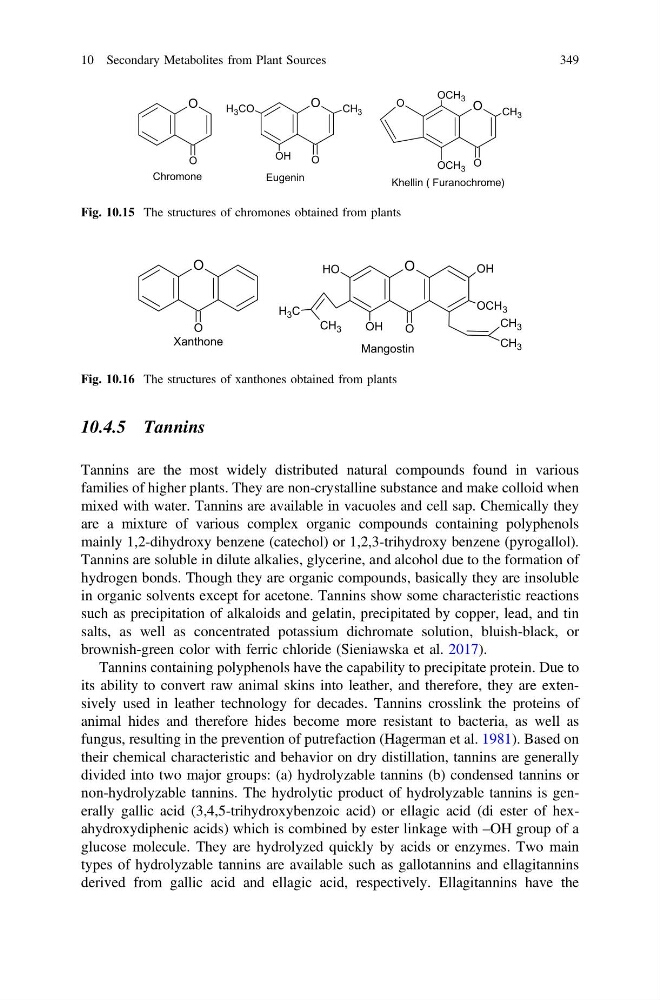
Fig. 10.15 The structures of chromones obtained from plants
O
O
Xanthone
O
O
OH
OH
O
H
OCH 3
CH 3
CH 3
C
H 3
CH 3
Mangostin
Fig. 10.16 The structures of xanthones obtained from plants
10 Secondary Metabolites from Plant Sources
349
Tannins are the most widely distributed natural compounds found in various
families of higher plants. They are non-crystalline substance and make colloid when
mixed with water. Tannins are available in vacuoles and cell sap. Chemically they
are a mixture of various complex organic compounds containing polyphenols
mainly 1,2-dihydroxy benzene (catechol) or 1,2,3-trihydroxy benzene (pyrogallol).
Tannins are soluble in dilute alkalies, glycerine, and alcohol due to the formation of
hydrogen bonds. Though they are organic compounds, basically they are insoluble
in organic solvents except for acetone. Tannins show some characteristic reactions
such as precipitation of alkaloids and gelatin, precipitated by copper, lead, and tin
salts, as well as concentrated potassium dichromate solution, bluish-black, or
brownish-green color with ferric chloride (Sieniawska et al. 2017).
Tannins containing polyphenols have the capability to precipitate protein. Due to
its ability to convert raw animal skins into leather, and therefore, they are extensively used in leather technology for decades. Tannins crosslink the proteins of
animal hides and therefore hides become more resistant to bacteria, as well as
fungus, resulting in the prevention of putrefaction (Hagerman et al. 1981). Based on
their chemical characteristic and behavior on dry distillation, tannins are generally
divided into two major groups: (a) hydrolyzable tannins (b) condensed tannins or
non-hydrolyzable tannins. The hydrolytic product of hydrolyzable tannins is generally gallic acid (3,4,5-trihydroxybenzoic acid) or ellagic acid (di ester of hexahydroxydiphenic acids) which is combined by ester linkage with –OH group of a
glucose molecule. They are hydrolyzed quickly by acids or enzymes. Two main
types of hydrolyzable tannins are available such as gallotannins and ellagitannins
derived from gallic acid and ellagic acid, respectively. Ellagitannins have the
O
O
Chromone
O
O
H 3 CO
OH
CH 3
O
O
O
CH 3
OCH 3
OCH 3
Eugenin
Khellin ( Furanochrome)
Fig. 10.15 The structures of chromones obtained from plants
O
O
Xanthone
O
O
OH
OH
O
H
OCH 3
CH 3
CH 3
C
H 3
CH 3
Mangostin
Fig. 10.16 The structures of xanthones obtained from plants
10 Secondary Metabolites from Plant Sources
349