

Secondary metabolites have a great importance to exhibit the pharmacological
activities which is established by the application of the extracts of medicinal plants
in the primitive peoples and animals to cure or treatment for various illness that is
published in different books and journals. Phytoconstituents provide various
activities such as analgesic, anti-inflammatory, antidiabetic, antimalarial, antihypertensive, antiprotozoal, antibacterial, antifungal, antiviral activity, etc. It has been
observed that some grasses such as alfalfa show biological activity like estrogen
that provides an impact on the fertility of animals (Bennets et al. 1946).
Secondary plant metabolites are grouped on the basis of their chemical structures
into several classes. This chapter deals with the comparison of secondary
metabolites with primary metabolites, description, and structure of various secondary plant metabolites, their biosynthesis, and their pharmacological activities.
Stress compounds are generally produced in plants due to several factors such as
injury in the plant and metabolic disturbance. These compounds are the products of
either primary metabolism or secondary metabolism in plants. These products are
available in the undeveloped flower buds, sub-epidermal glands, and seed kernels
of Gossypium hirsutum (cotton plant). The synthesis of such compounds is
Polysaccharide (C 6 H 5 O 5 )n
Nucleic acid
GLYCOSIDES
SUGAR DERIVATIVES
Pentose phosphate pathway
Phosphoenol pyruvate
Glycolysis
Erythrose-4-phosphate ( C 4 H 7 PO 7 )
TCA cycle
Hydroxybenzoic acid
Aromatic
amino
acids
Pyruvic acid (C 3 H 4 O 3 )
Shikimic acid pathway
Aliphatic
amino
acids
ALKALOIDS
COMPLEX
POLYKETIDES
Acetyl CoA
Mevalonic acid
Malonyl CoA
ISOPRENOIDS
COMPLEX
PHENYL
FLAVONOIDS
COMPLEX
FLAVONOIDS
ISOPRENOIDS
6- Deoxyxylulose
ALKALOIDS
PROPANOIDS
The primary and secondary metabolites obtained by carbon metabolism in plants
Glucose
(C 6 H 12 O 6 )
process
(C 3 H 3 O 6 )
(C 5 H 8 )
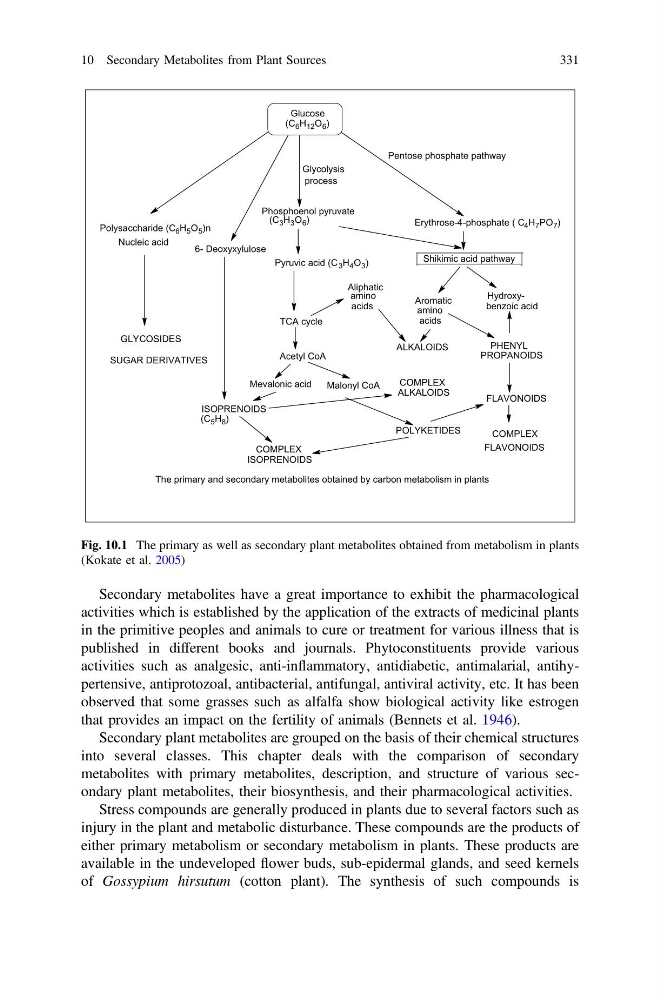
Fig. 10.1 The primary as well as secondary plant metabolites obtained from metabolism in plants
(Kokate et al. 2005)
10 Secondary Metabolites from Plant Sources
331
activities which is established by the application of the extracts of medicinal plants
in the primitive peoples and animals to cure or treatment for various illness that is
published in different books and journals. Phytoconstituents provide various
activities such as analgesic, anti-inflammatory, antidiabetic, antimalarial, antihypertensive, antiprotozoal, antibacterial, antifungal, antiviral activity, etc. It has been
observed that some grasses such as alfalfa show biological activity like estrogen
that provides an impact on the fertility of animals (Bennets et al. 1946).
Secondary plant metabolites are grouped on the basis of their chemical structures
into several classes. This chapter deals with the comparison of secondary
metabolites with primary metabolites, description, and structure of various secondary plant metabolites, their biosynthesis, and their pharmacological activities.
Stress compounds are generally produced in plants due to several factors such as
injury in the plant and metabolic disturbance. These compounds are the products of
either primary metabolism or secondary metabolism in plants. These products are
available in the undeveloped flower buds, sub-epidermal glands, and seed kernels
of Gossypium hirsutum (cotton plant). The synthesis of such compounds is
Polysaccharide (C 6 H 5 O 5 )n
Nucleic acid
GLYCOSIDES
SUGAR DERIVATIVES
Pentose phosphate pathway
Phosphoenol pyruvate
Glycolysis
Erythrose-4-phosphate ( C 4 H 7 PO 7 )
TCA cycle
Hydroxybenzoic acid
Aromatic
amino
acids
Pyruvic acid (C 3 H 4 O 3 )
Shikimic acid pathway
Aliphatic
amino
acids
ALKALOIDS
COMPLEX
POLYKETIDES
Acetyl CoA
Mevalonic acid
Malonyl CoA
ISOPRENOIDS
COMPLEX
PHENYL
FLAVONOIDS
COMPLEX
FLAVONOIDS
ISOPRENOIDS
6- Deoxyxylulose
ALKALOIDS
PROPANOIDS
The primary and secondary metabolites obtained by carbon metabolism in plants
Glucose
(C 6 H 12 O 6 )
process
(C 3 H 3 O 6 )
(C 5 H 8 )
Fig. 10.1 The primary as well as secondary plant metabolites obtained from metabolism in plants
(Kokate et al. 2005)
10 Secondary Metabolites from Plant Sources
331