

Even the extracts of plants have been demonstrated to induce necrosis in liver
cancer cell line Huh7it (Ficus carica leaves and fruits) (Purnamasari et al. 2019).
Further, Hymenocallis speciosa extract in acute myeloid leukaemia cell line showed
necroptosis and Jacaranda decurrens extract induced necrosis in K562 erythroleukaemia cells (De Giffoni De Carvalho et al. 2019).
Overall, the role of phytochemicals in necrosis induction and molecular mechanisms are less explored and has the potential to contribute to cancer cure. Drugs
targeting necrotic pathways are mainly useful to treat tumour cells that are resistant
to apoptotic drugs either by upregulation of anti-apoptotic proteins (Bcl-2) or
impaired pro-apoptotic proteins such as p53. This resistance, either intrinsic such as
mutations in p53 or acquired to anticancer drugs, is a significant reason for poor
treatment outcomes. Besides, necrosis-inducing phytochemicals could be used in
combination therapy to simultaneously hit both apoptosis and necrosis pathways
and thus provide an effective cure for cancer.
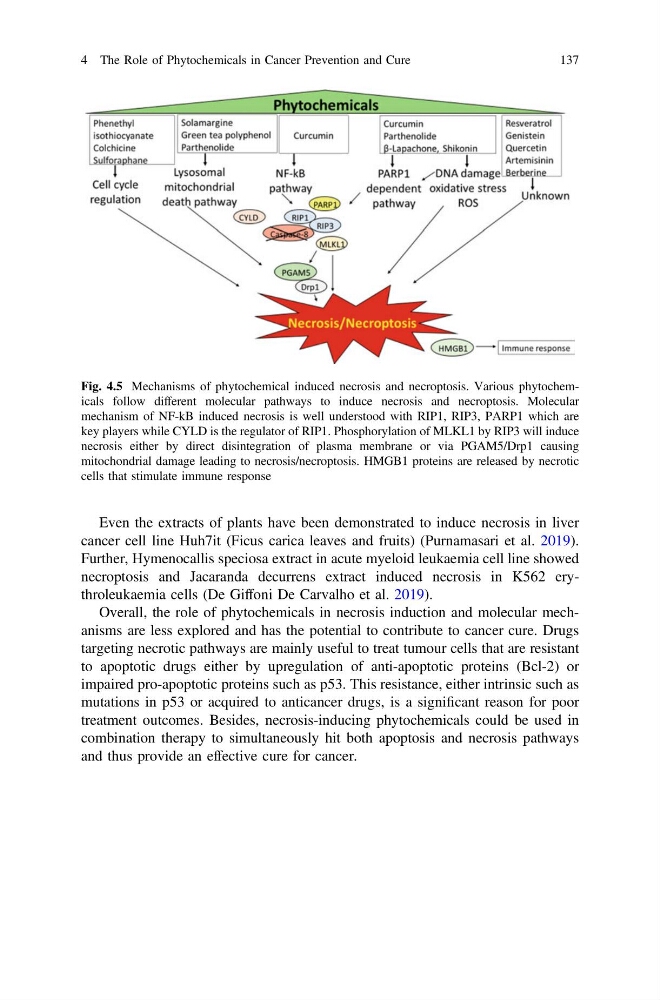
Fig. 4.5 Mechanisms of phytochemical induced necrosis and necroptosis. Various phytochemicals follow different molecular pathways to induce necrosis and necroptosis. Molecular
mechanism of NF-kB induced necrosis is well understood with RIP1, RIP3, PARP1 which are
key players while CYLD is the regulator of RIP1. Phosphorylation of MLKL1 by RIP3 will induce
necrosis either by direct disintegration of plasma membrane or via PGAM5/Drp1 causing
mitochondrial damage leading to necrosis/necroptosis. HMGB1 proteins are released by necrotic
cells that stimulate immune response
4 The Role of Phytochemicals in Cancer Prevention and Cure
137
cancer cell line Huh7it (Ficus carica leaves and fruits) (Purnamasari et al. 2019).
Further, Hymenocallis speciosa extract in acute myeloid leukaemia cell line showed
necroptosis and Jacaranda decurrens extract induced necrosis in K562 erythroleukaemia cells (De Giffoni De Carvalho et al. 2019).
Overall, the role of phytochemicals in necrosis induction and molecular mechanisms are less explored and has the potential to contribute to cancer cure. Drugs
targeting necrotic pathways are mainly useful to treat tumour cells that are resistant
to apoptotic drugs either by upregulation of anti-apoptotic proteins (Bcl-2) or
impaired pro-apoptotic proteins such as p53. This resistance, either intrinsic such as
mutations in p53 or acquired to anticancer drugs, is a significant reason for poor
treatment outcomes. Besides, necrosis-inducing phytochemicals could be used in
combination therapy to simultaneously hit both apoptosis and necrosis pathways
and thus provide an effective cure for cancer.
Fig. 4.5 Mechanisms of phytochemical induced necrosis and necroptosis. Various phytochemicals follow different molecular pathways to induce necrosis and necroptosis. Molecular
mechanism of NF-kB induced necrosis is well understood with RIP1, RIP3, PARP1 which are
key players while CYLD is the regulator of RIP1. Phosphorylation of MLKL1 by RIP3 will induce
necrosis either by direct disintegration of plasma membrane or via PGAM5/Drp1 causing
mitochondrial damage leading to necrosis/necroptosis. HMGB1 proteins are released by necrotic
cells that stimulate immune response
4 The Role of Phytochemicals in Cancer Prevention and Cure
137