

4.4 Role of Phytochemicals in Cancer Cure Via Apoptosis
Induction
Major plant-based phytochemicals such as terpenoids, phenolic acids and alkaloids
have shown potentially promising anticancer property by fine-tuning the reactive
oxygen species (ROS) signalling pathways (Chirumbolo et al. 2018). In line with
the anti-oxidative and ROS-scavenging properties of phytochemicals, numerous
phytochemicals have been studied and scientifically demonstrated to induce
apoptosis through the ROS generation. An established plant-based anticancer agent
can exemplify this, resveratrol, which was shown to induce caspase-8/
Caspase-3-dependent apoptosis in human colon cancer cells, HCT29 and
COLO201 by significantly increasing the intracellular ROS levels (Miki et al.
2012). Another commonly known phytochemical exhibiting anticancer activity,
quercetin, was also inhibiting cancer growth by inducing apoptosis via
cyclooxygenase-2 (COX-2)-dependent ROS generation.
Furthermore, numerous phytochemicals showed potentially promising anticancer activity by inducing apoptosis via upregulating the expression of caspases.
This can be exemplified by a phytochemical called hyperforin which was reported
to promote caspase-dependent apoptosis in various leukemia cell lines by upregulating caspase-9, caspase-8 and caspase-3 (Hostanska et al. 2003). One such
phytochemical is corosolic acid reported to promoting caspase activation, leading to
mitochondria-mediated signalling pathways to induce cell death in HeLa cells (Xu
et al. 2009). The purified bioactive compound, Pyranocycloartobiloxanthone A,
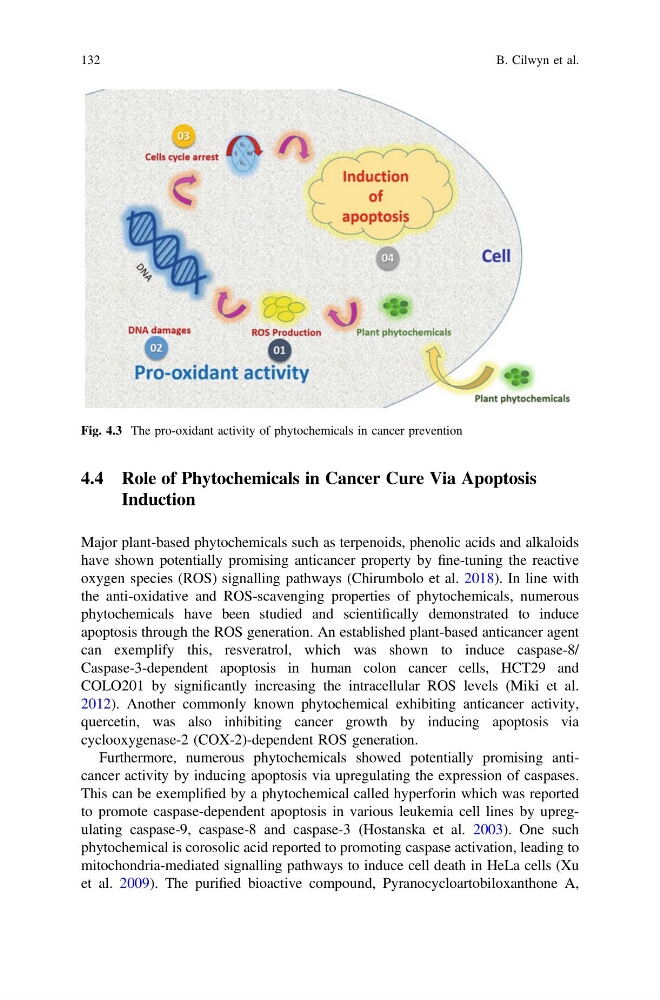
Fig. 4.3 The pro-oxidant activity of phytochemicals in cancer prevention
132
B. Cilwyn et al.
Induction
Major plant-based phytochemicals such as terpenoids, phenolic acids and alkaloids
have shown potentially promising anticancer property by fine-tuning the reactive
oxygen species (ROS) signalling pathways (Chirumbolo et al. 2018). In line with
the anti-oxidative and ROS-scavenging properties of phytochemicals, numerous
phytochemicals have been studied and scientifically demonstrated to induce
apoptosis through the ROS generation. An established plant-based anticancer agent
can exemplify this, resveratrol, which was shown to induce caspase-8/
Caspase-3-dependent apoptosis in human colon cancer cells, HCT29 and
COLO201 by significantly increasing the intracellular ROS levels (Miki et al.
2012). Another commonly known phytochemical exhibiting anticancer activity,
quercetin, was also inhibiting cancer growth by inducing apoptosis via
cyclooxygenase-2 (COX-2)-dependent ROS generation.
Furthermore, numerous phytochemicals showed potentially promising anticancer activity by inducing apoptosis via upregulating the expression of caspases.
This can be exemplified by a phytochemical called hyperforin which was reported
to promote caspase-dependent apoptosis in various leukemia cell lines by upregulating caspase-9, caspase-8 and caspase-3 (Hostanska et al. 2003). One such
phytochemical is corosolic acid reported to promoting caspase activation, leading to
mitochondria-mediated signalling pathways to induce cell death in HeLa cells (Xu
et al. 2009). The purified bioactive compound, Pyranocycloartobiloxanthone A,
Fig. 4.3 The pro-oxidant activity of phytochemicals in cancer prevention
132
B. Cilwyn et al.