

874
D. Matsuura et al.
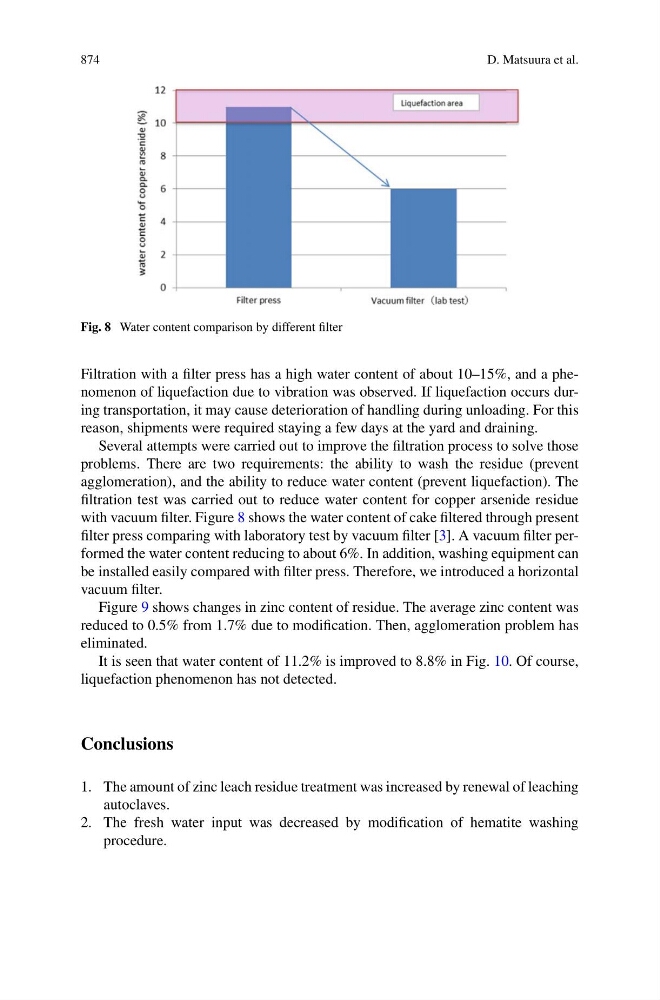
Fig. 8 Water content comparison by different filter
Filtration with a filter press has a high water content of about 10–15%, and a phenomenon of liquefaction due to vibration was observed. If liquefaction occurs during transportation, it may cause deterioration of handling during unloading. For this
reason, shipments were required staying a few days at the yard and draining.
Several attempts were carried out to improve the filtration process to solve those
problems. There are two requirements: the ability to wash the residue (prevent
agglomeration), and the ability to reduce water content (prevent liquefaction). The
filtration test was carried out to reduce water content for copper arsenide residue
with vacuum filter. Figure 8 shows the water content of cake filtered through present
filter press comparing with laboratory test by vacuum filter [3]. A vacuum filter performed the water content reducing to about 6%. In addition, washing equipment can
be installed easily compared with filter press. Therefore, we introduced a horizontal
vacuum filter.
Figure 9 shows changes in zinc content of residue. The average zinc content was
reduced to 0.5% from 1.7% due to modification. Then, agglomeration problem has
eliminated.
It is seen that water content of 11.2% is improved to 8.8% in Fig. 10. Of course,
liquefaction phenomenon has not detected.
Conclusions
1. The amount of zinc leach residue treatment was increased by renewal of leaching
autoclaves.
2. The fresh water input was decreased by modification of hematite washing
procedure.