

866
D. Matsuura et al.
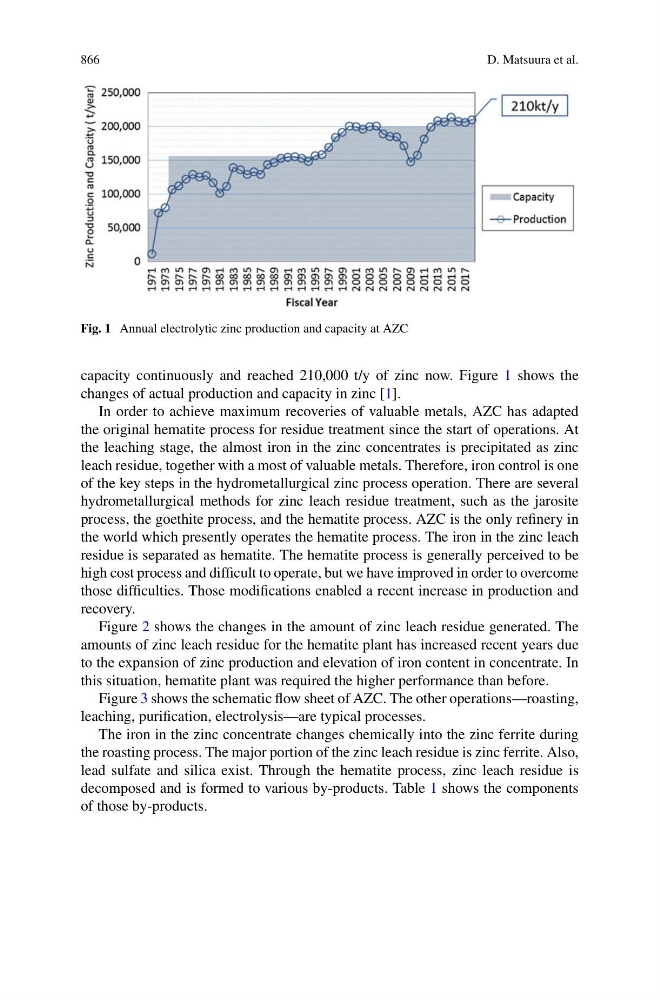
Fig. 1 Annual electrolytic zinc production and capacity at AZC
capacity continuously and reached 210,000 t/y of zinc now. Figure 1 shows the
changes of actual production and capacity in zinc [1].
In order to achieve maximum recoveries of valuable metals, AZC has adapted
the original hematite process for residue treatment since the start of operations. At
the leaching stage, the almost iron in the zinc concentrates is precipitated as zinc
leach residue, together with a most of valuable metals. Therefore, iron control is one
of the key steps in the hydrometallurgical zinc process operation. There are several
hydrometallurgical methods for zinc leach residue treatment, such as the jarosite
process, the goethite process, and the hematite process. AZC is the only refinery in
the world which presently operates the hematite process. The iron in the zinc leach
residue is separated as hematite. The hematite process is generally perceived to be
high cost process and difficult to operate, but we have improved in order to overcome
those difficulties. Those modifications enabled a recent increase in production and
recovery.
Figure 2 shows the changes in the amount of zinc leach residue generated. The
amounts of zinc leach residue for the hematite plant has increased recent years due
to the expansion of zinc production and elevation of iron content in concentrate. In
this situation, hematite plant was required the higher performance than before.
Figure 3 shows the schematic flow sheet of AZC. The other operations—roasting,
leaching, purification, electrolysis—are typical processes.
The iron in the zinc concentrate changes chemically into the zinc ferrite during
the roasting process. The major portion of the zinc leach residue is zinc ferrite. Also,
lead sulfate and silica exist. Through the hematite process, zinc leach residue is
decomposed and is formed to various by-products. Table 1 shows the components
of those by-products.