

Study of a Novel Chloride Volatilization Process …
843
Table 4 Metal volatilization rate under different roasting temperature
Roast temperature (°C)
Volatilization rates/%
Zn
Pb
Cu
In
Ag
800
58.68
96.19
21.84
52.11
12.03
900
80.90
99.17
42.55
52.99
27.02
1000
85.80
99.61
74.50
54.79
87.24
1100
98.26
99.88
97.32
58.73
95.22
1200
98.26
99.96
94.78
54.48
97.31
800
900
1000
1100
1200
0
10
20
30
40
50
60
70
80
90
100
volatilization rates/%
roast temperature/°C
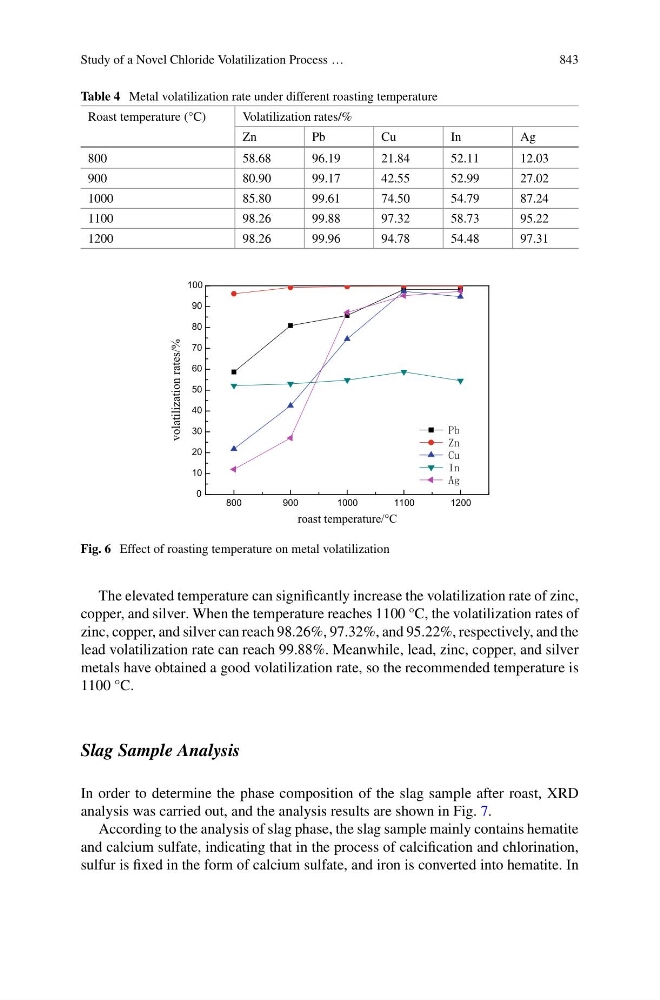
Fig. 6 Effect of roasting temperature on metal volatilization
The elevated temperature can significantly increase the volatilization rate of zinc,
copper, and silver. When the temperature reaches 1100 °C, the volatilization rates of
zinc, copper, and silver can reach 98.26%, 97.32%, and 95.22%, respectively, and the
lead volatilization rate can reach 99.88%. Meanwhile, lead, zinc, copper, and silver
metals have obtained a good volatilization rate, so the recommended temperature is
1100 °C.
Slag Sample Analysis
In order to determine the phase composition of the slag sample after roast, XRD
analysis was carried out, and the analysis results are shown in Fig. 7.
According to the analysis of slag phase, the slag sample mainly contains hematite
and calcium sulfate, indicating that in the process of calcification and chlorination,
sulfur is fixed in the form of calcium sulfate, and iron is converted into hematite. In