

828
C. C. S. de Oliveira et al.
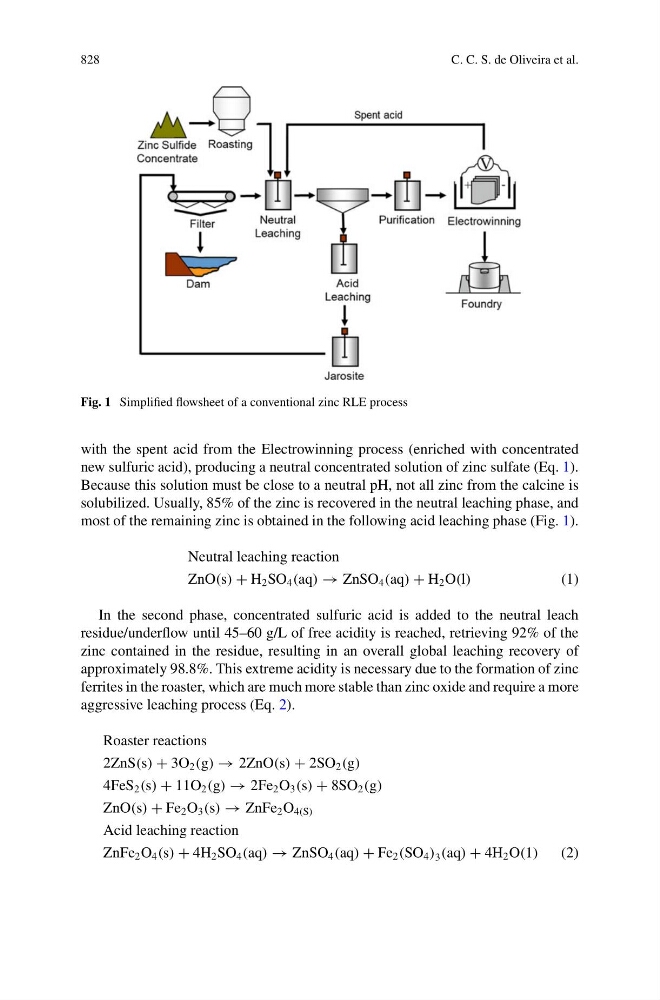
Fig. 1 Simplified flowsheet of a conventional zinc RLE process
with the spent acid from the Electrowinning process (enriched with concentrated
new sulfuric acid), producing a neutral concentrated solution of zinc sulfate (Eq. 1).
Because this solution must be close to a neutral pH, not all zinc from the calcine is
solubilized. Usually, 85% of the zinc is recovered in the neutral leaching phase, and
most of the remaining zinc is obtained in the following acid leaching phase (Fig. 1).
Neutral leaching reaction
ZnO(s) + H 2 SO 4 (aq) → ZnSO 4 (aq) + H 2 O(l)
(1)
In the second phase, concentrated sulfuric acid is added to the neutral leach
residue/underflow until 45–60 g/L of free acidity is reached, retrieving 92% of the
zinc contained in the residue, resulting in an overall global leaching recovery of
approximately 98.8%. This extreme acidity is necessary due to the formation of zinc
ferrites in the roaster, which are much more stable than zinc oxide and require a more
aggressive leaching process (Eq. 2).
Roaster reactions
2ZnS(s) + 3O 2 (g) → 2ZnO(s) + 2SO 2 (g)
4FeS 2 (s) + 11O 2 (g) → 2Fe 2 O 3 (s) + 8SO 2 (g)
ZnO(s) + Fe 2 O 3 (s) → ZnFe 2 O 4(S)
Acid leaching reaction
ZnFe 2 O 4 (s) + 4H 2 SO 4 (aq) → ZnSO 4 (aq) + Fe 2 (SO 4 ) 3 (aq) + 4H 2 O(1)
(2)