

786
M. Maccagni and E. Guerrini
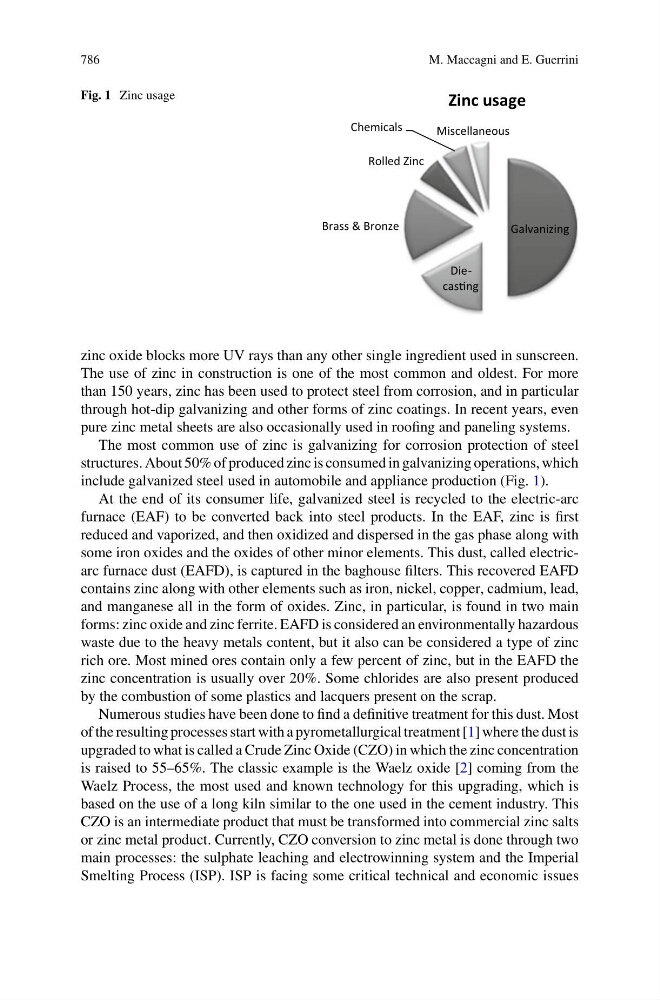
Fig. 1 Zinc usage
Galvanizing
DiecasƟng
Brass & Bronze
Rolled Zinc
Chemicals
Miscellaneous
Zinc usage
zinc oxide blocks more UV rays than any other single ingredient used in sunscreen.
The use of zinc in construction is one of the most common and oldest. For more
than 150 years, zinc has been used to protect steel from corrosion, and in particular
through hot-dip galvanizing and other forms of zinc coatings. In recent years, even
pure zinc metal sheets are also occasionally used in roofing and paneling systems.
The most common use of zinc is galvanizing for corrosion protection of steel
structures. About 50% of produced zinc is consumed in galvanizing operations, which
include galvanized steel used in automobile and appliance production (Fig. 1).
At the end of its consumer life, galvanized steel is recycled to the electric-arc
furnace (EAF) to be converted back into steel products. In the EAF, zinc is first
reduced and vaporized, and then oxidized and dispersed in the gas phase along with
some iron oxides and the oxides of other minor elements. This dust, called electricarc furnace dust (EAFD), is captured in the baghouse filters. This recovered EAFD
contains zinc along with other elements such as iron, nickel, copper, cadmium, lead,
and manganese all in the form of oxides. Zinc, in particular, is found in two main
forms: zinc oxide and zinc ferrite. EAFD is considered an environmentally hazardous
waste due to the heavy metals content, but it also can be considered a type of zinc
rich ore. Most mined ores contain only a few percent of zinc, but in the EAFD the
zinc concentration is usually over 20%. Some chlorides are also present produced
by the combustion of some plastics and lacquers present on the scrap.
Numerous studies have been done to find a definitive treatment for this dust. Most
of the resulting processes start with a pyrometallurgical treatment [1] where the dust is
upgraded to what is called a Crude Zinc Oxide (CZO) in which the zinc concentration
is raised to 55–65%. The classic example is the Waelz oxide [2] coming from the
Waelz Process, the most used and known technology for this upgrading, which is
based on the use of a long kiln similar to the one used in the cement industry. This
CZO is an intermediate product that must be transformed into commercial zinc salts
or zinc metal product. Currently, CZO conversion to zinc metal is done through two
main processes: the sulphate leaching and electrowinning system and the Imperial
Smelting Process (ISP). ISP is facing some critical technical and economic issues