

730
A. Cybulski
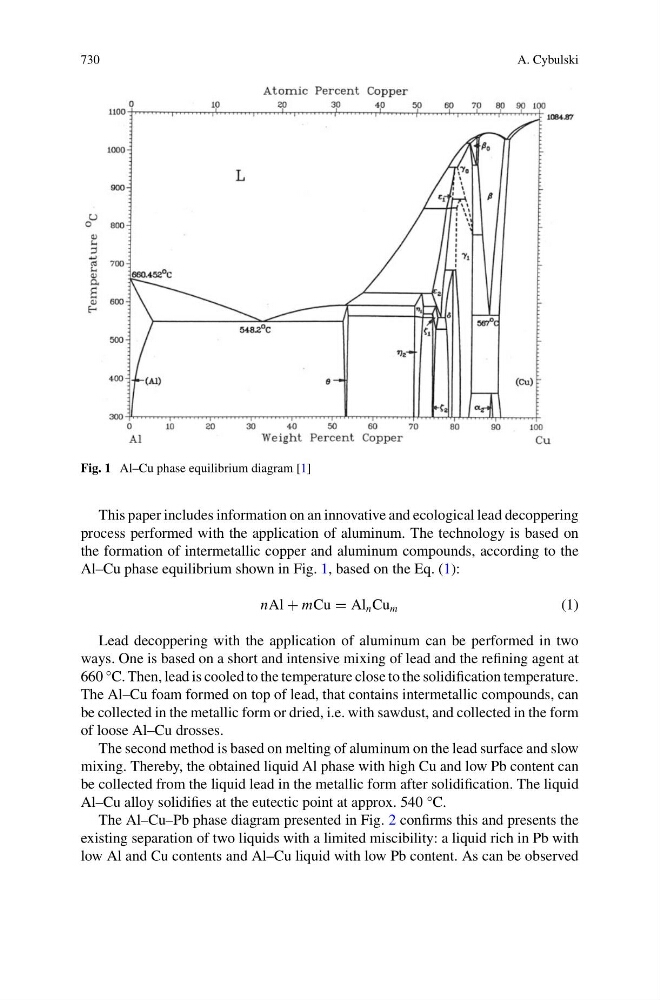
Fig. 1 Al–Cu phase equilibrium diagram [1]
This paper includes information on an innovative and ecological lead decoppering
process performed with the application of aluminum. The technology is based on
the formation of intermetallic copper and aluminum compounds, according to the
Al–Cu phase equilibrium shown in Fig. 1, based on the Eq. (1):
nAl + mCu = Al n Cu m
(1)
Lead decoppering with the application of aluminum can be performed in two
ways. One is based on a short and intensive mixing of lead and the refining agent at
660 °C. Then, lead is cooled to the temperature close to the solidification temperature.
The Al–Cu foam formed on top of lead, that contains intermetallic compounds, can
be collected in the metallic form or dried, i.e. with sawdust, and collected in the form
of loose Al–Cu drosses.
The second method is based on melting of aluminum on the lead surface and slow
mixing. Thereby, the obtained liquid Al phase with high Cu and low Pb content can
be collected from the liquid lead in the metallic form after solidification. The liquid
Al–Cu alloy solidifies at the eutectic point at approx. 540 °C.
The Al–Cu–Pb phase diagram presented in Fig. 2 confirms this and presents the
existing separation of two liquids with a limited miscibility: a liquid rich in Pb with
low Al and Cu contents and Al–Cu liquid with low Pb content. As can be observed