

Regional Changes in Refined Zinc Output and Demand
617
of extensive and world-class infrastructure in the transport, communications, and
power transmission networks, was a major factor in the rapid increase observed in
zinc demand. Rising exports of semi-manufactured and manufactured goods after its
accession to the WTO also boosted China’s zinc demand. China now possesses extensive modern infrastructure and, though investment continues, net annual additions to
road, rail, and power distributions networks are on a declining trend.
Also significant in the overall reduction in zinc demand globally since 2015 has
been the impact of subdued economic activity, especially as measured by industrial production, in the OECD, in spite of low interest rates and, at times, extensive
monetary easing (quantitative easing) which has generally not been matched by government fiscal stimulus. Very accommodative monetary policy has played a part in
high commodity prices, including zinc, which has encouraged efforts to find lower
cost substitutes and to reduce per unit usage. However, growth of demand in recent
years in North America has been boosted by the impact of tax cuts in the USA,
while increased consumption in a number of Asian countries has been supported by
increased infrastructure spending, in which China’s Belt and Road initiative (BRI)
has played a part in funding.
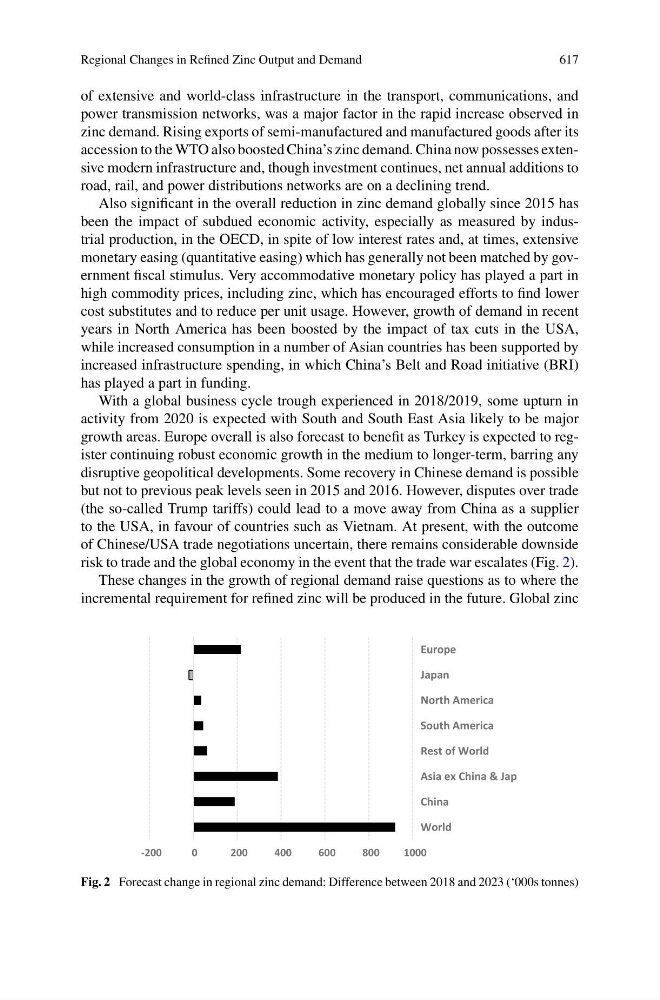
With a global business cycle trough experienced in 2018/2019, some upturn in
activity from 2020 is expected with South and South East Asia likely to be major
growth areas. Europe overall is also forecast to benefit as Turkey is expected to register continuing robust economic growth in the medium to longer-term, barring any
disruptive geopolitical developments. Some recovery in Chinese demand is possible
but not to previous peak levels seen in 2015 and 2016. However, disputes over trade
(the so-called Trump tariffs) could lead to a move away from China as a supplier
to the USA, in favour of countries such as Vietnam. At present, with the outcome
of Chinese/USA trade negotiations uncertain, there remains considerable downside
risk to trade and the global economy in the event that the trade war escalates (Fig. 2).
These changes in the growth of regional demand raise questions as to where the
incremental requirement for refined zinc will be produced in the future. Global zinc
-200
0
200
400
600
800
1000
World
China
Asia ex China & Jap
Rest of World
South America
North America
Japan
Europe
Fig. 2 Forecast change in regional zinc demand: Difference between 2018 and 2023 (‘000s tonnes)
617
of extensive and world-class infrastructure in the transport, communications, and
power transmission networks, was a major factor in the rapid increase observed in
zinc demand. Rising exports of semi-manufactured and manufactured goods after its
accession to the WTO also boosted China’s zinc demand. China now possesses extensive modern infrastructure and, though investment continues, net annual additions to
road, rail, and power distributions networks are on a declining trend.
Also significant in the overall reduction in zinc demand globally since 2015 has
been the impact of subdued economic activity, especially as measured by industrial production, in the OECD, in spite of low interest rates and, at times, extensive
monetary easing (quantitative easing) which has generally not been matched by government fiscal stimulus. Very accommodative monetary policy has played a part in
high commodity prices, including zinc, which has encouraged efforts to find lower
cost substitutes and to reduce per unit usage. However, growth of demand in recent
years in North America has been boosted by the impact of tax cuts in the USA,
while increased consumption in a number of Asian countries has been supported by
increased infrastructure spending, in which China’s Belt and Road initiative (BRI)
has played a part in funding.
With a global business cycle trough experienced in 2018/2019, some upturn in
activity from 2020 is expected with South and South East Asia likely to be major
growth areas. Europe overall is also forecast to benefit as Turkey is expected to register continuing robust economic growth in the medium to longer-term, barring any
disruptive geopolitical developments. Some recovery in Chinese demand is possible
but not to previous peak levels seen in 2015 and 2016. However, disputes over trade
(the so-called Trump tariffs) could lead to a move away from China as a supplier
to the USA, in favour of countries such as Vietnam. At present, with the outcome
of Chinese/USA trade negotiations uncertain, there remains considerable downside
risk to trade and the global economy in the event that the trade war escalates (Fig. 2).
These changes in the growth of regional demand raise questions as to where the
incremental requirement for refined zinc will be produced in the future. Global zinc
-200
0
200
400
600
800
1000
World
China
Asia ex China & Jap
Rest of World
South America
North America
Japan
Europe
Fig. 2 Forecast change in regional zinc demand: Difference between 2018 and 2023 (‘000s tonnes)